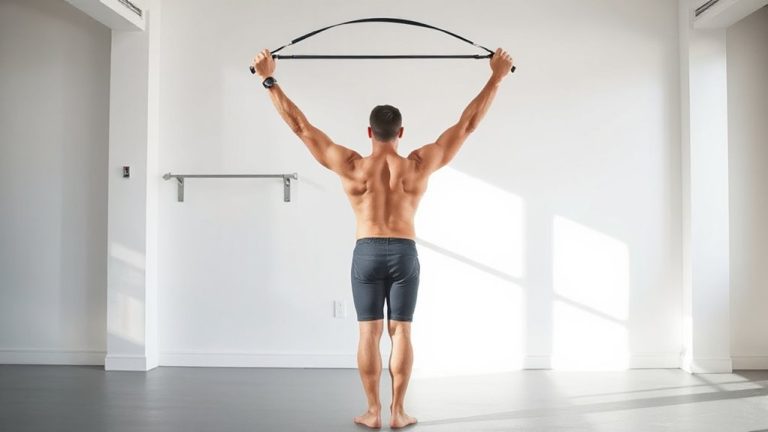
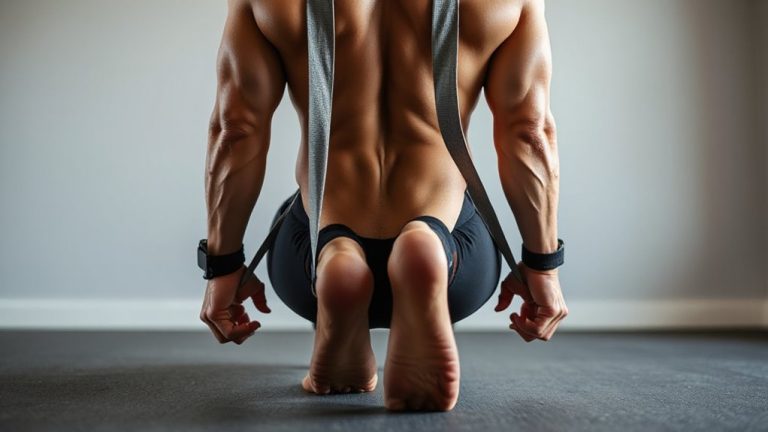
Tai Chi Cloud Hands Drill to Loosen Frozen Shoulder Adhesions Gradually
You can gently loosen frozen shoulder adhesions with the Tai Chi Cloud Hands drill, using slow, flowing motions to improve joint mobility and tissue elasticity. Keep your stance stable, shoulders relaxed, and align your spine to protect the joint. Sync your breath-inhale as arms rise, exhale as they cross-to enhance control and reduce tension. Modify the range to stay pain-free, and practice daily on a non-slip mat for best results. A lightweight brace may help support the shoulder without limiting motion. Consistent, mindful repetition builds neuromuscular re-education and promotes steady recovery. More details on optimizing each element follow.
Notable Insights
- Practice Cloud Hands with slow, flowing motions to gently mobilize stiff shoulder joints and reduce adhesions.
- Synchronize inhales with arm elevation and exhales as arms lower to enhance movement efficiency and relaxation.
- Maintain a stable stance and neutral spine to minimize joint stress during repetitive motion.
- Modify range of motion to stay within pain-free limits, gradually increasing as mobility improves.
- Perform daily, mindful repetitions to support connective tissue remodeling and sustained shoulder recovery.
How Tai Chi Helps Relieve Frozen Shoulder

While you’re managing the stiffness and discomfort of frozen shoulder, tai chi offers a low-impact way to gradually restore mobility without straining vulnerable joints. You’ll find that its slow, controlled movements encourage better qi flow, helping dissolve blockages that contribute to pain and limited motion. Unlike aggressive therapies, tai chi emphasizes gentle joint release through sustained, flowing sequences that warm tissues and improve circulation. Over time, this mindful movement retrains your body’s motor patterns, reducing compensatory habits that can worsen shoulder imbalance. Practicing regularly supports connective tissue elasticity, essential during the thawing phase of recovery. Quality fitness gear, like non-slip mats, enhances stability and alignment, making practice safer and more effective. You’re not just moving-you’re re-educating your neuromuscular system. Tai chi’s strength lies in its sustainability, blending physical therapy principles with holistic recovery. It’s not a quick fix, but a precise, progressive approach to restoring function through consistency and mindful engagement.
Do the Cloud Hands Exercise Safely
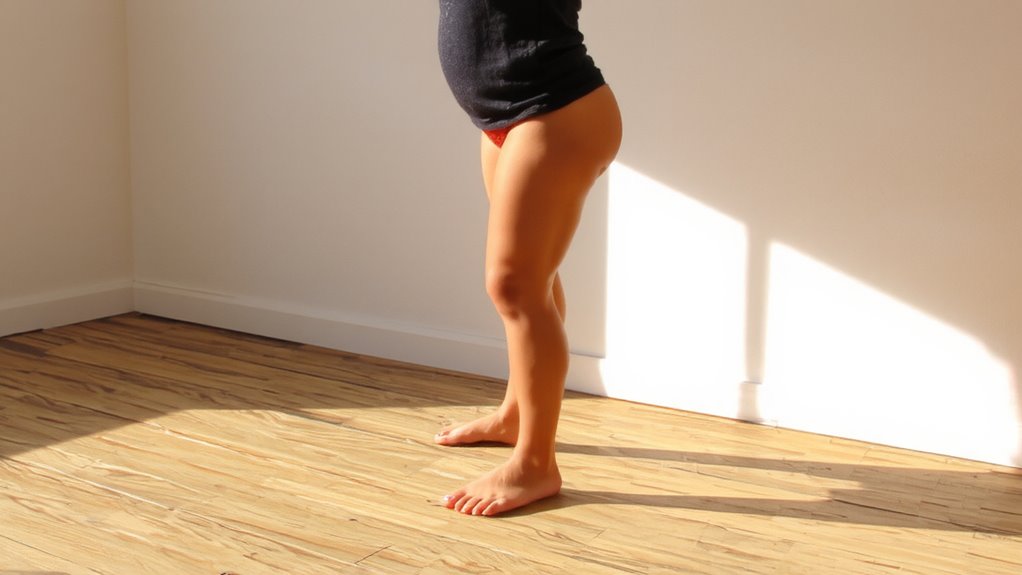
Since proper form and alignment are essential to avoiding strain during recovery, you’ll want to approach the Cloud Hands exercise with attention to detail and the right supportive gear. Maintaining proper alignment reduces joint stress and enhances movement efficiency, especially when working around frozen shoulder restrictions. Begin with a stable stance, spine neutral, and shoulders relaxed. Use a supportive, non-slip mat to guarantee balance during the shifting weight motion. For added joint protection, consider a lightweight shoulder brace that allows mobility while reminding you to avoid overexertion.
| Gear Feature | Benefit | Recovery Impact |
|---|---|---|
| Non-slip mat | Improves balance | Encourages gradual progression |
| Breathable brace | Supports without restricting | Enhances proper alignment |
| Low-resistance space | Allows controlled motion | Reduces re-injury risk |
Gradual progression guarantees lasting gains without flare-ups.
Match Breath to Movement for Easier Motion
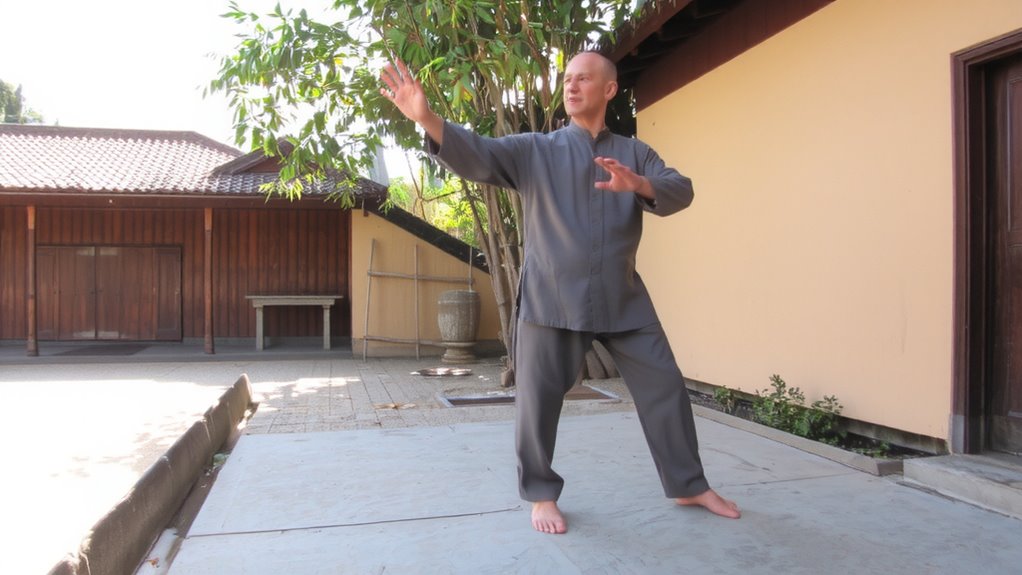
You’ve set up your space with the right mat and gear to protect your joints and support proper alignment, so now it’s time to bring breath into the equation-specifically, syncing it with movement to reduce tension and improve range of motion. Proper breath coordination isn’t just mindfulness fluff; it’s a biomechanical tool. As you begin Cloud Hands, inhale as your arms rise and open, and exhale as they lower and cross. This rhythm boosts movement fluidity, helping you avoid jerky motions that strain the shoulder. Controlled breathing oxygenates tissues, easing muscle engagement and supporting recovery. Unlike high-intensity routines, Tai Chi relies on steady, deliberate breathwork to enhance neuromuscular control. You’ll notice less stiffness over time, especially when breath and motion align. Breath coordination also sharpens focus, turning exercise into active rehabilitation. It’s low-impact but effective, and with consistent practice, supports long-term joint health. Your gear matters, but breath is the real foundation.
Modify Cloud Hands for Your Pain Level
If your shoulder pain makes full-range movements challenging, don’t force the standard Cloud Hands form-instead, adjust the motion to match your current capacity. This movement modification reduces strain while still promoting joint lubrication and circulation. Keep your arms lower, within a pain-free zone, and shorten the arc of motion as needed. By prioritizing smooth, mindful shifts over breadth, you support effective pain management without compromising long-term progress. Tai Chi’s low-impact nature makes it ideal for fitness recovery, especially when paired with mindful attention to form. You’re not skipping intensity-you’re optimizing it for healing. Unlike aggressive fitness gear designed for performance, this practice emphasizes control and awareness over force. Small, consistent adjustments in motion build greater tolerance over time. The goal isn’t to push through discomfort but to work intelligently within it, letting gradual adaptation restore function safely and sustainably.
Stay Consistent to Regain Shoulder Mobility
While progress with frozen shoulder can feel slow, staying consistent with modified Tai Chi movements like Cloud Hands helps maintain momentum in your recovery without overloading the joint. Routine building is essential-aim for daily practice, even if just five minutes, to reinforce neuromuscular patterns and encourage gradual tissue remodeling. Use progress tracking to monitor improvements in range of motion and pain reduction over weeks. This data not only motivates but also guides adjustments in intensity. Practicing barefoot on a non-slip mat enhances balance and reduces strain, while breathable clothing allows full awareness of movement limitations. Though some fitness gear promises faster recovery, nothing replaces disciplined repetition and mindful execution. Over time, consistent practice reshapes joint mobility more effectively than sporadic, intense sessions. Stay patient, track changes, and let routine building transform small efforts into lasting gains.
On a final note
You’re tackling frozen shoulder with a proven, low-impact method. Tai Chi’s Cloud Hands drill promotes gradual release of adhesions through smooth, repetitive motion. When you match breath to movement and modify intensity, you reduce strain while improving mobility. Consistency matters more than speed. This mindful practice, paired with proper recovery gear like supportive braces or rollers, enhances long-term shoulder function without overloading joints.