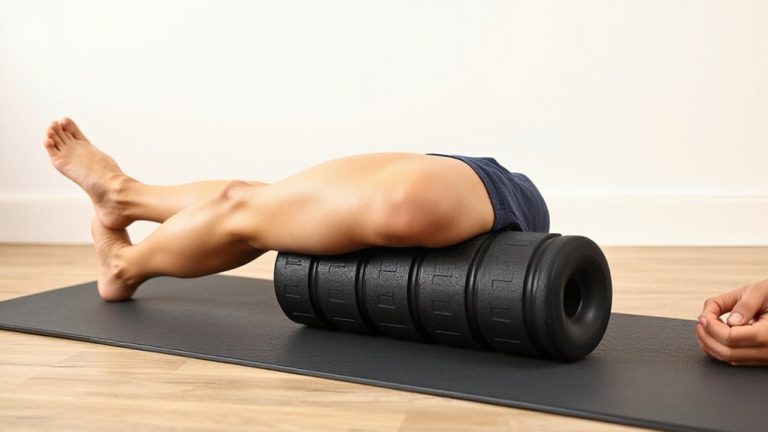
Lumbar Mobility Drills With Seated Forward Bend With Clasp
You hinge forward from the hips while seated, legs extended and hands clasped behind your back, maintaining a long spine to target lumbar stiffness with precision. This drill enhances spinal articulation and integrates hip synergy, reducing lower back tension safely. Avoid rounding your spine or over-gripping-use controlled breathing and a neutral pelvis to deepen the stretch. It boosts mobility through segmental motion, supporting recovery and performance, especially when paired with proper gear. There’s more to how this builds resilience over time.
Notable Insights
- Perform the seated forward bend with a firm hand clasp behind the back to enhance shoulder retraction and upper back engagement.
- Initiate the movement by hinging at the hips while maintaining a long spine to target lumbar mobility effectively.
- Use controlled breathing-inhale to lengthen, exhale to deepen the forward bend-to reduce tension and improve flexibility.
- Avoid rounding the lower back by engaging the core and keeping the pelvis in a neutral position throughout the movement.
- Incorporate mirrors or video feedback to ensure proper alignment and maximize intervertebral motion in the lumbar region.
How to Do the Seated Forward Bend With Clasp
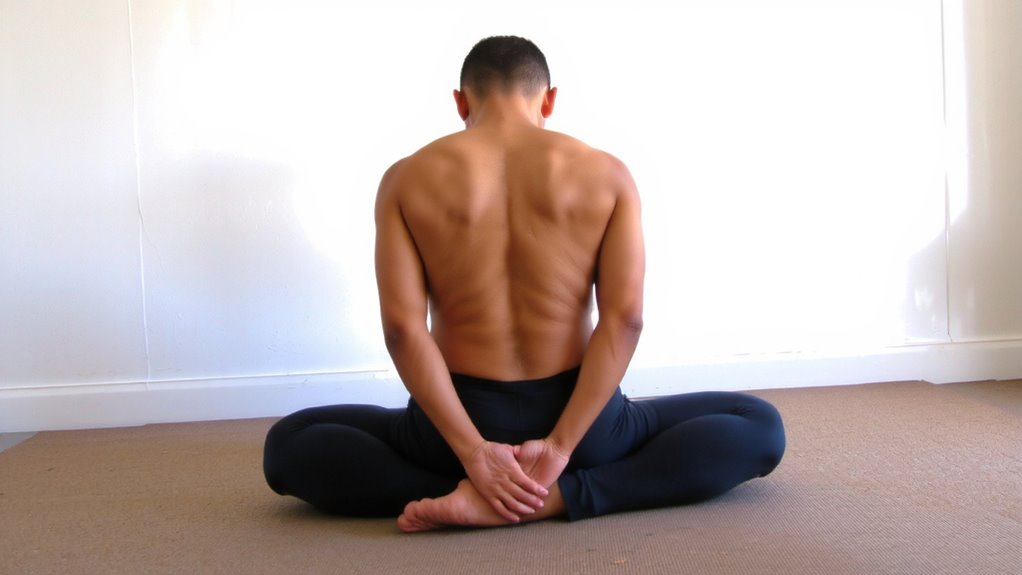
While you’re seated with legs extended, begin by clasping your hands behind your back to initiate the forward bend. This seated posture promotes spinal alignment and reduces lumbar compensation. Engage the clasp technique early-interlock fingers firmly but comfortably-to encourage shoulder retraction and upper back engagement. As you hinge forward from the hips, keep your spine long and chest lifted, avoiding rounding. The clasp technique enhances thoracic involvement, allowing a deeper, safer stretch. Maintaining this form guarantees targeted mobility without straining connective tissues. Ideal for fitness recovery, the pose integrates well post-workout, especially when using supportive gear like ergonomic mats that cushion joints. Consistent practice improves functional flexibility and posture control. Though simple, effectiveness depends on precision: slight misalignments weaken results. Use mirrors or video feedback to verify technique. When performed correctly, this drill supports long-term spinal health and movement efficiency, making it a reliable tool in any mobility routine.
Why This Lumbar Mobility Drill Works
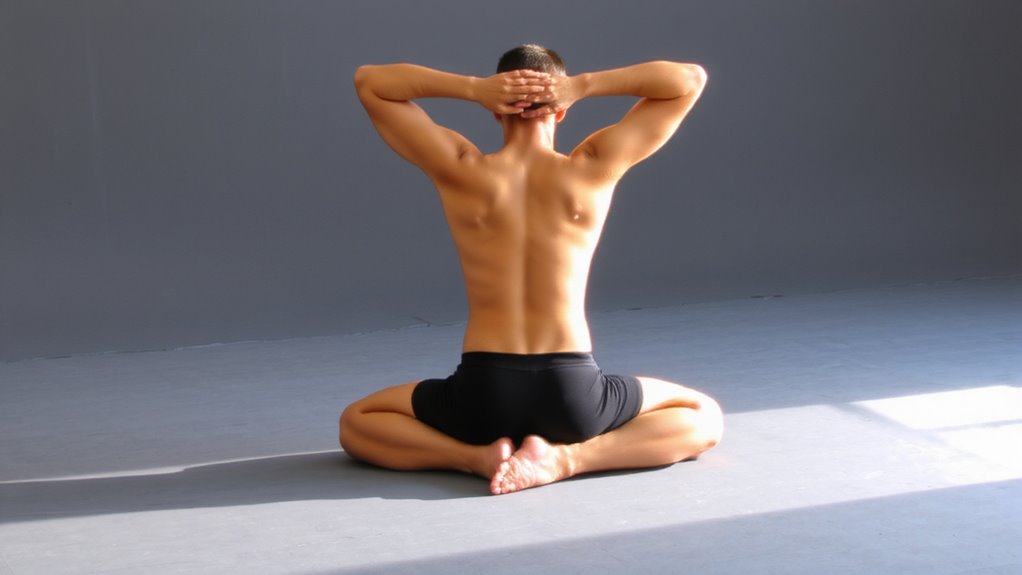
A strategic blend of joint mechanics and soft-tissue engagement makes this drill a standout in lumbar mobility training. You’re not just stretching-you’re guiding your spine through controlled spinal articulation, segment by segment, which enhances intervertebral motion and reduces stiffness. The seated forward bend with clasp encourages proper sequencing from the pelvis upward, ensuring you don’t just hinge from the hips but truly mobilize the lower back. This is where hip synergy comes in: your hamstrings, glutes, and hip flexors coordinate to support a smooth, aligned fold, preventing compensatory patterns. Unlike passive stretches, this movement promotes active control, making it effective for both recovery and preparation. It integrates well into routines using basic fitness gear like mats or benches, requiring minimal equipment but delivering high functional return. You’ll notice improved movement quality in lifts, bends, and daily motions.
Common Mistakes to Avoid in the Forward Bend
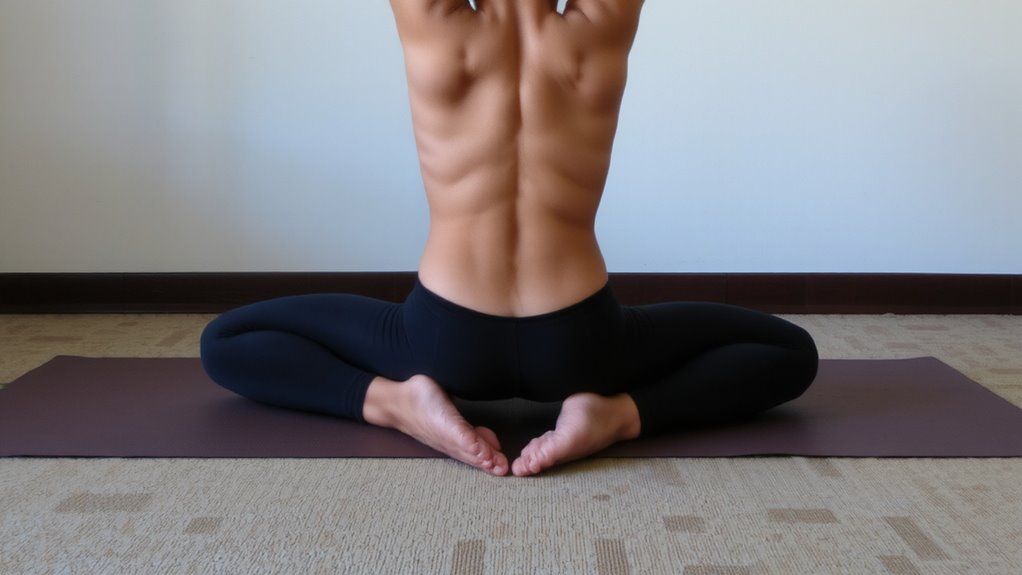
You’ve already seen how the seated forward bend with clasp enhances spinal articulation and integrates key muscle groups for better lumbar mobility, but getting the most out of this drill means watching out for errors that can undercut its benefits. One common issue is improper alignment-rounding your back too aggressively instead of hinging from the hips can strain lumbar structures and reduce targeted activation. Keep your spine elongated, initiating movement from the pelvis to maintain control. Another pitfall is restricted breathing; holding or shallow breathing increases tension and limits relaxation in the posterior chain. Inhale to lengthen, exhale to deepen the hinge-rhythmic respiration supports mobility gains. Avoid locking your knees or over-gripping the clasp, as these subtle tensions disrupt the drill’s fluidity. Staying mindful of form guarantees you build functional flexibility without compromising joint or muscle health. Correct execution maximizes both safety and effectiveness in daily practice.
How to Deepen the Stretch Safely
Why settle for a basic stretch when you can refine it to safely deepen your range of motion? You can intensify the seated forward bend by focusing on breathing techniques and proper alignment. Inhale deeply to lengthen your spine, then exhale fully as you hinge forward from the hips-never from the lower back. Engaging your core subtly supports spinal stability, letting you fold deeper without strain. Maintain a neutral pelvis to preserve lumbar integrity; rounding excessively compromises tissue safety. Use slow, rhythmic breaths: each exhale lets muscles like the hamstrings and erector spinae release incrementally. Avoid forcing the stretch-progress comes from consistency, not aggression. Tools like yoga straps can assist while maintaining form, but they’re no substitute for disciplined technique. With mindful repetition, you’ll notice increased mobility without risking injury. Proper alignment isn’t just preventive-it’s performance-enhancing. Incorporating targeted back stretching equipment can enhance lumbar mobility when used alongside mindful technique.
What This Stretch Targets in Your Spine
Where exactly does the seated forward bend deliver its most meaningful impact along your spine? Primarily, it targets the lumbar region, where tightness often restricts movement and posture. As you fold forward with control, you encourage progressive spinal articulation-each vertebra stacking deliberately, enhancing neuromuscular coordination. This movement boosts intervertebral flexibility, especially between the lower discs, reducing stiffness and improving shock absorption over time. While the stretch extends into the thoracic spine, the deepest sensation typically resides in the lumbar curve, where hamstrings and erector spinae converge. Consistent practice not only lengthens posterior chains but also promotes disc hydration, essential for spinal resilience. Recovery-focused gear like supportive坐垫 or posture cushions can amplify the stretch’s benefits by optimizing pelvic alignment. Though simple, the drill’s effectiveness hinges on form, not force. When performed mindfully, it’s a cornerstone for long-term spinal health and functional mobility-low risk, high reward.
On a final note
You’ll find this lumbar mobility drill effective for enhancing spinal flexibility and relieving lower back tension. When performed correctly, the seated forward bend with clasp promotes controlled segmental movement, targeting the lumbar vertebrae without overloading surrounding muscles. Avoid rounding your back by engaging your core and initiating the stretch from the pelvis. Use supportive fitness gear, like a non-slip mat, to maintain alignment and reduce injury risk during recovery phases.