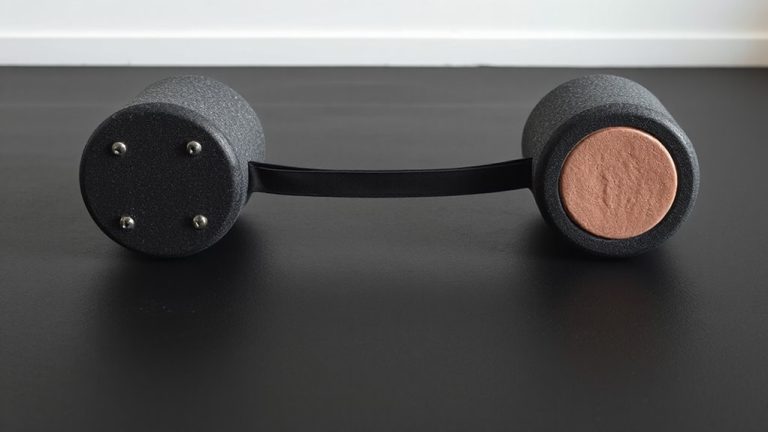
Cervical Retraction Holds in Prone Position to Strengthen Deep Neck Flexors
You’re building real strength when you do cervical retraction holds in the prone position. Lying face down, you gently tuck your chin to activate deep neck flexors like longus colli-muscles often underused in screen-heavy postures. This isometric exercise improves cervical alignment, reduces forward head strain, and enhances neuromuscular control without equipment. Proper form guarantees targeted gains while minimizing compensation. There’s smarter recovery than just massaging tight traps-discover how this quiet, consistent move delivers lasting postural change.
Notable Insights
- Perform cervical retraction holds face down with forehead slightly off a firm surface to target deep neck flexors effectively.
- Gently tuck the chin to create a double chin while keeping the head level to ensure proper alignment.
- Hold each retraction for 5–10 seconds, completing 3 sets of 10 reps with controlled, precise movements.
- Focus on activating longus colli and capitis muscles without engaging upper traps or suboccipital overcompensation.
- Practice regularly to improve cervical stability, reduce forward head posture, and enhance neuromuscular control within weeks.
Why Your Neck Needs Cervical Retractions

While you might not think much about how you hold your head during the day, poor neck posture-especially from hunching over screens-places steady strain on your cervical spine, and that’s where cervical retractions come in. These small, controlled movements help restore anatomical alignment by gently pulling your head straight back, stacking your skull over your spine. Over time, this reduces forward head posture and eases tension. More importantly, retractions train neuromuscular control, reteaching your deep neck flexors to activate properly instead of relying on overworked superficial muscles. Without this recalibration, even the best fitness recovery tools-like foam rollers or massage guns-only offer temporary relief. You’re treating symptoms, not the root cause. Consistent retractions build sustainable strength and control. They require no gear, fit into daily routines, and complement any fitness regimen. When done correctly, they’re a foundational fix for long-term cervical health-simple but essential for lasting postural improvement and injury prevention. For more targeted relief, using a neck decompression device can enhance the benefits of cervical retractions by promoting spinal alignment and reducing disc pressure.
How Prone Position Activates Deep Neck Muscles
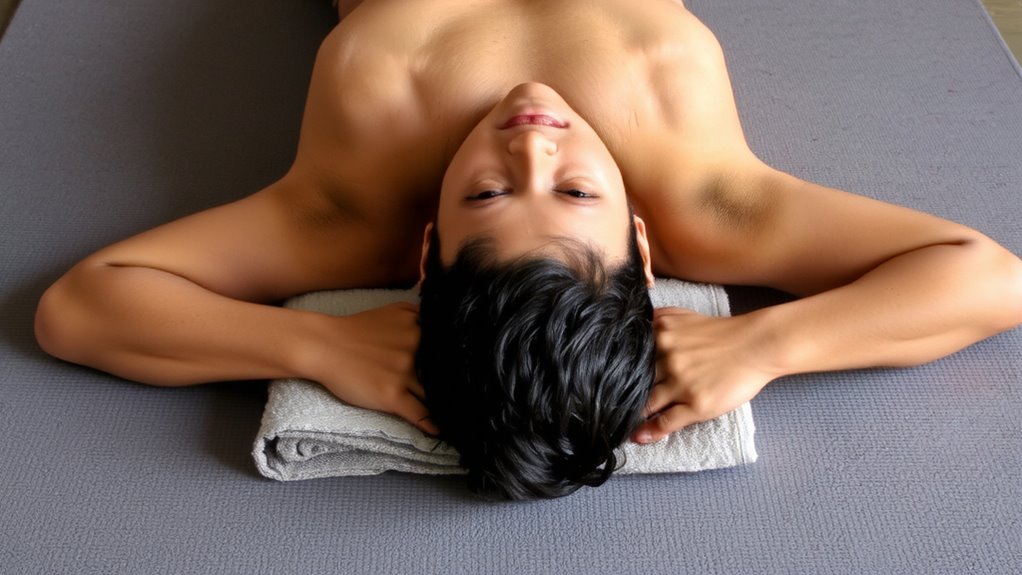
Because gravity works against you in the prone position, lying face down while performing cervical retractions forces your deep neck flexors to engage more fully than in seated or standing variations. You’re not just moving your head-you’re challenging stability, which ramps up muscle synergy across the anterior cervical chain. The lack of external support means your longus colli and capitis must work harder to initiate and sustain the movement. This increased demand sharpens neural feedback, improving proprioception and motor control over time. Unlike upright positions where compensation is easier, the prone setup limits momentum, making each retraction more precise and effective. You’ll notice improved endurance and coordination, especially when holding the position. This isn’t just about strength-it’s about retraining your neck’s functional alignment. The position’s biomechanical demand makes it a superior choice for long-term postural correction and injury prevention, especially if you spend hours at a desk or screen. Proper pillow support during recovery can enhance alignment and reduce strain, especially when using a best pillow recommended for post-surgical neck care.
How to Perform Prone Cervical Retraction Holds (Step-by-Step)

If you’re aiming to build real stability in your neck and retrain proper alignment, starting with prone cervical retraction holds can make a meaningful difference in both performance and postural control. Begin by lying facedown on a firm surface, forehead just off the edge, so your neck can move freely. Gently tuck your chin, creating a double chin, while keeping your head level-this guarantees muscle isolation without upper trap compensation. Hold for 5 seconds, gradually increasing to 10. Perform 3 sets of 10 reps, focusing on quality over quantity. Using the right cervical pillow can further support proper neck alignment during rest and enhance recovery.
| Step | Action | Key Focus |
|---|---|---|
| 1 | Lie prone, forehead off surface | Neutral spine |
| 2 | Retract chin straight back | Proper alignment |
| 3 | Hold without neck elevation | Muscle isolation |
| 4 | Maintain steady breathing | Control & endurance |
Top Mistakes in Prone Cervical Retractions
What keeps your cervical retractions from delivering real gains? Improper alignment is a primary culprit-tilting your chin too high or tucking it too aggressively misdirects muscle engagement, weakening the activation of your deep neck flexors. You’re not alone if you’re guilty of excessive effort; pushing too hard or holding your breath creates tension in the upper traps and suboccipitals, counteracting the exercise’s purpose. Many people arch their upper back or lift their forehead off the floor, shifting focus away from precision. Instead, aim for subtle, controlled motions-think millimeters, not inches. Focus on sliding the skull straight back, maintaining a neutral spine throughout. Poor form not only reduces effectiveness but can contribute to strain over time. To get the most from this exercise, prioritize quality over quantity. Consistent, mindful reps with correct alignment yield better long-term results than forced, sloppy repetitions.
Who Should Try Prone Cervical Retractions?
Prone cervical retractions aren’t for everyone, but they can be highly effective if your goals include improving neck posture, enhancing deep neck flexor strength, or recovering from prolonged forward head positioning-common with desk work or screen overuse. If you’re dealing with chronic neck tension or seeking postural correction, these retractions help retrain muscle activation patterns often disrupted by sedentary habits. You’ll benefit most if you’re cleared of acute cervical injuries and able to maintain neutral spine alignment. Neck stabilization is essential for both rehab and performance, and these retractions build foundational endurance in the deep cervical flexors. They’re ideal for those integrating functional training or recovery protocols, especially when using supportive fitness gear like foam rolls or stability pillows to maintain proper form. However, if you’ve got vestibular issues or cervical instability, this exercise may not be safe. Always assess your individual needs and start conservatively to guarantee effective, sustained progress.
How Soon Will You Feel a Difference?
You’ll likely notice subtle changes in neck awareness and posture within the first few days of consistent practice, especially if you’re coming from a background of prolonged screen use or poor cervical alignment. Initial muscle fatigue is common, signaling that the deep neck flexors are being properly engaged. This fatigue typically decreases as neuromuscular control improves over one to two weeks. With regular practice, you’ll start to feel more stability in your cervical spine during everyday movements. Progress tracking-like noting hold duration, reduced compensatory movements, or decreased discomfort-helps maintain motivation and measure gains. While structural changes take longer, functional improvements often emerge within three to four weeks. Consistency matters more than intensity here, as frequent, controlled repetitions yield better long-term activation. Don’t expect dramatic shifts overnight; instead, focus on steady, observable enhancements in control and endurance. These small wins reflect meaningful rehab progress.
How to Fit Prone Retractions Into Your Day
Why make time for an exercise that seems so subtle it’s barely noticeable? Because prone retractions combat hours of poor posture with minimal effort and maximum impact. You can easily integrate them into daily work breaks and posture checks. Do a set while lying on your stomach during a midday pause, or add them after checking your alignment at your desk. Consistency beats intensity here-short sessions build neuromuscular control over time.
| Time of Day | Suggested Context |
|---|---|
| Morning | Posture check after waking |
| Mid-Afternoon | Post-work break routine |
| Evening | Pre-bed mobility session |
They require no gear, recover deep neck flexors effectively, and support cervical stability. Unlike bulky fitness tools, this exercise relies on precision, not equipment. Over weeks, you’ll notice less strain and better head positioning-proof that sometimes, less really is more.
On a final note
You’ll find cervical retraction holds in prone position effective for building deep neck flexor strength with minimal equipment. When done correctly, they enhance postural control and reduce strain on overactive superficial muscles. Though subtle, the movement yields measurable improvements in neck stability over time. Pairing this exercise with supportive recovery tools-like foam rollers or posture trainers-can optimize results, especially if used consistently. It’s a practical addition to daily routines, particularly for those combating forward head posture.