Thoracic Mobility Drills With Standing Side Bends to Improve Lateral Flexion
You can improve thoracic mobility and restore natural lateral flexion with standing side bends, especially if you spend long hours sitting. These drills target stiffness in the mid-back by promoting controlled movement and ribcage expansion. Proper form-like keeping your spine aligned and breathing deeply-ensures you engage the right muscles without compensation. When done consistently, they enhance spinal alignment and reduce tension. You’ll soon discover even greater benefits by refining technique and adding strategic variations.
Notable Insights
- Standing side bends improve thoracic lateral flexion by targeting stiffness in the mid-back where mobility is often restricted.
- Engage lateral breathing to enhance ribcage expansion and activate intercostal muscles during each side bend.
- Maintain rib-spine coordination to ensure true thoracic movement instead of lumbar compensation.
- Avoid latissimus dorsi dominance by controlling arm position aligned with the ear during the bend.
- Perform 3–5 times weekly, using variations like foot lifts to increase core engagement and stability.
Why Thoracic Mobility Fixes Stiff, Hunched Posture
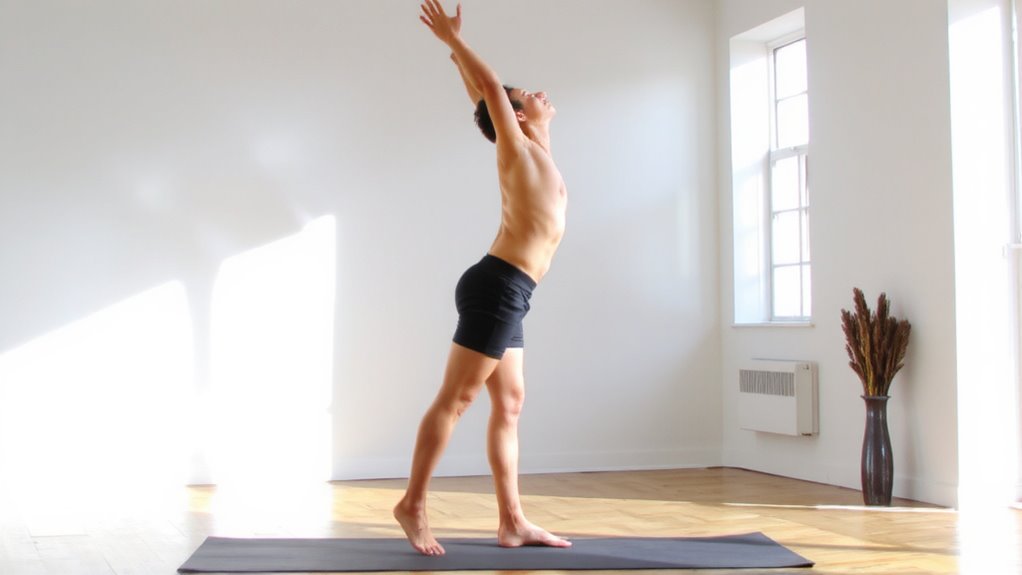
Why does your upper back feel so tight after hours at a desk? Because poor spinal alignment from slouching compresses your thoracic spine, leading to stiffness and hunched posture. Restoring thoracic mobility reverses this-allowing your mid-back to move freely improves posture correction naturally. Without mobility, muscles stiffen, joints lock, and your body compensates by overusing the neck and lower back. That’s where targeted movement helps. Devices like foam rollers and mobility sticks support this process, but they’re only effective when paired with consistent, correct motion. You’re not fixing alignment with gear alone-your movement patterns do the real work. Over time, improved thoracic mobility reduces strain, balances muscle tension, and promotes healthier sitting mechanics. It’s not about quick fixes, but sustainable posture correction through functional range. The best recovery tools enhance, not replace, these movements.
How Standing Side Bends Unlock Your Mid-Back
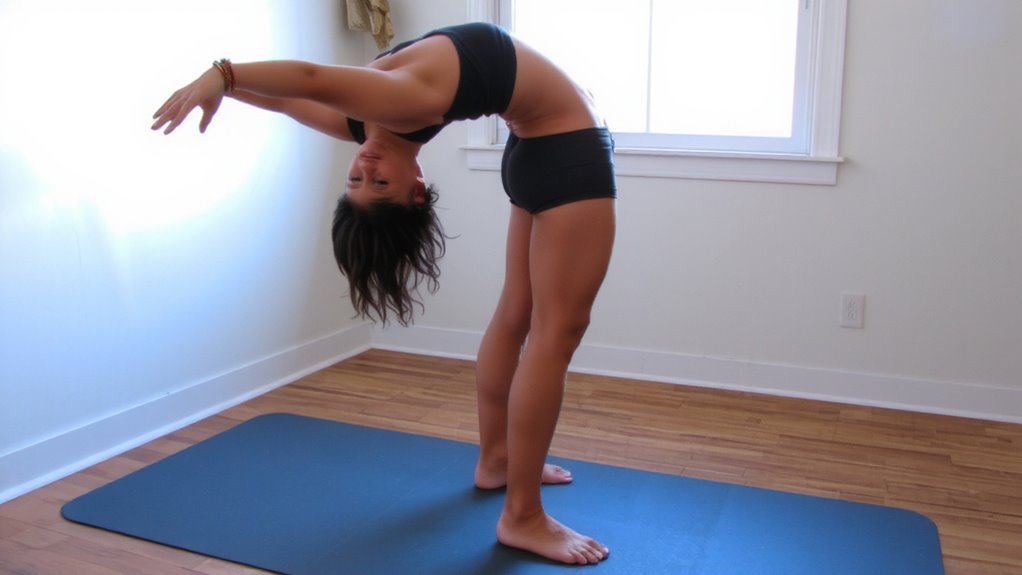
Standing side bends are a simple yet effective way to activate and lengthen the muscles surrounding your thoracic spine, directly addressing the stiffness that builds up from prolonged sitting. You’re not just stretching-you’re creating space for improved spinal rotation and encouraging more natural movement patterns. By emphasizing controlled lateral flexion, these bends enhance mid-back mobility where it’s often most restricted. Combine this with deliberate lateral breathing, and you’ll notice deeper expansion between the ribs, helping oxygen reach tight intercostal muscles. This synergy supports recovery by reducing tension and improving circulation. While fitness gear like mobility bands can assist, the movement itself remains foundational. Over time, consistent practice leads to noticeable gains in posture and trunk control. It’s not flashy, but it’s functional-delivering measurable improvements in how your mid-back rotates, bends, and breathes. You’ll move better in daily life and under load.
Master the Standing Side Bend (Step by Step)

How do you actually perform a standing side bend to maximize thoracic mobility without compromising form? Start by standing tall, feet hip-width apart, spine neutral. Inhale to prepare-this breath coordination sets stability. As you exhale, slowly reach your right arm overhead, gently bending sideways to the left. Keep your left hand resting on your hip or sliding down your leg-avoid pulling. Maintain strict arm alignment: your right arm should stay in line with your ear, not drifting forward or back. Your ribs must move as a unit with the spine to isolate thoracic motion. Inhale at the top, then exhale returning upright. Repeat on the other side. Controlled reps with precise arm alignment and breath coordination enhance lateral flexion quality, making each rep more effective for mid-back mobility.
5 Mistakes That Limit Mobility Gains
Isn’t it frustrating when your mobility work doesn’t seem to pay off, even though you’re consistent with your standing side bends? You might be sabotaging your progress without realizing it. An overactive latissimus dorsi can severely restrict lateral flexion, limiting your range no matter how many reps you do. When this muscle stays tight, it pulls your torso into compensation, making your movement more spinal shear than true side bend. You’ve got to address muscular dominance, not just repeat motions. Plus, neglected breathing patterns reduce neuromuscular efficiency-shallow breaths keep your core disengaged and stiffness high. Proper diaphragmatic breathing enhances thoracic expansion and allows deeper, controlled movement. Without it, you’re not recovering well between sets or gaining lasting mobility. Adjust your focus: release the overactive latissimus with targeted soft tissue work and integrate breath rhythm into every rep. Real gains come from smart technique, not just repetition.
3 Standing Side Bend Variations for Core & Flexibility
Why do so many overlook the subtle power of variation in a basic standing side bend? You shouldn’t. Adding slight shifts-like reaching overhead with one arm or lifting a foot-intensifies both core engagement and lateral flexibility. These variations demand dynamic stabilization, forcing your obliques and quadratus lumborum to work cohesively, not just stretch. Try incorporating lateral breathing: inhale deeply into the expanded side, exhale as you return to center. This technique enhances ribcage mobility and supports thoracic expansion. Holding a light kettlebell or resistance band increases proprioceptive demand, turning a passive stretch into an active drill. Unlike static stretches, these dynamic versions build functional strength alongside flexibility. They also mirror real-world movement patterns, improving postural resilience. Consistent use of these variations delivers measurable improvement in trunk control and spinal suppleness-critical for peak movement efficiency. Gear like posture trainers or mobility bands can assist, but aren’t essential. The real tool is your body’s response to smart, progressive loading.
When to Do Side Bends for Best Results
Often, the best results from standing side bends come when you align them with your body’s natural movement rhythms and recovery needs. Ideal timing matters-perform these drills during dynamic warm-ups or as part of your cool-down to enhance mobility without fatiguing stabilizing muscles. Doing side bends pre-workout primes thoracic flexibility, aiding overhead and lateral movements; post-workout, they support lengthening tight obliques and intercostals. Avoid high-intensity sessions immediately after, as compromised form may diminish returns. Consistent practice, ideally 3–5 times weekly, yields measurable improvements in lateral flexion and postural control within weeks. Pair routines with recovery-focused gear like supportive foam rollers or compression wear to sustain joint and muscle health. These tools don’t replace proper timing but complement it-especially when recovery is prioritized. Ultimately, integrating side bends strategically into your schedule, not just sporadically, defines long-term effectiveness.
On a final note
You’ve likely noticed how stiff thoracic joints contribute to hunched posture and restricted movement. Standing side bends effectively target lateral flexion, enhancing mid-back mobility when performed correctly. These drills, paired with proper recovery and supportive fitness gear-like breathable, flexible apparel and quality mats-improve consistency and comfort. They’re practical, measurable, and worth integrating post-warm-up or during cooldowns. With attention to form, you’ll see sustainable gains in both flexibility and postural resilience.