Balance Board Single-Limb Stands With Head Turns to Challenge Vestibular System Post-Concussion
You’re building real recovery when you combine single-limb stands on a balance board with controlled head turns post-concussion. This exercise challenges your vestibular, visual, and proprioceptive systems at once, promoting neural adaptation and sensory integration essential for healing. A firm, responsive board on a non-slip surface lets you progress safely while minimizing compensation. Adding head turns increases brain-body coordination, boosting neuroplasticity. When you’ve got consistent control, the next phase of structured challenge awaits.
Notable Insights
- Single-limb stands on a balance board challenge stability to retrain the vestibular system after concussion.
- Adding head turns increases sensory conflict, enhancing brain-body coordination and vestibular adaptation.
- Controlled instability promotes neural plasticity by activating vestibular, visual, and proprioceptive integration.
- Use a stable, responsive balance board on a non-slip surface near support for safety.
- Progress only when stable; stop if dizziness, nausea, or brain fog occurs during exercise.
Why Vestibular Retraining Speeds Concussion Recovery
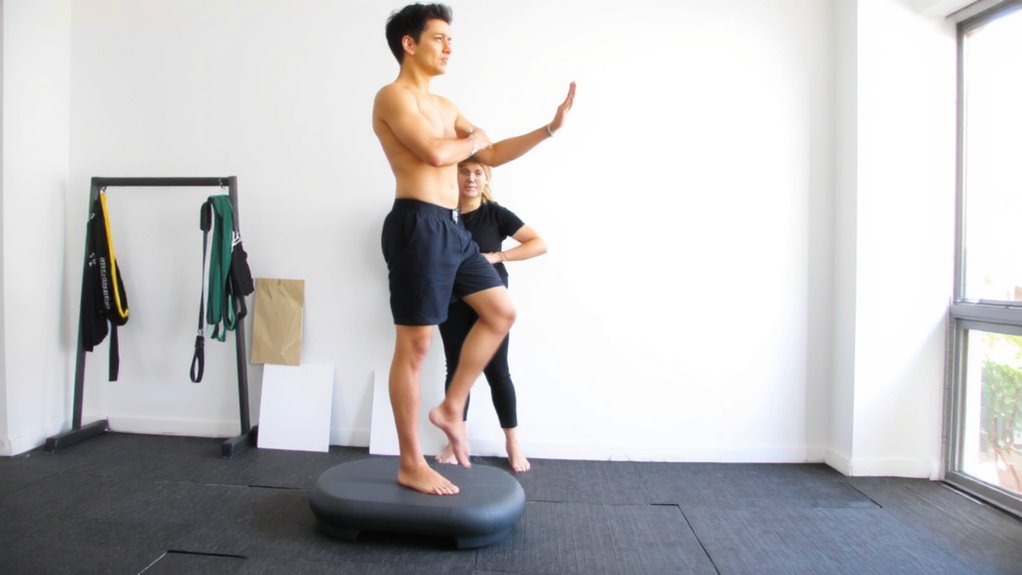
Why do some concussion patients recover faster when they incorporate balance training into their rehab routine? Because vestibular retraining directly addresses the root causes of dizziness and imbalance, common after head trauma. When you use a balance board, you challenge your inner ear, eyes, and brain to work together-improving coordination and reducing symptoms. This form of training enhances visual tracking, helping you maintain focus during movement, which is essential for daily tasks. It also decreases cognitive fatigue, since your brain doesn’t have to work as hard to stabilize your body. Over time, consistent use conditions your vestibular system to respond more efficiently. Fitness recovery tools like balance boards offer measurable, progressive resistance, making them practical for home and clinical settings. Their durability and simple design support long-term rehab, giving you control over your healing process with minimal equipment. They’re practical, low-cost, and backed by clinical observation.
How This Exercise Helps Your Brain Heal
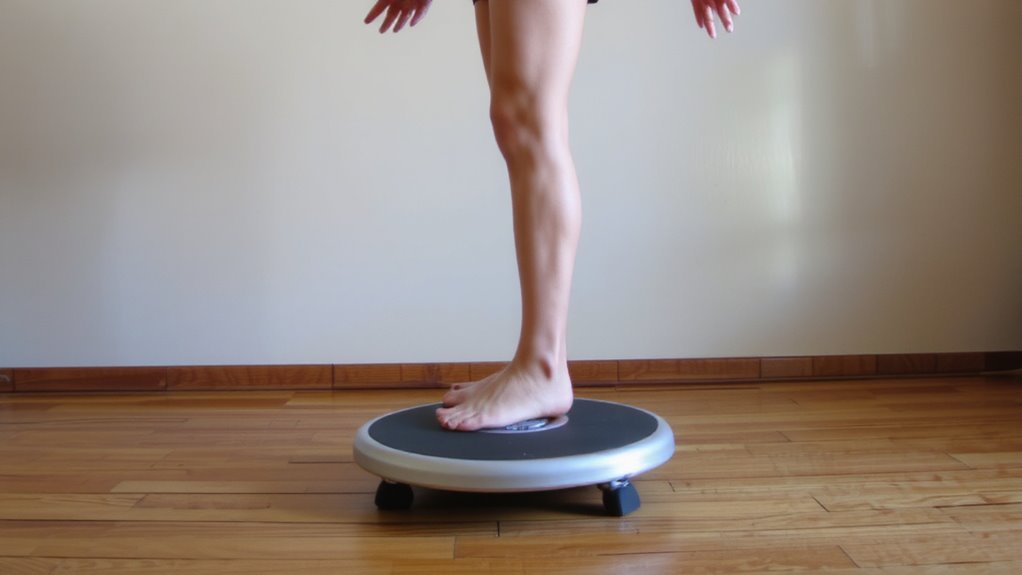
While your brain recovers from a concussion, using a balance board isn’t just about staying upright-it’s reshaping how your neural pathways process movement and spatial awareness. This exercise drives neural adaptation by forcing your brain to recalibrate balance responses under controlled instability. Each wobble activates the vestibular system, prompting sensory integration-the brain’s ability to merge input from your eyes, inner ear, and body position into coordinated movement. Over time, these micro-corrections strengthen communication between brain regions, rebuilding trust in motion. Single-limb stands with head turns add complexity, challenging your brain to handle conflicting signals-common during post-concussion dizziness. Unlike passive recovery, this active engagement accelerates healing, turning disorientation into adaptation. It’s not just fitness gear; it’s neuroplasticity training you can stand on. With consistent use, the balance board becomes a tool for retraining, not just testing, your recovery.
How to Set Up for Success: Gear, Space, and Readiness
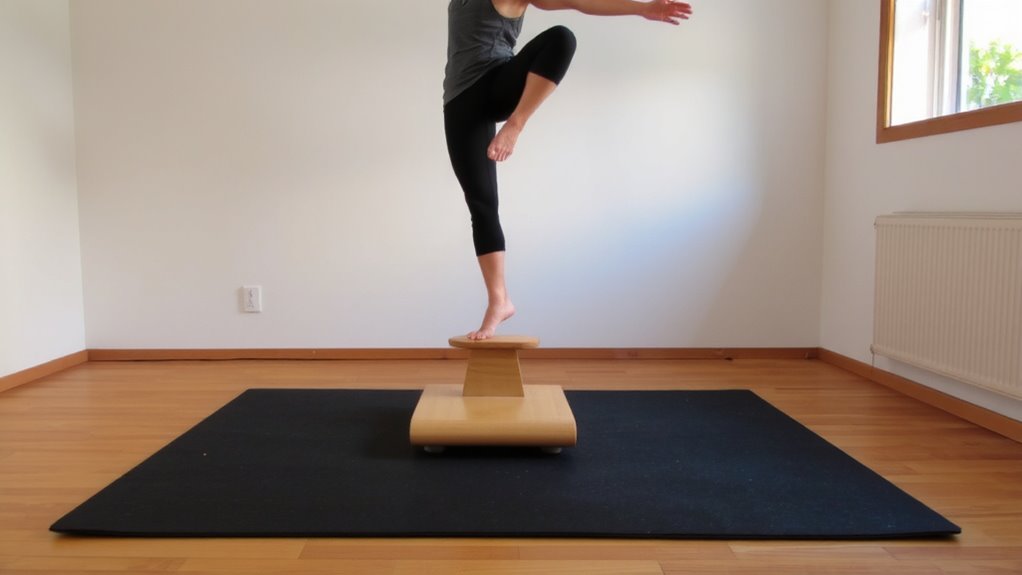
If you’re serious about using a balance board for vestibular rehab after a concussion, setting up the right environment makes all the difference in safety, consistency, and progress. Start with an equipment check: guarantee your board has a stable curve, non-slip surface, and appropriate resistance. Pair it with supportive, flat-soled shoes or go barefoot if surface grip allows. Environmental setup is just as critical-choose a clutter-free zone with nearby support (like a wall or counter) for stability. Good lighting and minimal visual distractions help maintain focus during drills. Here’s what to verify before each session:
| Item | Checkpoint | Why It Matters |
|---|---|---|
| Balance board | No cracks, smooth motion | Prevents uneven tilting or injury |
| Footwear | Non-slip soles or barefoot grip | Enhances control and proprioception |
| Nearby support | Wall, rail, or sturdy furniture | Provides safety during instability |
| Floor surface | Flat, dry, non-slip | Reduces fall risk |
| Distractions | Low noise, minimal movement | Supports cognitive focus post-concussion |
Add Head Turns to Boost Brain-Body Coordination
How much more challenging can a simple head turn make your balance workout? A lot-especially when you’re recovering from a concussion. Adding head turns to single-limb stands on a balance board forces your brain to manage competing signals, sharpening sensory integration as your vestibular, visual, and proprioceptive systems recalibrate. This isn’t just balance training-it’s neuro retraining. The controlled instability boosts neural plasticity, helping your brain adapt and rewire more efficiently. You’re not just standing still; you’re actively improving communication between your brain and body. The balance board’s responsiveness matters-too soft and it dampens feedback; too stiff and it increases fall risk. A mid-density foam or wobble board works best, offering enough movement to challenge coordination without compromising safety. Done consistently, this pairing of movement and cognitive load supports meaningful, measurable progress in post-concussion rehab, making it a smart, science-backed addition to your recovery toolkit.
How to Do the Exercise: Step by Step
Start with a single piece of equipment: a mid-density foam or wobble board that allows controlled movement without excessive instability. Stand on one leg with your knee slightly bent, placing your opposite foot just off the board. Engage your core stability to maintain balance-this isn’t just leg work; your entire midsection helps control subtle shifts. Keep arms relaxed at first, but as you progress, use arm strength to adjust balance by extending or lowering them slowly. Gently turn your head side to side, starting with small, controlled motions. Focus on keeping your gaze steady during movements to challenge the vestibular system effectively. Perform three to five sets of 30 seconds per side. Choose equipment with a non-slip surface for safety and durability. Consistent use on appropriate gear supports functional recovery while minimizing re-injury risk.
Advance When You’re Ready
Once you’ve built consistent control and can stabilize for the full duration without compensating, it’s time to level up-your vestibular system adapts quickly, and progress means challenging it with purpose. You’re not just improving balance; you’re driving vestibular adaptation through controlled instability. Introduce subtle changes: increase head-turn speed, close your eyes briefly, or shift surfaces. These tweaks demand greater neural plasticity, strengthening brain-body communication critical for fitness recovery after concussion. The right balance board-firm yet responsive-supports this progression without overstressing joints. It’s not about difficulty for its own sake; it’s about precision, consistency, and gradual load. When you advance, you’re not just testing stability-you’re retraining your nervous system. Thoughtful progress turns routine practice into meaningful rehabilitation. The gear should enable this evolution, offering grip, durability, and enough give to stimulate growth without risk. Move forward only when control is automatic-then challenge it all over again.
When to Pause or Stop the Exercise
Why keep going when your body’s already signaling it’s had enough? If you notice a symptom flare up-like headaches, nausea, or brain fog-during balance board single-limb stands, it’s time to stop. A dizziness increase with head turns isn’t just uncomfortable; it’s a sign your vestibular system is overwhelmed. Pushing through may delay recovery, not speed it up. These exercises should challenge you, not destabilize your equilibrium or worsen post-concussion symptoms. Pause immediately if your vision blurs or you feel unsteady without support. Use a wall or counter for safety, and resume only when symptoms settle. Monitoring your response closely guarantees the gear supports recovery, not setbacks. Smart progression means respecting your limits, not ignoring them. Fitness recovery tools like balance boards are effective, but only when used with awareness and restraint.
On a final note
You’ll find balance boards effective for vestibular retraining post-concussion, especially when adding head turns. They challenge coordination and encourage neural adaptation. Choose a stable, textured board with slight give to support safe practice. Consistent, graded use improves stability and reduces dizziness. Always progress slowly-symptom flare-ups mean you’re moving too fast. With proper form and gradual intensity, this exercise supports functional recovery and builds confidence in daily movement.