Progressive Nordic Curls for Advanced Athletes
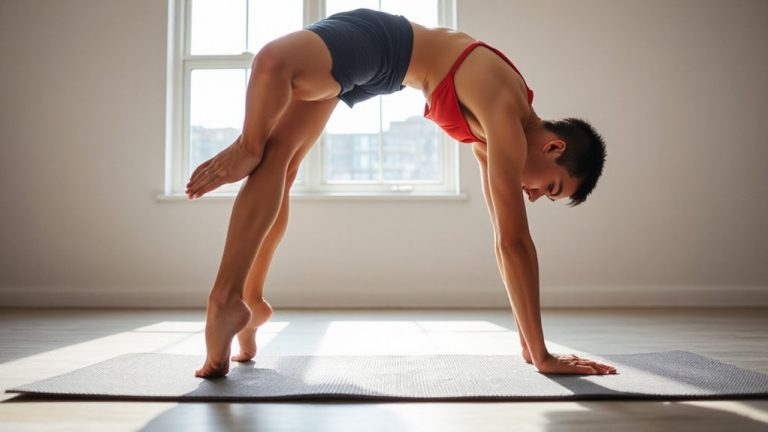
You’re maximizing hamstring strength and injury resilience with progressive Nordic curls, where controlled 3- to 5-second eccentrics build tissue tolerance at long muscle lengths. Using a weight vest or resistance bands increases overload safely, while deficit setups extend range for greater activation. Master each phase with strict form before advancing-partial reps help manage intensity. Progress to single-leg variations only when stability and control are rock-solid. You’ll gain more than strength; you’ll develop the kind of resilient, high-performance musculature few athletes achieve.
Notable Insights
- Progressive Nordic curls enhance eccentric hamstring strength, reducing injury risk and improving sprinting and jumping performance.
- A controlled 3- to 5-second descent maximizes eccentric activation and builds neuromuscular control and tissue resilience.
- Use resistance tools like weight vests, chains, or bands to progressively overload the movement safely and effectively.
- Deficit Nordic curls increase range of motion and eccentric stretch, boosting strength and hypertrophy at long muscle lengths.
- Single-leg variations improve unilateral strength, expose imbalances, and require core and hip stabilization for advanced progression.
Why Progressive Nordic Curls Build Stronger, Safer Hamstrings
Strength, control, and injury resilience-those are the hallmarks of well-trained hamstrings. With progressive Nordic curls, you’re not just building size; you’re enhancing muscle activation through the entire eccentric and concentric range. This movement forces your hamstrings to work maximally under load, particularly at long muscle lengths, where injuries often occur. That high level of activation translates directly into better joint stability around the knee and pelvis during sprinting, cutting, and lifting. Unlike traditional leg curls, progressive Nordic curls engage stabilizing musculature and promote neuromuscular coordination, which supports safer movement patterns. You’ll notice improved tissue tolerance and responsiveness, especially when you train with controlled progressions. The use of supportive gear-like knee pads with gel cushioning-can enhance comfort without reducing training effectiveness. These tools don’t replace proper form, but they do allow longer training sessions and better consistency-key factors in long-term hamstring development.
Control the Descent for Maximum Gain
While you might be tempted to rush through the lowering phase, controlling the descent in Nordic curls is where the real work begins. Eccentric focus isn’t just a technique-it’s the key to building serious hamstring strength and resilience. When you lower slowly, you amplify muscle activation, forcing the hamstrings to work harder under tension. This controlled lengthening improves neuromuscular coordination and reduces injury risk over time. Most athletes underestimate how much this phase boosts both power and endurance. You’re not just moving down-you’re teaching your muscles to resist, stabilize, and adapt. Aim for a 3- to 5-second descent, maintaining tightness from hips to heels. Proper form guarantees maximum gain without relying on momentum. Over time, this discipline translates to better sprinting, jumping, and cutting performance. The investment in slow, deliberate lowering pays off in strength, control, and long-term joint health-essential for advanced training longevity.
Add Weight: Use Bands and Weights for Progressive Overload
You’ve built a solid foundation by mastering the slow, controlled descent, and now it’s time to challenge your hamstrings further. Adding weighted resistance is essential for continued strength gains, especially once bodyweight no longer creates sufficient overload. You can use a weight vest, chains, or a dumbbell held against your chest to increase demand during the eccentric phase. Band assistance isn’t just for beginners-advanced athletes can use it to fine-tune tension, allowing stricter form under heavier loads. Below are common tools and their effectiveness:
| Tool | Resistance Type | Best For |
|---|---|---|
| Weight Vest | Weighted Resistance | Even load distribution |
| Resistance Bands | Band Assistance | Adjustable tension control |
| Dumbbell | Weighted Resistance | Accessibility |
| Chains | Weighted Resistance | Variable resistance |
| Hybrid Setup | Band + Weight | Progressive overload precision |
Choose gear that supports strict form and scalability.
Increase Range of Motion With Deficit Nordic Curls
By positioning your feet on an elevated surface like a weight plate or plyo box, deficit Nordic curls extend the range of motion beyond standard setup limitations, forcing your hamstrings to work harder through a longer eccentric stretch. This extended descent increases eccentric overload, a key driver for strength and hypertrophy gains in advanced athletes. You’ll notice greater muscle activation at the bottom range, where the hamstrings are fully lengthened and under maximum tension. The added challenge demands control, making deficits ideal for refining technique while amplifying adaptation. Use stable, non-slip equipment to maintain safety during execution-consistent contact with the surface guarantees proper form throughout each rep. Though demanding, the deficit variation is efficient, requiring minimal gear while delivering high neuromuscular demand. It bridges the gap between standard Nordic curls and more advanced progressions without compromising joint integrity. For those ready, it’s a smart, measurable way to boost hamstring resilience and performance.
Progress to Single-Leg Nordic Curls
You’re ready to take Nordic curls to their most demanding form when you shift to single-leg variations. This progression sharply increases the load on the working hamstring, making it a true test of unilateral strength and control. By removing the support of the second leg, you’re not just doubling the demand-you’re exposing imbalances most miss in bilateral movements. Single leg balance becomes essential, requiring engagement from the hip stabilizers and core to maintain proper alignment throughout the descent. These curls highlight weaknesses and build resilient, functional strength essential for advanced athletes. Unlike standard Nordic curls, this version forces each leg to work independently, promoting even development and reducing compensation. While challenging, mastering single-leg Nordic curls delivers significant ROI in injury resilience and athletic performance. Don’t rush it-your form, control, and consistency matter more than speed. When executed correctly, it’s one of the most effective hamstring builders available.
Program Nordic Curls for Strength Gains
Strength gains with Nordic curls hinge on intelligent programming-consistency, volume, and intensity must align to challenge the hamstrings without tipping into overreach. You’ll maximize strength by using progressive overload: start with 3 sets of 6 reps and gradually increase volume or difficulty every 2–3 weeks. Tempo variations are essential-try slowing the eccentric phase to 4–5 seconds to amplify time under tension and stimulate hypertrophy. Pair Nordic curls with complementary movements like glute-ham raises or Romanian deadlifts through strategic exercise pairing, ensuring synergistic fatigue without compromising form. This method boosts neuromuscular coordination and overall posterior chain development. Use a padded ankle cuff or secure foot anchor for stability, reducing joint strain while maintaining proper alignment. Track progress by rep quality and control, not just numbers. With disciplined programming, you’ll build robust, functional hamstring strength that translates directly to explosive performance.
Reduce Injury Risk and Improve Sprinting With Eccentric Strength
Let’s be honest-most people overlook eccentric strength until an injury forces them to pay attention, but when it comes to sprinting speed and hamstring resilience, controlling the lengthening phase of a movement is where real gains hide. Nordic curls train this phase intensely, boosting hamstring elasticity so muscles absorb force efficiently during high-speed running. You’re not just building strength-you’re teaching your body to decelerate safely, reducing strain on tendons and joints. That’s critical for sprinters, whose stride depends on rapid stretch-shortening cycles. Eccentric loading also sharpens neuromuscular coordination, improving the timing between your nervous system and muscle activation. This means faster, more controlled movements and less risk of misfires that lead to pulls or tears. Progressive Nordic curls, especially with resistance bands or isokinetic devices, allow measured overload while preserving joint integrity. Used consistently, they become a cornerstone of injury-resistant performance, merging strength, control, and elasticity where sprinting demands it most.
On a final note
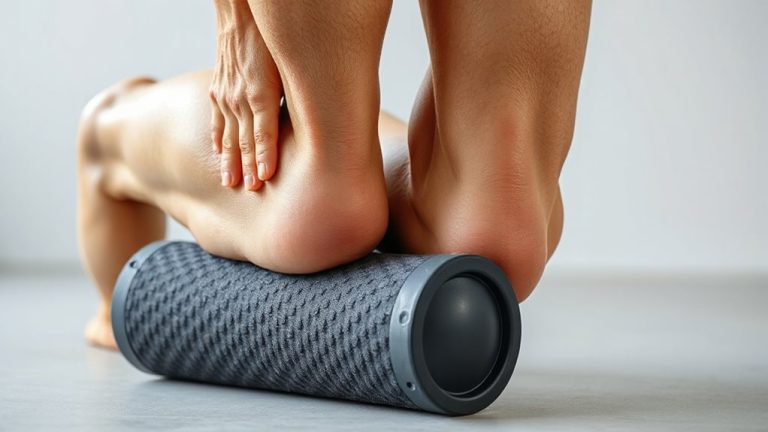
You’ve seen how progressive Nordic curls build resilient, powerful hamstrings through controlled eccentrics and overload. They’re not just exercises-they’re injury shields and sprint boosters. Paired with quality recovery gear like compression sleeves and foam rollers, gains cement faster. These tools don’t replace work, but they support adaptation. For advanced athletes, consistency with proper equipment turns effort into lasting performance. It’s smart progression, grounded in biomechanics and recovery science.