Functional Single-Leg Balance Drills With Medicine Ball Throws
You boost balance and functional strength with single-leg medicine ball throws by combining instability and dynamic movement. These drills sharpen coordination, enhance neuromuscular control, and build real-world stability through explosive, sport-specific actions. Proper form-like bracing your core and maintaining neutral alignment-maximizes effectiveness while reducing injury risk. They’re practical for rehab, fitness, and athletic performance. Mastering these movements reveals deeper insights into power transfer and joint control.
Notable Insights
- Perform standing rotational throws to boost core engagement and unilateral stability during dynamic movements.
- Use overhead backward slams to develop explosive power and precise single-leg landing control.
- Execute lateral reach tosses to improve hip mobility and frontal plane balance on one leg.
- Apply chest pass throws from a single-leg stance to sharpen coordination and reactive stabilization.
- Incorporate diagonal medicine ball throws to integrate full-body mechanics and enhance stabilizer muscle activation.
Why Single-Leg Medicine Ball Throws Improve Balance
Why do certain balance drills stand out in functional training? Because they challenge your body in ways that mimic real movement-like single-leg medicine ball throws. You’re not just standing still; you’re moving dynamically while maintaining control. This forces your muscles and nervous system to communicate more efficiently, leading to neural adaptation over time. Your brain learns to activate the right muscles faster, improving coordination and reaction. Plus, the unstable stance heightens proprioceptive feedback, so you become more aware of your body’s position in space. This kind of drill doesn’t just test balance-it builds it. Medicine balls, especially those with textured grips and variable weights, make the training more effective by adding resistance without compromising form. Consistent use leads to noticeable stability gains, especially on uneven terrain or during athletic maneuvers. It’s practical, measurable progress.
Top 5 Medicine Ball Throws for Single-Leg Stability
Balance isn’t just a skill-it’s a dynamic process that improves with smart, targeted drills like single-leg medicine ball throws. You’ll boost stability while developing rotational power, essential for sports performance and daily movement. Start with the standing rotational throw, which enhances core engagement and unilateral control. The overhead backward slam builds explosive strength while refining landing precision. Add the lateral reach toss to challenge hip mobility and frontal plane stability-ideal for athleticism and injury prevention. The chest pass throw (from a single-leg stance) sharpens coordination, while the diagonal throw integrates full-body mechanics. Each drill demands focus, forcing your stabilizers to adapt. Medicine balls with textured grips and durable rubber construction hold up well under repeated throws, supporting long-term use. These five movements, when performed consistently, build resilient, functional balance.
How to Nail Your Form on Single-Leg Throws
How do you guarantee your single-leg medicine ball throws actually improve stability instead of reinforcing poor movement patterns? Focus on core engagement and proper alignment from the start. Stand on one leg with a slight bend in the knee, keeping your hips level and your pelvis neutral-this prevents excessive swaying or rotation. Engage your core as if bracing for a light punch; this stabilizes your torso during the throw. Maintain a straight line from head to supporting heel, avoiding hip hike or trunk shift. Your free leg should act as a dynamic counterbalance, not a passive dead weight. Keep your eyes forward to enhance proprioception. Use a medicine ball with a grip-friendly texture and appropriate weight-too heavy disrupts form, too light minimizes gains. Execute each throw with control, emphasizing quality over power. Proper technique guarantees neuromuscular efficiency and reduces injury risk, making each rep truly functional.
How to Progress Single-Leg Throws Safely
Where do you go once single-leg medicine ball throws feel controlled and stable? You progress-but wisely. Increasing the progression speed too fast risks form breakdown and strain, so advance in small, deliberate increments. Start by slightly increasing throw intensity or adding a soft bounce before the catch. Only move forward when balance remains steady and joint alignment stays neutral. Your safety thresholds aren’t fixed; they depend on fatigue, surface, and footwear. Test them cautiously, especially on unstable surfaces or with heavier balls. Monitoring these limits guarantees gains without setbacks. Think of progression as a balance between challenge and control-each step should feel *almost* too easy. Pushing hard feels productive, but slow, consistent advancement delivers lasting results. Stick to measured increases, respect joint feedback, and let stability guide your pace. This approach builds functional strength without trading safety for speed.
Common Mistakes in Single-Leg Balance Training
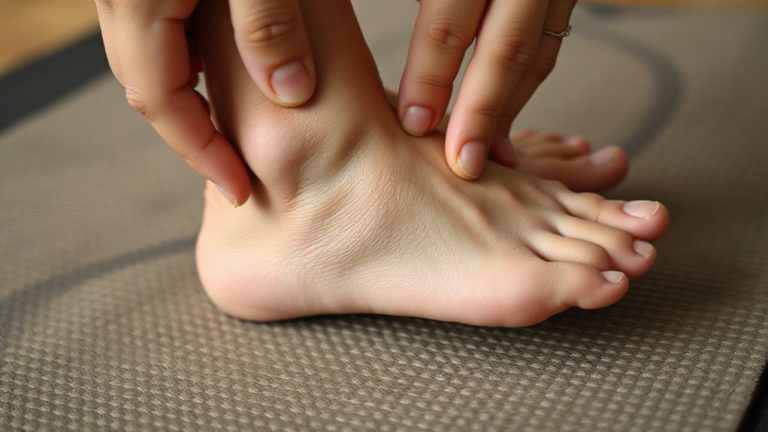
While focusing on building stability through single-leg balance drills, it’s easy to overlook subtle errors that undermine progress and increase injury risk. You might let your ankle collapse inward, a sign of overpronation issues that strain ligaments and reduce force transfer. This faulty alignment often stems from undetected muscle imbalances, particularly between the glutes and hip adductors, leading to compensatory patterns. Avoid locking your knee or hiking your hip to find balance-these tricks cheat the exercise’s purpose. Instead, engage your core and distribute weight evenly across the foot’s three points: heel, big toe, and little toe. Poor posture or rushing reps worsens instability and limits neuromuscular adaptation. Remember, consistent form trumps duration or load. Correcting these flaws guarantees drills enhance coordination and joint integrity, not reinforce dysfunction. Over time, mindful execution reduces asymmetries and supports resilient movement, whether you’re rehabbing or training for performance.
When to Use These Drills: Rehab, Fitness & Sport
Though your goals may differ, whether you’re recovering from an injury, building general fitness, or sharpening athletic performance, single-leg balance drills with medicine ball throws offer targeted benefits across all stages. In rehab, these drills improve proprioception and joint stability, speeding recovery while reinforcing injury prevention. For general fitness, they challenge core control and coordination, making everyday movement safer and more efficient. Athletes use them to boost performance enhancement through explosive power and unilateral strength under dynamic conditions. The medicine ball’s weight adds resistance, training muscles to stabilize during sudden force changes-critical in sports with cutting and pivoting. Because these drills integrate balance, strength, and timing, they’re more functional than static exercises. When paired with quality recovery gear-like supportive footwear or foam rollers-adaptation accelerates. You won’t just regain function; you’ll build resilience that protects against setbacks and elevates physical readiness.
Sample Workout: Single-Leg Throws in Action
How do you turn balance training into a dynamic, full-body challenge? Try single-leg medicine ball throws. Stand on one leg and perform front, side, and rotational throws against a wall or to a partner. Each throw demands core activation to stabilize your torso while maintaining posture. It’s not just strength-it’s control. The unstable stance creates a sharp proprioception challenge, sharpening joint feedback and coordination. Start with a light ball-4 to 6 pounds-and 3 sets of 8 reps per side. Focus on sticking the landing post-throw. Progress by increasing weight slightly or using a rebounder for continuous motion. This drill bridges rehab and performance, especially with durable, grippy medicine balls that resist slipping. A well-made ball guarantees consistency, reducing injury risk during high-repetition sets. This workout builds functional strength efficiently.
On a final note
You’ll see clear gains in stability and coordination from single-leg medicine ball throws, especially when form and progression are prioritized. These drills bridge rehab and performance, challenging proprioception while building functional strength. Used correctly, they’re more effective than static holds. Pair them with quality recovery gear-like foam rollers and compression wear-to maintain joint health and muscle resilience. It’s practical, scalable training that delivers real-world results across fitness levels and athletic demands.