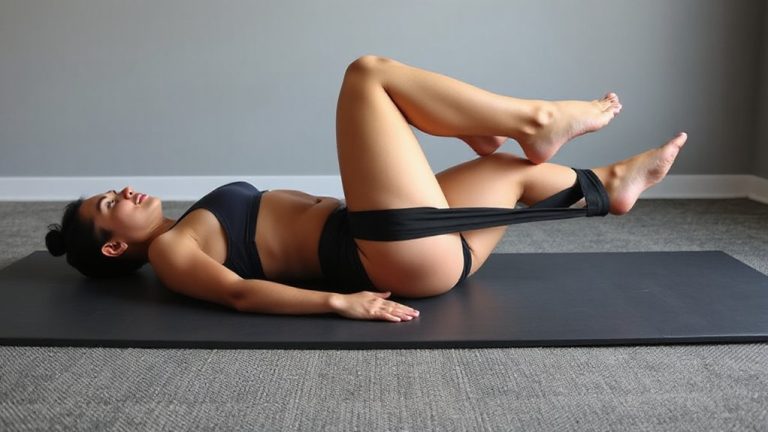
Isometric Adductor Press in Frog Position to Improve Groin Stability
You activate your adductors effectively in the frog position by pressing your knees toward the floor while resisting with your hands, creating an isometric contraction that builds groin stability. This exercise targets the inner thigh muscles precisely, especially the adductor longus and magnus, improving pelvis alignment and reducing injury risk. Perform it 2–3 times weekly with proper form-knees above ankles, feet together, spine neutral-to avoid strain. Consistent execution enhances functional strength, especially when integrated after warm-ups or alongside stability drills-discover how to refine your technique and maximize results.
Notable Insights
- The frog position activates inner thigh muscles, particularly adductor longus and magnus, enhancing groin stability through sustained isometric contraction.
- Performing the isometric adductor press involves pressing knees down while resisting with hands to strengthen adductors without joint movement.
- Proper form includes neutral spine, stable pelvis, and feet together to maximize effectiveness and reduce injury risk during the exercise.
- Weak adductors contribute to hip misalignment and groin strain, making this exercise essential for balanced pelvic and lower limb stability.
- Perform 2–3 times weekly with 48–72 hours recovery to optimize tissue adaptation and avoid overuse while building long-term groin strength.
How the Frog Position Activates Your Adductors
While your body remains still in the frog position, your adductors are far from idle-this static posture creates sustained tension that specifically targets the inner thigh muscles, especially the adductor longus and magnus. You’ll notice significant muscle engagement, as these muscles work continuously to resist the natural tendency of your legs to fall outward. Proper limb alignment-knees bent, soles of the feet together, and hips externally rotated-ensures maximal activation and reduces strain on the joints. This position mimics therapeutic stances used in fitness recovery, where controlled isometric holds rebuild strength without joint movement. Quality fitness gear, like supportive mats, enhances comfort during extended holds, promoting consistency. Unlike dynamic exercises, this static stance emphasizes endurance and neuromuscular control, making it valuable for rehab and performance prep. When performed correctly, the frog position isn’t just stable-it’s strategic, offering functional benefits that translate to better groin stability and injury resilience over time.
Perform the Isometric Adductor Press: Step by Step
The isometric adductor press in the frog position starts with precise setup-lie on your back, bring your knees out to the sides, and press the soles of your feet together, allowing your thighs to rest comfortably open. Maintain proper leg alignment by keeping your knees above ankles, spine neutral, and pelvis stable. Initiate muscle engagement by gently pressing your knees toward the floor, resisting with your hands placed just outside your legs-don’t let them move. This static contraction targets the adductors effectively without joint strain. Hold the press for 5–10 seconds, breathe steadily, and release slowly. Repeat 3–5 times. You’ll feel tension along the inner thighs, signaling proper activation. Consistent form guarantees functional strength gains and enhances groin stability. Equipment like supportive yoga mats improves comfort during floor exercises, making regular practice more sustainable.
Avoid These Common Form Mistakes
Even when you’re keen to build inner thigh strength, letting form slide during the isometric adductor press can undercut your progress and invite unnecessary strain. One of the most frequent issues is improper alignment-letting your knees drift outward too far or allowing your lower back to拱 (arch) excessively compromises joint integrity. Keep your spine neutral and feet firmly planted, knees bent at roughly 90 degrees, to maintain ideal muscle engagement. Applying excessive pressure by pushing too hard against resistance can also backfire, especially if your body isn’t ready; this spikes joint load without boosting strength gains. Instead, focus on steady, controlled contraction-aim for 70–80% effort initially. Avoid bouncing or jerking motions, which reduce effectiveness and increase injury risk. Staying mindful of positioning and pressure guarantees safer, more productive sessions, especially when using fitness gear like resistance bands or stability balls that amplify form flaws if misused.
Why Groin Strength Prevents Pain and Injury
Your groin’s strength isn’t just about power-it’s a key player in stabilizing your pelvis and protecting your hips during dynamic movement. Weak adductors can disrupt hip alignment, increasing strain on ligaments and joints, especially during running, cutting, or jumping. When your groin muscles are strong, they enhance force distribution across the pelvis and thighs, reducing localized stress that often leads to strains or chronic pain. Proper force distribution also supports symmetrical movement patterns, lowering the risk of overuse injuries. You’ll notice improved control and resilience, particularly in sports requiring sudden direction changes. Maintaining groin strength isn’t just preventive-it’s foundational for efficient, pain-free motion. Over time, imbalance or weakness here can silently compromise performance and recovery, making targeted work like the adductor press not optional, but essential for long-term joint health and functional stability.
How Often to Do the Adductor Press
Typically, performing the isometric adductor press in frog position two to three times per week delivers ideal results without overloading the tissue, especially when recovery between sessions is prioritized. This training frequency allows sufficient stimulus for strength gains while minimizing fatigue accumulation. You’ll see best outcomes when you align the exercise with perfect timing-placing it after warm-ups or alongside other stability drills, not at the end of exhausting workouts. Avoid daily sessions, as tendons and hip adductors need recovery to adapt. If you’re using fitness gear like resistance bands or stability balls, monitor intensity closely to prevent overuse. Training consistency matters more than volume, and spacing sessions 48 to 72 hours apart enhances tissue repair. You’ll maintain progress without risking strain, particularly if you listen to feedback from your body. Ultimately, this approach balances stimulus and recovery effectively.
On a final note
You’ve seen how the isometric adductor press in frog position builds groin stability. When performed correctly, it activates inner thigh muscles effectively, aiding injury prevention and recovery. This exercise, though simple, demands attention to form to guarantee maximum muscle engagement. Used consistently, it supports joint integrity and functional strength. Fitness recovery isn’t just about rest-it’s about targeted, mindful movements that complement quality gear and promote long-term physical resilience.