Yoga Mudras Used Alongside Seated Meditation to Channel Energy Flow
You channel energy flow during seated meditation by forming precise hand gestures that guide prana through your body’s subtle pathways. Mudras like Gyan, Prana, and Dhyana align finger positions to enhance concentration, life force, and inner stillness. When combined with steady breath and proper alignment, they amplify neural feedback and energetic balance. Slight errors in form or tension can reduce effectiveness, so consistency and mindful execution matter. You’ll find even brief daily practice strengthens focus-and there’s more to discover about optimizing each gesture for your goals.
Notable Insights
- Gyan Mudra enhances concentration by joining thumb and index finger to stimulate knowledge and energy flow.
- Prana Mudra boosts vitality by connecting thumb, ring, and little fingers to activate life force energy.
- Shuni Mudra promotes patience and responsibility through contact between middle finger and thumb during seated practice.
- Prithvi Mudra increases physical strength and stability by linking thumb and ring finger to ground energy.
- Dhyana Mudra supports deep meditation by resting hands palm-up in the lap to encourage inner stillness and energy flow.
What Are Yoga Mudras and How Do They Work?
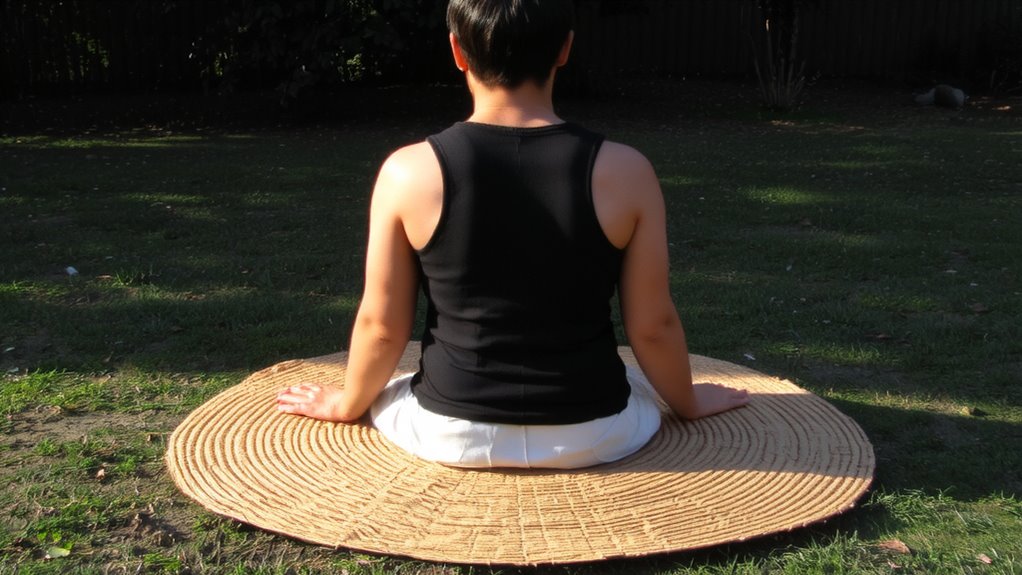
Balance, both physical and energetic, lies at the heart of yoga mudras-the subtle hand gestures that serve as bridges between your body and mind. You’ve likely seen them in meditation, where simple hand positions create focused shifts in awareness. Mudra origins trace back to ancient Indian texts, where they emerged in spiritual practices to influence energy flow and mental clarity. Each gesture carries hand symbolism tied to the five elements or specific psychological states-like Gyan mudra, which boosts knowledge by connecting thumb and index finger. While not fitness gear, mudras function like internal tools, requiring no equipment yet delivering measurable calm and focus over time. Their design is precise: fingertip alignment, hand symmetry, and sustained hold matter for effectiveness. With consistent use, they aid mental recovery much like quality recovery gear supports physical repair-only here, the mechanism is subtle, not mechanical.
How Mudras Channel Prana in Meditation
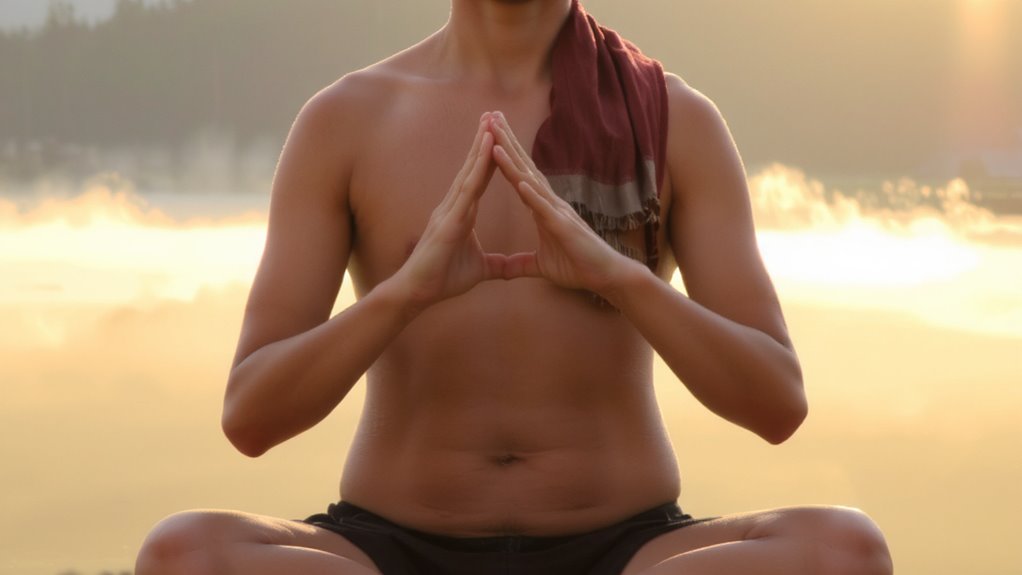
When you hold a mudra during meditation, you’re not just folding your fingers into a shape-you’re creating a circuit for prana, the essential life force in yogic tradition, to move more efficiently through your energy channels. The precise finger placements establish energy loops that redirect internal flow, helping stabilize your mental state. This subtle loop system works in tandem with nerve stimulation, as each fingertip connects to specific neural pathways, amplifying the body’s bioelectric feedback. You’ll often notice a slight warmth or tingling-signs that circulation and energy are intensifying. Though the gestures seem simple, their impact on focus and energetic balance is measurable over time. Unlike fitness recovery gear that targets muscles mechanically, mudras operate on a bioenergetic level, offering a quieter, yet potent form of regulation. With consistent use, these hand seals refine your meditation’s depth, making them a practical tool for inner tuning.
Top 5 Mudras for Seated Meditation
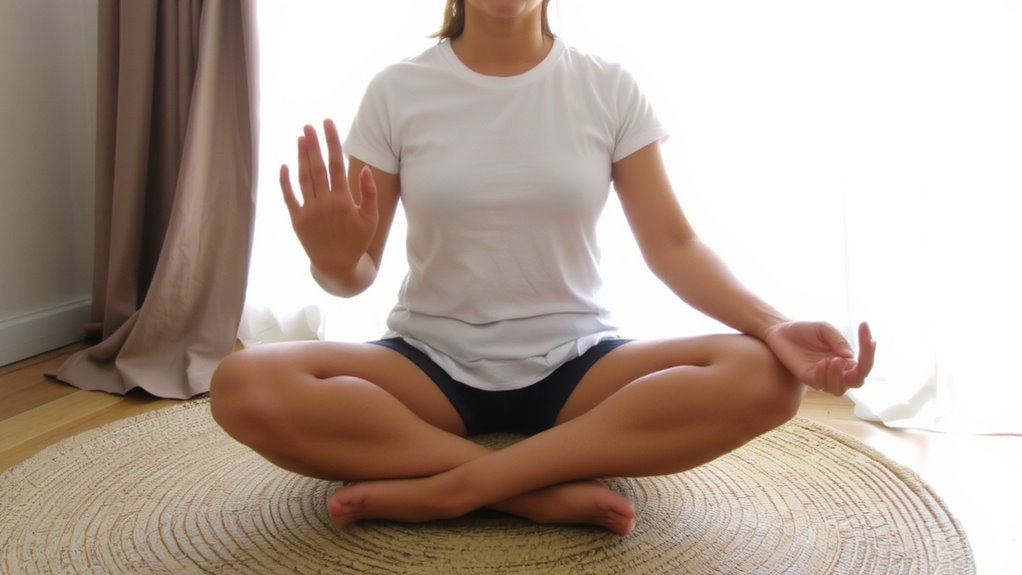
You’ll find these five mudras especially effective for seated meditation, each designed to influence your pranic flow and mental clarity in distinct ways. Gyan Mudra, with thumb and index fingertip touching, boosts concentration and reflects knowledge in Mudra symbolism. Prana Mudra, where thumb, ring, and little fingers connect, enhances vitality through precise hand alignment. Shuni Mudra, linking middle finger and thumb, promotes patience and responsibility. Prithvi Mudra, joining thumb and ring finger, increases stability and strength. Dhyana Mudra, hands resting palm-up in the lap, encourages deep stillness and inner flow. Each gesture carries intentional Mudra symbolism, guiding energy with subtle yet powerful effects. Proper hand alignment guarantees ideal conduction of prana, making your practice more effective. You’ll notice improvements in focus and equanimity when applying these consistently. These mudras aren’t just symbolic-they’re practical tools grounded in energetic physiology, essential for sustained seated practice.
Pair Mudras With Breath for Deeper Focus
Combining mudras with conscious breathing sharpens meditation far more than hand positions alone. When you practice breath synchronization, you create a rhythm that stabilizes attention and deepens mental clarity. Holding a mudra while inhaling and exhaling slowly amplifies internal awareness, turning abstract focus into a tangible experience. This coordination isn’t just symbolic-it supports real energy redirection, guiding prana along preferred pathways to clear blockages. You’ll notice improved concentration within minutes, especially when breath stays smooth and intentional. Think of it as tuning a circuit: the mudra sets the channel, and breath fine-tunes the signal. Over time, this pairing trains your nervous system to enter meditative states more readily. Unlike passive sitting, this method demands engagement, yielding faster results. Whether you’re recovering from mental fatigue or enhancing daily mindfulness, integrating breath with hand gestures boosts effectiveness. Proper technique matters-keep your spine aligned, shoulders relaxed, and breath steady for best outcomes.
Choose the Right Mudra for Your Goal
Why settle for a one-size-fits-all approach when your meditation goals are unique? Your intention setting matters, and pairing it with the right mudra enhances energy alignment. Think of mudras as precision tools-each channels prana differently based on your focus. Whether you’re cultivating calm, clarity, or confidence, there’s a gesture that supports it.
| Goal | Mudra | Effect |
|---|---|---|
| Mental Clarity | Gyan Mudra | Boosts focus, calms the mind |
| Emotional Balance | Shuni Mudra | Encourages patience, stability |
| Energy Activation | Surya Mudra | Increases inner warmth, drive |
| Inner Peace | Chin Mudra | Aids grounding, spiritual connection |
Choosing wisely deepens your practice. You’re not just sitting-you’re aligning energy with purpose. Let your hands reflect your intention setting, and watch your meditation transform through intentional energy alignment.
Avoid These Common Mudra Mistakes
Ever wonder why your meditation isn’t yielding the expected benefits, despite holding the correct hand gesture? The issue might lie in common mudra mistakes you’re unknowingly making. Incorrect finger alignment disrupts energy flow, weakening the mudra’s intended effect. Even slight deviations-like a bent thumb or mispositioned index finger-can diminish results. You should maintain precise contact points between specific fingertips, as subtle shifts alter energetic circuitry. Another frequent problem is excessive hand tension. Clenching fingers too tightly restricts circulation and introduces physical stress, counteracting meditation’s calming purpose. Your hands should be relaxed yet mindful, with gentle pressure-think of holding a feather, not gripping a tool. Awareness of these details enhances effectiveness, ensuring your practice supports, rather than hinders, energy channeling. Correct form, not force, drives benefit.
Build a Daily Mudra Routine for Clarity
While consistency matters in any wellness practice, building a daily mudra routine for clarity hinges more on intention than repetition alone-you’re not just forming shapes with your hands, you’re directing subtle energy to quiet mental noise. Start with morning consistency: dedicate five minutes upon waking to Gyan Mudra-thumb and index fingertip touching-to sharpen focus and set mental tone. Follow with Shuni Mudra, adding the middle finger, to cultivate patience and discipline. Hold each for five to seven minutes, seated comfortably with spine aligned, breath steady. This subtle intention amplifies the mudras’ neurological and energetic effects, creating a foundation for calmer cognition throughout the day. Unlike physical fitness gear that supports recovery through compression or resistance, mudras work internally, requiring no equipment-just awareness. Their efficacy grows not from duration, but mindfulness. With daily application, you’ll notice improved concentration, emotional balance, and mental resilience, making this routine a crucial, equipment-free pillar of holistic fitness recovery.
On a final note
You’ll find that pairing mudras with seated meditation sharpens focus and directs prana effectively. These hand postures, when held with awareness and breath, enhance energy flow and mental clarity. While not a substitute for proper fitness recovery or quality gear, they complement routines by promoting internal balance. Choose mudras mindfully, avoid tension, and integrate them daily. Their subtle power lies in consistency, not intensity-making them a practical, accessible tool for sustained well-being.