Cervical Mobility Drills With Isometric Rotation Holds
You maintain cervical mobility and build strength with isometric rotation holds by gently pressing your hand against your cheek while contracting the neck muscles without moving the head. These drills enhance joint stability, improve posture, and reduce stiffness over time. Paired with controlled mobility exercises, they support long-term spinal health and movement efficiency-especially if done 3–4 times weekly. You’re likely missing key form cues that could optimize results.
Notable Insights
- Perform isometric rotation holds by gently rotating your head against hand resistance without actual movement.
- Maintain a neutral spine and avoid tilting or jutting forward during isometric cervical exercises.
- Hold contractions for 5–10 seconds, completing 2–3 sets per side with full recovery.
- Combine isometric holds with active mobility drills like slow rotations and side bends for best results.
- Train 3–4 times weekly to improve neck strength, stability, and long-term joint health.
Why Cervical Mobility Prevents Neck Pain
While it might seem minor compared to larger joint movements, maintaining good cervical mobility actually plays a critical role in preventing neck pain over time. You’re likely unaware of how restricted neck motion contributes to chronic stiffness and discomfort. Without regular movement, the cervical spine can develop joint degeneration, especially as discs lose hydration and flexibility. This wear increases your risk of nerve compression, which can radiate pain, numbness, or weakness into your shoulders and arms. By preserving mobility, you help guarantee proper alignment, reduce uneven load distribution, and support natural spinal mechanics. Think of it like maintaining a hinge-without lubrication and motion, it stiffens and wears down. Mobility drills keep tissues supple and neural pathways clear, minimizing long-term issues. Simply put, moving your neck well today helps avoid degenerative changes and nerve-related complications later, making it an essential, if overlooked, part of fitness recovery and musculoskeletal health.
How Isometrics Build Long-Term Neck Strength

Strength lies not just in motion, but in resistance-especially when it comes to building resilient neck musculature. When you perform isometric holds, you’re training your neck without movement, which boosts muscle endurance and joint stability over time. These static contractions activate deep stabilizing muscles often missed in dynamic exercises. Because there’s no range-of-motion stress, you can safely load the tissues, stimulating strength gains with minimal risk. Over weeks, this builds structural tolerance, helping the neck withstand daily strain or athletic impact. Isometrics also enhance neuromuscular control, reinforcing proper alignment during everyday postures. You’ll notice less fatigue during prolonged sitting or physical work-your neck simply holds up better. Unlike bulky recovery gear, isometric drills require no equipment, making them efficient for long-term consistency. They’re not flashy, but they deliver durable strength, reducing wear and supporting lasting joint stability. Some users also incorporate a neck decompression device to complement their strength routine between sessions.
How to Do Isometric Neck Rotations (Perfect Form)

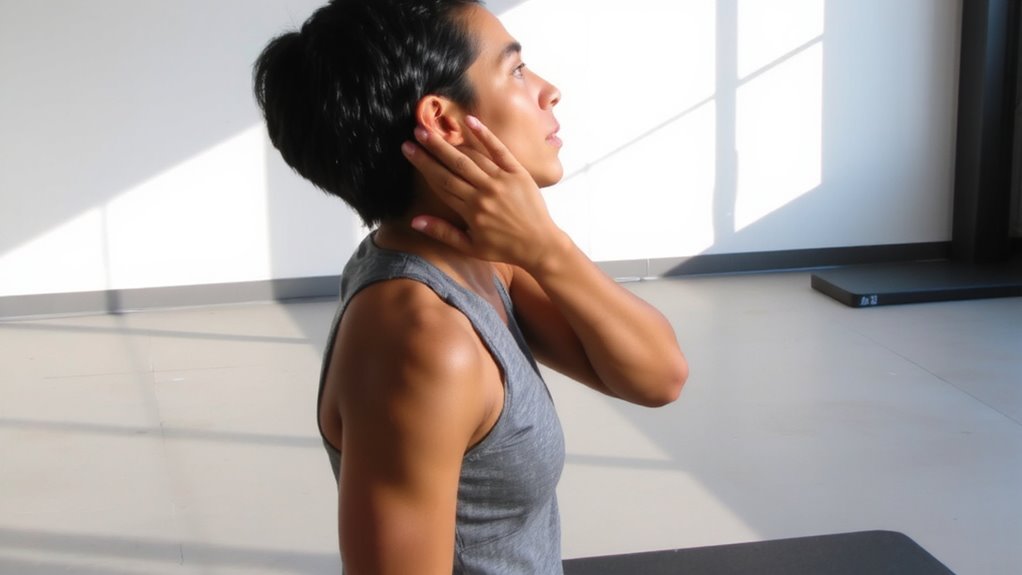
An effective isometric neck rotation starts with proper positioning: sit or stand tall, shoulders relaxed, and spine in neutral alignment. Gently rotate your head to one side, then place your hand on your cheek to apply light resistance-don’t move your head forward or tilt it; maintain strict neck alignment. Push into your hand for 5–10 seconds, relax, then repeat on the opposite side. This promotes muscle balance and enhances cervical control. Perform 2–3 sets per side, focusing on tension quality and form precision.
| Phase | Key Cue |
|---|---|
| Setup | Neutral spine, relaxed shoulders |
| Engagement | Apply resistance without movement |
| Duration | Hold contraction 5–10 seconds |
| Recovery | Rest 15–20 seconds between sides |
Consistency improves long-term stability, and clean execution beats resistance intensity.
3 Cervical Mobility Drills You Can Do Today
What if better neck movement was just a few deliberate drills away? You can start today with simple yet effective cervical mobility exercises that blend neck stretches and range training to improve posture and reduce stiffness. Begin with slow chin tucks to activate deep neck flexors, then progress to controlled side bends and rotations-each movement performed with awareness, not force. Incorporate isometric holds mid-motion to build stability within newly gained ranges. These drills aren’t flashy, but they’re functional, especially if you spend hours at a desk or in front of screens. Used consistently, they support long-term joint health and neuromuscular control. Unlike passive neck stretches, this approach emphasizes active control, making it a smarter fit for sustainable range training. The right technique beats fancy gear-consistency and form deliver results, not expensive accessories. For added support during recovery, consider pairing these drills with one of the best cervical pillows for neck pain relief.
How Often to Do Neck Isometrics for Results
You’ve already started building better neck control with those mobility drills, but adding isometrics can take your progress further-if you time it right. For real gains, aim to train your neck isometrics 3 to 4 times per week. This frequency optimization helps stimulate tissue adaptation without overstressing stabilizing muscles. Each session should last about 5–7 minutes, focusing on slow, controlled holds-think 10 to 15 seconds per side-with full recovery between contractions. Duration consistency is key; skipping days or rushing reps undermines cumulative strength and neuromuscular control. Think of it like rehab-grade resistance work: steady inputs yield measurable outputs. Over time, this builds resilient cervical musculature, especially useful if you sit long hours or engage in contact sports. Pairing this routine with proper form guarantees progressive loading without compensation. You won’t need fancy gear-just body resistance and intent. Stick with it, and within weeks, you’ll notice sharper control and reduced stiffness during movement. For added convenience and targeted relief between sessions, consider using a neck massager to support muscle recovery and relaxation.
Avoid These 4 Neck Exercise Mistakes
Why do some people feel worse after neck exercises when they’re supposed to improve mobility and strength? It’s often due to these four common mistakes. First, you’re pushing too hard-excessive force leads to neck strain. Isometrics build strength, but overloading causes more harm than good. Second, poor alignment during movement compromises spinal safety. Keep your head in neutral, not tilted or jutting forward. Third, holding your breath increases tension; remember to breathe steadily. Finally, skipping warm-ups leaves muscles stiff and vulnerable. These errors undermine recovery and long-term gains. You might think grinding through pain equals progress, but that mindset risks injury. Smart technique beats intensity. Correct form guarantees drills enhance function without strain. Fix these mistakes, and you’ll feel the difference-safer, stronger, more controlled.
Use Posture Checks to Reinforce Neck Mobility
While mobility drills strengthen and loosen neck tissues, they won’t stick if your posture resets to slouching the moment you stop exercising-so integrating posture checks throughout the day reinforces the gains you’re working hard to build. Every hour, pause and assess your spinal alignment: ears over shoulders, chin slightly tucked, back flat. This isn’t just about looking alert-it guarantees muscle symmetry and reduces uneven strain from prolonged forward head posture. Poor alignment disrupts neuromuscular feedback, making mobility work less effective over time. Use reminders, like phone alerts or workstation sticky notes, to prompt checks. You’ll notice improved control and reduced tension when posture and mobility training work together. Consistent posture monitoring enhances long-term joint function and supports recovery by preventing compensatory patterns. Think of posture checks as maintenance, not correction-they preserve the integrity of your mobility training, guaranteeing your neck moves efficiently and without restriction throughout the day.
On a final note
You’ll build resilience by pairing cervical mobility drills with isometric rotation holds, enhancing both range of motion and muscular endurance. These exercises stabilize neck musculature, reducing strain from poor posture or repetitive motion. When performed consistently and with correct form, they support long-term joint health and injury prevention. Though minimalist, the approach delivers measurable gains, especially when integrated into daily routines. Pair them with posture checks and quality recovery gear-like supportive pillows or ergonomic chairs-for ideal, sustained results.