Comparing Cold Water Immersion and Hot Tub Soaks for Psychological Rejuvenation in High-Performance Sports
You recover faster mentally when you align therapy with your goals. Cold water immersion sharpens focus, spikes alertness, and lifts mood through norepinephrine surges-ideal post-training. Hot tub soaks relax your nervous system, enhance sleep onset, and ease mental fatigue via parasympathetic activation. Timing matters: cold boosts daytime performance; heat aids overnight restoration. Your gear choice-chillers, insulated tubs, adjustable jets-shapes effectiveness. Match method to mindset, and you’ll fine-tune resilience in ways that go deeper than muscle.
Notable Insights
- Cold water immersion boosts mental clarity and alertness through sympathetic activation and norepinephrine release.
- Hot tub soaks enhance psychological relaxation by promoting parasympathetic dominance and reducing mental fatigue.
- Cold therapy is ideal post-training for an acute mental reset and heightened focus.
- Evening hot tub use improves sleep onset and emotional regulation via thermoregulatory and aromatherapy effects.
- Recovery choice should align with circadian rhythm, training phase, and specific psychological performance goals.
What Athletes Need to Know About Mental Recovery
Recovery isn’t just measured in muscle repair-it extends into the quiet space where focus resets and mental fatigue lifts, a dimension often overlooked in high-performance routines. You need mindful breathing to activate the parasympathetic nervous system, slowing your heart rate and supporting emotional regulation after intense training. Unlike passive rest, deliberate recovery includes techniques that stabilize mood and sharpen mental clarity. Cold immersion and hot tubs both influence this process, but through differing physiological pathways. While cold exposure demands mental resilience, heat encourages relaxation essential for nervous system balance. Mindful breathing during these sessions enhances their psychological benefit, helping you shift from stress to recovery mode efficiently. Fitness recovery gear isn’t just about physical adaptation-it’s a tool for training emotional regulation. When used intentionally, these methods contribute to long-term mental stamina, focus, and performance consistency in high-pressure environments.
How Cold Plunges Boost Alertness and Mood
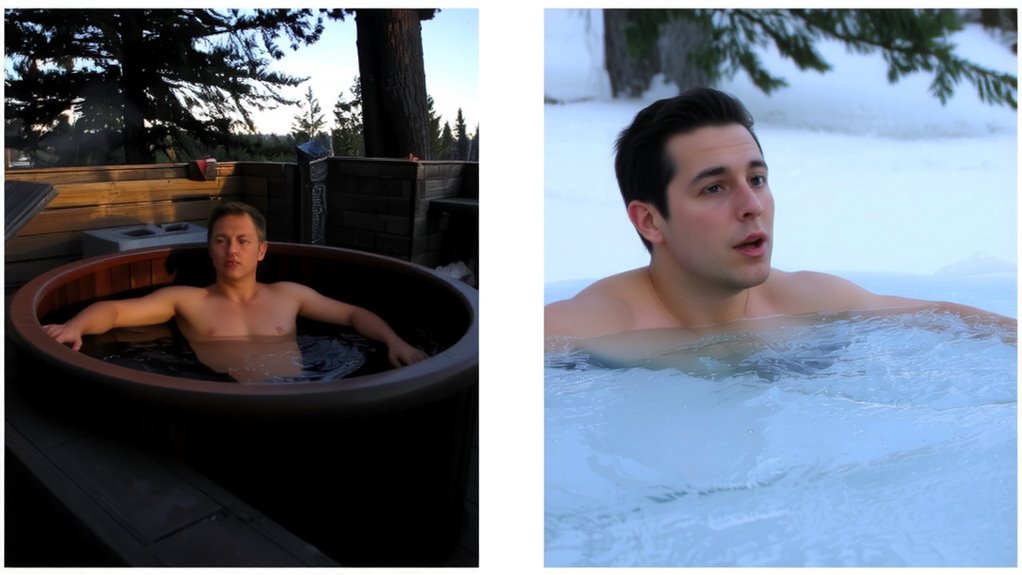
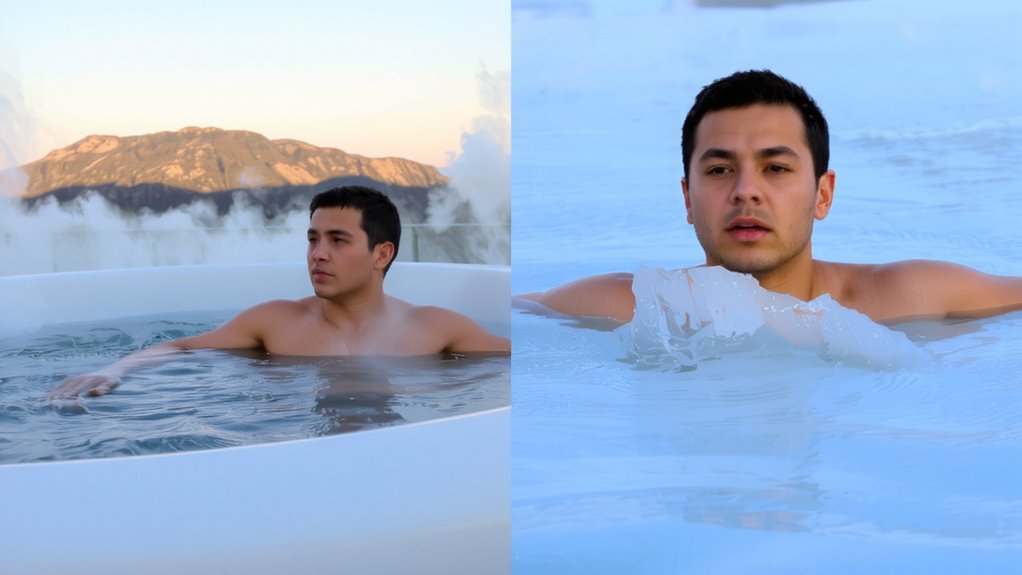
Why do so many elite athletes step straight from ice baths into high-focus training sessions? The answer lies in the immediate physiological response cold immersions trigger. When you’re hit with that initial ice shock, your body activates the sympathetic nervous system, spiking adrenaline and sharpening mental clarity. This isn’t just discomfort for the sake of it-your brain responds with increased alertness, helping you feel more present and energized. Studies show this reaction also prompts a measurable mood lift, thanks to a surge in norepinephrine and endorphins. Unlike passive recovery methods, cold immersion is an active reset, especially effective when recovery windows are tight. Modern immersion tanks, with precise temperature control and easy maintenance, make it feasible for regular use. While intense, the payoff in focus and emotional tone is why many high performers trust this method. It’s not about suffering-it’s about harnessing a biological response for sharper mindset and resilience.
Why Hot Tubs Improve Relaxation and Sleep
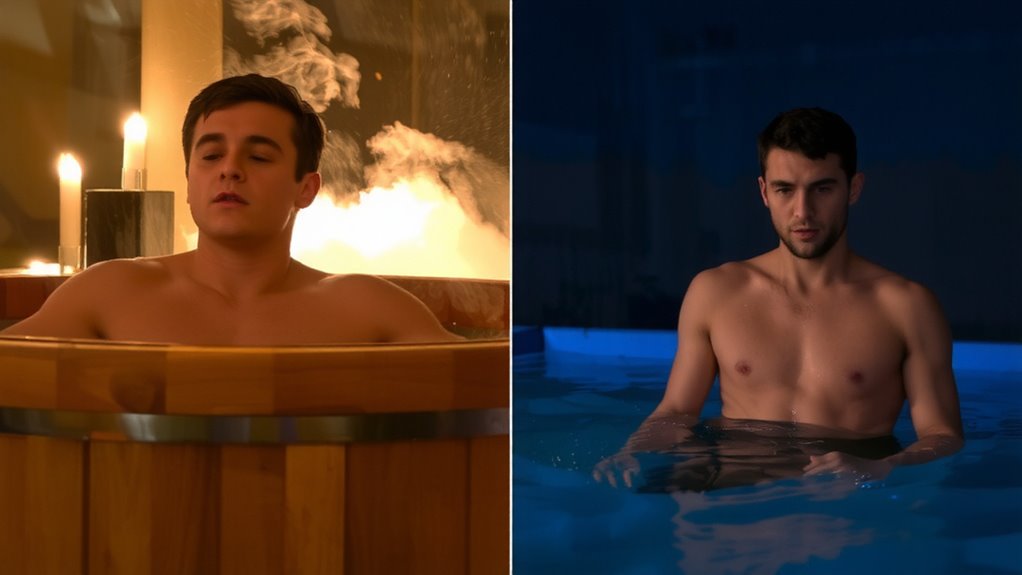
A well-designed hot tub isn’t just a luxury-it’s a tool that can meaningfully support your recovery when used strategically. The warm water, typically maintained between 98°F and 104°F, relaxes tense muscles and dilates blood vessels, improving circulation. You’ll notice how the hydrotherapy jets target pressure points, easing physical strain. Pair that with aromatherapy benefits-like lavender or eucalyptus scents-and you’re not just unwinding physically; you’re calming your nervous system. This environment promotes circadian rhythm support by helping regulate melatonin production, especially when used consistently before bedtime. The rise and subsequent drop in body temperature mimic natural sleep cues, aiding deeper rest. High-performance models with adjustable jets and efficient insulation enhance this effect, making them practical for serious athletes. Used correctly, your hot tub becomes less about indulgence and more about intentional recovery-backed by physiology and smart design.
When to Use Cold vs. Hot Therapy
You’ve just unwound in the warm embrace of your hot tub, letting the jets loosen tight muscles and your mind settle into relaxation-benefits well-supported by hydrotherapy science. Now consider when to shift gears. Cold water immersion right after intense training helps reduce inflammation and supports acute recovery, making timing considerations key. Delayed soreness often responds better to heat, so later use promotes blood flow and eases stiffness. For ideal recovery synergy, some athletes alternate therapies-cold first, then heat-but this demands careful scheduling to avoid counterproductive stress. Morning cold soaks can sharpen focus, while evening hot tub sessions enhance parasympathetic activation, aiding sleep. You’re not just choosing temperature; you’re aligning therapy with your body’s physiological rhythms. Strategic sequencing improves outcomes more than isolated use. Both tools have merit, but their value peaks when applied according to workout intensity, circadian patterns, and recovery goals-ensuring you maximize mental clarity and physical readiness without overburdening your system.
Matching Recovery Methods to Your Mental and Physical Goals
How do your recovery choices align with what you’re trying to achieve-faster muscle repair, sharper mental focus, or deeper rest? If you’re after alertness and reduced inflammation, cold water immersion sharpens focus through shock-induced breath control and increases circulation. It’s ideal post-intense training, though prolonged exposure demands caution. For mental unwinding and physical relaxation, hot tub soaks offer warmth that eases muscle stiffness while promoting sensory deprivation when used in dim, quiet settings-this supports parasympathetic activation and deeper recovery. Your gear matters: insulated tubs retain heat efficiently, while chillers maintain appropriate cold temperatures. Cold dips suit high-frequency training blocks needing rapid turnover; hot soaks fit taper periods emphasizing restoration. Neither method is universally superior-they serve different goals. By aligning your choice with your current physical and psychological targets, you maximize both recovery quality and performance sustainability.
On a final note
You should choose cold water immersion to sharpen focus and elevate mood after intense training, as it increases norepinephrine and alertness. For unwinding and improving sleep, hot tub soaks reduce cortisol and ease nervous system tension. Both methods support mental recovery, but their effects differ. Match your therapy to your goals-cold for activation, heat for relaxation. Quality gear with reliable temperature control guarantees effectiveness and consistency, making proper maintenance essential for long-term use and performance benefits.