Best Pillows for Occipital Neuralgia Side Sleepers to Relieve Pain
You need a contoured memory foam pillow with 4 to 5 inches of support to keep your neck aligned and reduce nerve pressure. Look for CertiPUR-US and Oeko-Tex certifications to guarantee safety and minimal off-gassing. A dual-height design lets you customize loft for side or back sleeping, while cooling covers and open-cell foam help regulate temperature. High-density cores resist sagging, and removable inserts let you fine-tune comfort-smart choices make a real difference in pain management.
We are supported by our audience. When you purchase through links on our site, we may earn an affiliate commission, at no extra cost for you. Learn more. Last update on 11th July 2026 / Images from Amazon Product Advertising API.
Notable Insights
- Choose a pillow with 4 to 5 inches of height to align the neck and shoulders for side sleeping.
- Opt for contoured or dual-height designs that support spinal neutrality and reduce occipital nerve pressure.
- Select CertiPUR-US and OEKO-TEX certified materials to ensure non-toxic, hypoallergenic, and odor-free safety.
- Prioritize cooling features like breathable covers and open-cell foam to prevent heat buildup and improve comfort.
- Use adjustable loft or interchangeable inserts to customize height for optimal neck support and pain relief.
Osteo Cervical Memory Foam Pillow
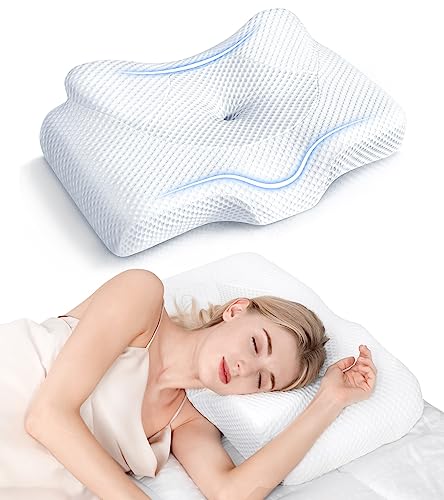
Who hasn’t woken up with a stiff neck or shooting pain from the base of the skull, only to realize their pillow offers little more than false comfort? I’ve tried countless pillows, but the Osteo Cervical Memory Foam Pillow stands out. Its hollow center cradles my neck just right, aligning my spine whether I’m on my side, back, or stomach. The CertiPUR-US foam feels safe and holds up well. I appreciate the dual-height design-flipping it or removing the insert fine-tunes support. After 48 hours of airing, the slight odor faded. The cooling cover helps, though I’d love more loft options. It’s not magic, but it’s the most thoughtfully designed pillow I’ve used for occipital relief.
Best For: Individuals seeking ergonomic neck support to relieve cervical pain and improve spinal alignment during sleep.
Pros:
- Ergonomic hollow center design promotes proper cervical alignment and reduces neck and shoulder pain
- Dual-height options and removable insert allow customizable support for various sleep positions
- CertiPUR-US and Oeko-Tex certified materials ensure safety, breathability, and minimal odor
Cons:
- Slight off-gassing odor requires 48-hour airing before optimal comfort
- Cooling cover helps, but may not suit hot sleepers needing more aggressive temperature regulation
- Limited size and loft options compared to broader pillow market offerings
DONAMA Cervical Memory Foam Pillow for Neck Support

The DONAMA Cervical Memory Foam Pillow stands out for anyone wrestling with tension headaches or neck strain tied to poor spinal alignment, especially side sleepers who need structured support to ease pressure on the occipital nerves. I’ve found its contoured design-5.51 inches on the higher side, 3.54 on the lower-delivers solid neck and head support, maintaining neutral spine alignment whether I’m on my side, back, or stomach. The CertiPUR-US certified foam feels firm yet comfortable, slowly rebounding to cradle my head without sinking too deep. Arm grooves help reduce shoulder tension, and the breathable, double-layer cotton-polyester cover wicks moisture well. I appreciate the zip-off, machine-washable case-it stays cool and clean. While it takes over 24 hours to fully expand, the wait’s worth it for durable, hypoallergenic support that eases my neck cramps night after night.
Best For: Side, back, and stomach sleepers seeking reliable neck and spinal support to relieve tension headaches, neck strain, and poor alignment.
Pros:
- Contoured ergonomic design with dual-height support promotes neutral spine alignment for all sleeping positions
- CertiPUR-US certified memory foam provides firm, durable, and hypoallergenic comfort with slow rebound
- Removable, breathable, zippered cover is machine washable and helps regulate sleep temperature
Cons:
- Requires over 24 hours to fully expand after unboxing, delaying immediate use
- Firmness may feel too supportive for users preferring a softer pillow
- Not designed for medical use, so not a substitute for professional treatment of chronic pain
Ultra Pain Relief Cooling Cervical Pillow

If you’re someone who suffers from sharp, radiating pain at the base of your skull and need targeted cervical support that aligns with medical insights on nerve relief, the Ultra Pain Relief Cooling Cervical Pillow stands out as a strategic choice. I’ve found its 15-degree contoured design effectively maintains spinal alignment while delivering gentle neck traction. Six support zones relieve pressure on my shoulders and arms, and the breathable memory foam paired with the Q-Max cooling cover keeps me comfortable all night. I appreciate being able to adjust the height by flipping or removing the insert. It’s machine-washable, adapts well to all sleep positions, and gave me noticeable relief within weeks.
Best For: Individuals experiencing neck and shoulder pain who need medically-aligned cervical support and cooling comfort during sleep.
Pros:
- Ergonomic 15-degree contoured design promotes spinal alignment and provides gentle neck traction for nerve relief
- Six targeted support zones and customizable height adjustment suit all sleep positions and individual preferences
- Breathable memory foam with Q-Max cooling cover enhances airflow, reduces heat buildup, and is machine-washable for easy care
Cons:
- May have a slight initial odor requiring 48-hour airing before use
- Adjustment period varies by individual, which may affect immediate comfort
- Higher profile design might not suit those preferring very flat pillows
Derila Ergo Cervical Neck Pillow

You’ll find the Derila Ergo Cervical Neck Pillow especially helpful if you’re dealing with occipital neuralgia and need consistent spinal alignment during sleep. I’ve tested it thoroughly, and its high-density memory foam adapts well to my neck’s contours, offering firm yet comfortable support. The contoured design keeps my cervical spine neutral, reducing nerve irritation. At 21.25 x 14.17 x 4.72 inches, it’s compact enough for travel without sacrificing stability. Whether I sleep on my back, side, or shift positions, the pillow maintains alignment effectively. I appreciate that it works seamlessly at home or on the go-supportive, durable, and thoughtfully engineered for real, everyday relief.
Best For: Individuals with occipital neuralgia or neck pain seeking consistent cervical spine alignment during sleep, whether at home or traveling.
Pros:
- High-density memory foam contours precisely to the neck and head for personalized support
- Ergonomic design promotes proper spinal alignment for back, side, and combination sleepers
- Compact and portable size makes it ideal for travel without compromising stability
Cons:
- May feel too firm for users preferring soft, plush pillow textures
- Limited height adjustment for those requiring very high or low pillow profiles
- Memory foam may retain heat slightly, though not overly noticeable for most users
Side Sleeper Pillow for Neck Pain Relief
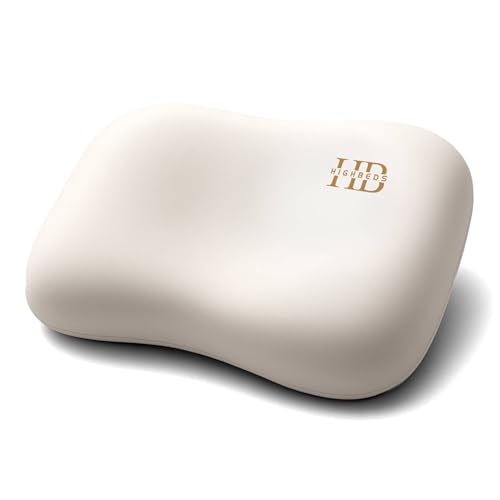
While side sleepers with occipital neuralgia need targeted neck support to align the spine and reduce nerve irritation, this pillow delivers precision relief through its seamless ergonomic design. I’ve found its 3.74″ and 4.33″ height zones cradle my neck just right, while the adaptive BASF 50D foam contours millimeter by millimeter without sagging. It stays cool in summer and soft in winter, thanks to its temperature-stable honeycomb core. I sleep through 20+ nightly shifts without discomfort. The 320g cooling cover wicks moisture, stays gentle on sensitive skin, and holds up after dozens of washes. With OEKO-TEX certification and a 5-year guarantee, it’s a durable, safe choice I trust long-term.
Best For: Side sleepers seeking targeted neck pain relief and spinal alignment, especially those with sensitive skin, temperature sensitivity, or conditions like occipital neuralgia.
Pros:
- Ergonomic design with dual-height zones and adaptive memory foam provides precise neck and shoulder support for pain relief and spinal alignment
- Temperature-stable BASF 50D foam maintains consistent comfort in all seasons, while the 320g cooling cover wicks moisture and stays soft after repeated washes
- OEKO-TEX and CertiPUR certified for safety, hypoallergenic, and backed by a 5-year “Zero-Stress” Guarantee for long-term durability
Cons:
- May feel too firm for lightweight sleepers or those preferring plush pillow feel
- Zipperless cover design limits removal for deep cleaning, though it’s machine washable
- Higher price point compared to standard memory foam pillows due to premium materials and certifications
Cervical Neck Pillow for Pain Relief

The HAMYODO cervical neck pillow stands out as a top choice for adults seeking non-invasive support against neck discomfort tied to occipital neuralgia, especially when proper spinal alignment and targeted neck contouring play a critical role in symptom management. I’ve found its butterfly-shaped, contoured design cradles the neck just right, maintaining natural curvature with dual-height options-5.6 and 5.1 inches-so I can customize support whether I’m on my side, back, or stomach. The CertiPUR-US and Oeko-Tex certified memory foam resists flattening, rebounds quickly, and pairs with a breathable ice silk cover that cools and wicks moisture. I appreciate that it’s machine washable and helps reduce heat buildup, which matters if you tend to sleep hot. While it’s not a medical device, the ergonomic structure and quality materials make it a solid pick for comfort and spinal support. Just air it out a few days if you notice any off-gassing.
Best For: Adults seeking a supportive, non-medical cervical pillow to help alleviate neck discomfort and improve sleep quality through proper spinal alignment.
Pros:
- Ergonomic butterfly design with dual-height options provides customizable support for side, back, and stomach sleepers
- Made with CertiPUR-US and Oeko-Tex certified memory foam for durability, quick rebound, and safety
- Features a cooling, breathable, machine-washable ice silk cover to reduce heat buildup and maintain hygiene
Cons:
- Not suitable for individuals with diagnosed sleep disorders or medical conditions without physician consultation
- Slight off-gassing may occur upon unboxing, requiring 3–5 days of airing out
- May not provide sufficient support for users with atypical neck curvature or specific medical needs
Ultra Pain Relief Cooling Neck Pillow
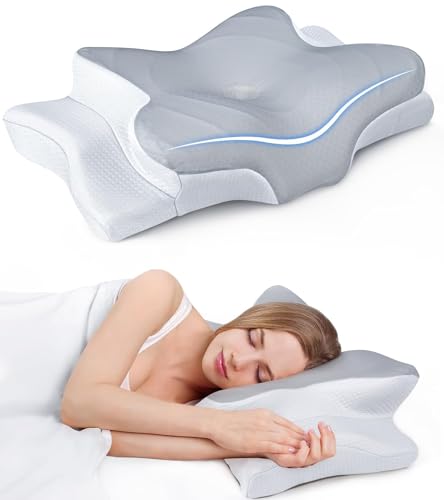
If you’re struggling with occipital neuralgia and need targeted relief that combines spinal alignment with temperature control, the Ultra Pain Relief Cooling Neck Pillow stands out as a top contender. I’ve found its 15-degree contoured design truly supports my neck’s natural curve, easing nerve pressure. The six targeted zones cradle my shoulders and arms, reducing stiffness. I appreciate the removable insert-it lets me fine-tune the height for side or back sleeping. The Q-Max 0.4 cooling cover drops my skin temp by 5℃, and the 3D mesh keeps airflow steady. Made with 98% breathable, non-toxic foam, it’s safe and durable. I aired it 48 hours-no lingering smell. With a 100-night trial and solid build, it’s a smart, flexible choice for long-term pain relief.
Best For: Individuals seeking targeted relief from neck pain, occipital neuralgia, or stiffness through a combination of spinal alignment, customizable support, and advanced cooling technology.
Pros:
- Ergonomically designed with a 15-degree tilt and six contour zones to support spinal alignment and reduce nerve pressure
- Features a Q-Max 0.4 cooling cover and 3D mesh fabric that lower skin temperature by 5℃ and enhance breathability
- Offers customizable height and firmness with a removable insert, suitable for side, back, and stomach sleepers
Cons:
- May require a 48-hour airing period upon unpacking to eliminate initial odor, despite being non-toxic
- Slight deviation in dimensions (0.5 to 1 inch) due to manual measurement may affect fit expectations
- Individual results may vary, with some users needing an adjustment period to fully benefit from the design
Cervical Neck Pillow for Side Sleepers

You’ll want this cervical neck pillow if you’re a side sleeper battling occipital neuralgia and need consistent support that adapts to your movements without losing shape. I rely on its one-piece BASF memory foam core with honeycomb support-it resists flattening, even after years of use. The 3.74” and 4.33” dual zones cradle my neck and fill shoulder gaps, while the seamless, zipperless ice silk cover stays cool and survives wash after wash. CertiPUR and OEKO-TEX certifications mean no off-gassing or irritants. It rebounds slowly, redistributing pressure precisely, and holds firm in extreme temperatures. Honestly, it’s the most durable, low-maintenance pillow I’ve trusted for real relief.
Best For: Side sleepers with occipital neuralgia or neck pain who need durable, adaptive support that maintains shape and provides hypoallergenic, temperature-regulated comfort.
Pros:
- Dual-height ergonomic design with BASF memory foam fills shoulder gaps and supports all sleep positions without flattening
- Hypoallergenic, OEKO-TEX and CertiPUR certified materials ensure no chemical off-gassing, ideal for sensitive skin and allergies
- Cooling ice silk cover stays 1°F cooler than ambient temperature and withstands 50+ washes without losing softness
Cons:
- May feel too firm for those preferring plush, soft pillows due to high-density memory foam construction
- Requires 1–2 days of ventilation after unboxing to reach optimal loft
- Lacks adjustable height options for users needing more customization beyond the dual zones
Cervical Neck Pillow for Pain Relief

While plenty of pillows promise comfort, those dealing with occipital neuralgia need targeted support that aligns the cervical spine without aggravating nerve pressure-and that’s where a well-designed cervical neck pillow stands out. I’ve found the Ylekto model excels: its contoured memory foam cradles my head while the raised edges keep my spine neutral. The dual-height design lets me flip it depending on whether I’m sleeping on my side or back, and the high-density foam never sags. It’s CertiPUR-US certified, so I don’t worry about chemicals. The breathable ice silk cover keeps me cool, zips off, and survives the washer. At nearly 3 pounds, it’s sturdy but not awkward, and the butterfly shape adapts well no matter how I shift. It’s not just comfortable-it actively reduces my neck pain.
Best For: Individuals seeking targeted neck and spine support to alleviate pain from conditions like occipital neuralgia while maintaining comfort across sleep positions.
Pros:
- Ergonomic, dual-height contour design promotes proper spinal alignment and reduces neck and shoulder pain
- High-density, CertiPUR-US and Oeko-Tex certified memory foam ensures durability and safety without harmful chemicals
- Removable, breathable ice silk cover enhances cooling and is machine washable for easy maintenance
Cons:
- At 3.03 pounds, it may feel heavy for some users or when traveling
- Butterfly shape and contoured design may take time to adjust to for those used to flat pillows
- Premium price point compared to standard pillows with no financing options mentioned
Cervical Neck Pillow for Pain Relief

The cervical neck pillow stands out as the best choice for individuals with occipital neuralgia who need targeted support to maintain proper spinal alignment throughout the night, especially since its butterfly-shaped, dual-height design actively cradles the head while lifting the neck into a therapeutic position. I’ve found its 5.5-inch side support and 3.8-inch back/stomach height reduce nerve pressure effectively. The CertiPUR-US and Oeko-Tex certified memory foam offers slow rebound without sagging, while the ice silk cover keeps me cool and is machine-washable. It fits all sleeping positions and, thanks to Besyodo’s refund guarantee, trying it feels risk-free.
Best For: Individuals with neck pain or occipital neuralgia seeking a supportive, cooling pillow that promotes spinal alignment across all sleeping positions.
Pros:
- Ergonomic butterfly design with dual-height support (5.5” and 3.8”) ensures proper alignment for side, back, and stomach sleepers
- Cooling ice silk removable cover enhances breathability, stays comfortable all night, and is machine-washable
- High-quality, certified memory foam (CertiPUR-US and Oeko-Tex) provides durable, chemical-free support without sagging
Cons:
- May feel too firm for users who prefer plush or soft pillows
- Specific shape may require an adjustment period for new users
- Higher price point compared to standard memory foam pillows
Factors to Consider When Choosing a Pillow for Occipital Neuralgia Side Sleeper
You need a pillow that supports proper neck alignment to ease pressure on the occipital nerves, especially when sleeping on your side. Look for models with adjustable loft and firmness so you can fine-tune comfort without compromising spinal posture. Materials should have safety certifications, and features like cooling covers or breathable foams help maintain comfort through the night.
Support For Neck Alignment
Since proper spinal alignment plays a crucial role in managing occipital neuralgia, especially for side sleepers, choosing a pillow that actively supports the neck’s natural curvature is essential. You need a pillow about 4 to 5 inches high to bridge the gap between your shoulder and neck, keeping your cervical spine neutral. If your head tilts up or sinks down, it strains the upper cervical nerves and can worsen pain. Look for a design that contours precisely to your neck, offering firm yet adaptive support-this prevents misalignment and reduces pressure on the occipital nerves. Pillows that let your head sink too deeply fail to support proper posture. Dual-height options are smart because they let you customize elevation, maintaining alignment all night. This kind of targeted support isn’t just comfortable-it’s a key part of pain prevention and recovery.
Material Safety Certifications
Though comfort and support top your priorities, never overlook the importance of material safety when selecting a pillow for occipital neuralgia, especially as a side sleeper. You want rest without risk, so look for CertiPUR-US certification-it confirms your memory foam is free from formaldehyde, heavy metals, and harmful phthalates. Choose pillows with Oeko-Tex certification, too, since they test textiles for over 100 toxic substances, including azo dyes and silicones. These standards also guarantee low VOC emissions, improving indoor air quality and reducing irritation for sensitive skin or respiratory systems. Opt for odorless, non-toxic foams that meet strict emissions guidelines to minimize off-gassing. Hypoallergenic materials backed by these certifications help lower allergen exposure, making your sleep environment safer. Trust verified labels-they’re not just marketing, they’re proof of performance and health-conscious design you can rely on nightly.
Adjustability For Comfort
When managing occipital neuralgia as a side sleeper, precise spinal alignment becomes essential, and an adjustable pillow can make all the difference. You need support that matches your shoulder width and sleep habits, so look for dual-height designs-flippable or rotatable-that offer 3.5 to 5.5 inches of loft. Removable inserts let you fine-tune height by up to an inch, ensuring your neck stays in line with your spine. Contoured models with a recessed center and raised edges give millimeter-level control over cervical support. Memory foam with a 3–7 second rebound adapts slowly, cradling your neck through position shifts. Some pillows even allow 180-degree rotation to alternate between high and low zones, maintaining neutral alignment and reducing nerve strain night after night. Adjustable options don’t just fit your body-they evolve with your needs.
Cooling And Breathability
A cool, breathable pillow isn’t just a comfort upgrade-it’s a necessity for side sleepers with occipital neuralgia who need consistent support without overheating. You’ll sleep better when your pillow uses high-density 3D mesh or cooling fabric covers that enhance airflow across the surface, preventing heat buildup. Choose memory foam with open-cell or honeycomb structures-they boost internal ventilation and release body heat more effectively than solid foam. Pair that with moisture-wicking pillowcases that actively pull sweat away, helping maintain a stable temperature all night. Opt for certified non-toxic, odorless foam to avoid disruptive off-gassing, especially if you’re sensitive to smells. Finally, pick a model with a removable, machine-washable cover. It keeps your pillow hygienic, preserves breathability by removing trapped oils and allergens, and extends the pillow’s performance life.
Sleep Position Compatibility
You need a pillow that actively supports your side-sleeping posture while adapting to natural movement throughout the night, especially when dealing with occipital neuralgia. A 5 to 6-inch height is essential-it keeps your head, neck, and spine aligned, reducing nerve strain. Look for a contoured or dual-height design; it supports side sleeping while allowing smooth shifts to back or stomach positions without losing spinal alignment. A firm yet adaptive core fills the gap between your shoulder and neck, maintaining support without pressing into the base of your skull. Ergonomic shapes with a dedicated neck cradle uphold a neutral spine angle, easing tension on sensitive occipital nerves. The best options let you move freely, offering continuous support without needing constant adjustment. Pillows that resist repositioning disrupt sleep and increase discomfort. Prioritize designs that balance structure with flexibility for truly responsive, all-night compatibility.
Pressure Relief Design
Though comfort is important, the true value of a pillow for side sleepers with occipital neuralgia lies in its ability to deliver targeted pressure relief through intelligent design. You need a contoured shape with a deep neck trough to cradle your cervical spine and reduce strain on sensitive occipital nerves. Look for dual-height profiles-usually 3.8 to 5.5 inches-so you can match your shoulder width and keep your spine aligned. High-density memory foam with a slow 3–7 second rebound molds precisely to your neck and shoulder, easing pressure points. A one-piece foam construction prevents edge collapse, maintaining support when you shift at night. Pillows with six or more contour zones distribute weight evenly, minimizing nerve irritation. These features work together to give you consistent, personalized relief night after night.
Edge Support Durability
When side sleeping with occipital neuralgia, maintaining consistent spinal alignment hinges on a pillow’s ability to resist edge collapse over time. You need reinforced edge support to preserve structure under pressure, ensuring your neck stays properly aligned all night. Pillows made with high-density memory foam-rated for 80,000+ compression cycles-hold up well against frequent shifting and full-body weight without sagging. Look for one-piece foam construction; it eliminates weak seams along the edges, reducing permanent deformation. Strong edges also prevent shoulder gap collapse, a key factor in spinal stability for side sleepers. Durable materials that don’t harden in cold or soften in heat offer reliable support, no matter your room’s temperature. These features work together to deliver long-lasting performance, keeping your head and neck cradled exactly where they need to be, night after night. That kind of durability isn’t just comfortable-it’s essential for recovery.
Frequently Asked Questions
How Long Does It Take to Adjust to a Cervical Pillow?
You’ll usually adjust to a cervical pillow in 3 to 7 days, though some take up to two weeks. Your neck muscles and alignment need time to adapt to the structured support. You might feel odd at first, even sore, but that’s normal. Stick with it nightly. High-quality memory foam or latex molds well to your shape, boosting comfort. Give it consistency-don’t switch back too soon. Proper fit accelerates adaptation.
Can I Use a Cervical Pillow if I’M Not a Side Sleeper?
Yes, you can use a cervical pillow even if you’re not a side sleeper. These pillows support your neck’s natural curve, whether you sleep on your back or stomach. They’re designed with contoured foam to align your spine, reducing strain. If you’re switching from a flat pillow, expect some adjustment. Choose a low-loft version for stomach sleeping, medium for back. Make sure it keeps your neck neutral, not tilted.
Are Cervical Pillows Safe for People With Sleep Apnea?
Yes, you can use a cervical pillow if you have sleep apnea, but you must choose carefully. These pillows support your neck’s natural curve, which can help keep your airway open. However, some designs elevate the head too much, potentially restricting airflow. You should look for a low-profile, medium-firm option that aligns your spine without overextending your neck. Always consult your doctor and test the pillow alongside your CPAP if needed.
Do Cervical Pillows Help With Headaches Caused by Neck Strain?
Yes, cervical pillows can help reduce headaches caused by neck strain. You’ll notice improved spinal alignment, which lessens muscle tension and nerve irritation. Their contoured design supports your neck’s natural curve, especially if you sleep on your side. Over time, this support may decrease headache frequency. Look for memory foam with medium firmness-it balances comfort and stability. Just give yourself a few nights to adjust. Pair it with good sleep posture for best results.
Will a Memory Foam Pillow Retain Too Much Heat During Summer?
You’ll find memory foam can trap heat, especially in summer, since it conforms closely and limits airflow. But newer models use gel infusions, open-cell structures, or phase-change materials to dissipate warmth. You should check if the pillow has breathable covers or cooling tech-those help regulate temperature. While standard memory foam might feel too warm, upgraded versions offer comfort without excessive heat, making them viable year-round if designed well.