Best Insoles for Rucking That Support Every Mile
You need insoles that handle heavy loads and long miles without breaking down. The FB-01 Miles Ahead and Superfeet Green deliver high arch support, deep heel cups, and superior shock absorption to keep your feet stable and fatigue at bay. Durable materials like PORON foam and carbon fiber maintain performance over rugged terrain. They resist compression, wick moisture, and stay effective mile after mile-especially when you demand more from every step. There’s more to evaluate if you want the right fit for your stride and load.
We are supported by our audience. When you purchase through links on our site, we may earn an affiliate commission, at no extra cost for you. Learn more. Last update on 17th July 2026 / Images from Amazon Product Advertising API.
Notable Insights
- FB-01 Miles Ahead Insoles provide targeted shock absorption and blister protection for 8–12 mile rucks under heavy loads.
- Superfeet GREEN Insoles offer high arch support and deep heel stabilization ideal for rucking over long distances.
- Dr. Scholl’s Heavy Duty Support Insoles deliver durable arch support and pressure distribution for ruckers over 200 lbs.
- Hiking insoles with carbon arch support and EnerBoost Tech enhance energy return and reduce joint impact during extended rucks.
- Moisture-wicking, trim-to-fit insoles with closed-cell foam maintain comfort, hygiene, and shock absorption over every mile.
FB-01 Miles Ahead Boot Insoles (L)
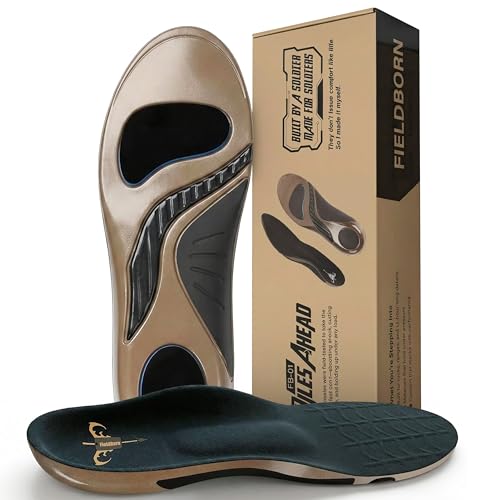
If you’re logging miles under a loaded pack or grinding through long shifts on unforgiving terrain, the FB-01 Miles Ahead Boot Insoles (L) are built for you-think of them as shock absorbers tuned for endurance. I rely on their stable arch platform and PORON impact zones to cut fatigue during 8–12 mile rucks. The PU foam cushions each step, while the low-friction top reduces hotspots. They fit my military boots perfectly, don’t slip, and handle heavy loads without breaking down. I’ve washed them after muddy ops-they keep their shape. If between sizes, go up; I did, and it made all the difference.
Best For: Individuals who need durable, high-performance insoles for long rucks, extended shifts, or heavy-duty use in military or work boots.
Pros:
- Engineered to support 8–12 mile ruck movements with shock-absorbing heel and stable arch platform to reduce fatigue
- Durable, military-inspired construction withstands heavy loads and harsh conditions while remaining hand-washable for easy maintenance
- Low-profile, anti-slip design fits securely in standard military and work boots with blister-resistant, low-friction surface for comfort
Cons:
- May require trimming for ideal fit in certain boot types, especially when sizing up
- Not specifically designed for running or high-impact athletic activities
- Performance benefits most noticeable under load, so may feel overly firm during light use
Superfeet High Arch Insoles (Green)

I rely on the Superfeet High Arch Insoles (Green) when I need dependable support during long rucks, especially because their premium high arch design and deep heel cup stabilize my feet in bulky boots. The high-density foam offers full-foot support, while the moisture-wick top cover keeps things fresh, even after miles. I appreciate the trim-to-fit design-it lets me customize the fit for different boots, though I recommend sizing up if you’re on the fence. Though they’re best in roomy footwear, they’re durable and maintain shape well. For serious rucking, these deliver reliable, orthotic-grade performance I trust.
Best For: Ruckers and outdoor enthusiasts needing durable, high-arch orthotic support in roomy boots for long-distance treks.
Pros:
- Delivers premium high arch support and deep heel cup stability ideal for rugged use
- Moisture-wick top cover and high-density foam maintain comfort and freshness over miles
- Trim-to-fit design allows customization across various boot types
Cons:
- Requires trimming for optimal fit, which may be inconvenient for some users
- Best suited for roomy footwear, limiting compatibility with tighter or narrow shoes
- Sizing recommendations may not be intuitive, especially when between sizes
Dr. Scholl’s Heavy Duty Support Insoles for Men

You want stability and durability on long rucks, especially if you’re over 200 pounds or have wide feet, and that’s where Dr. Scholl’s Heavy Duty Support Insoles for Men come in. I’ve used them in my work boots and rucking shoes, and they deliver solid arch support and even pressure distribution. Their shock-absorbing heel cushioning reduces leg fatigue and eases lower back strain, which I noticed after just a few miles. Built with durable materials, they hold up well over time. They’re trim-to-fit for sizes 8–14 and are clinically proven to support heavy loads. For me, they’ve been a reliable, no-frills orthotic choice when comfort and structure matter most.
Best For: Men over 200 pounds, with tall stature or wide feet, who need durable, orthotic support for long hours on their feet or during high-impact activities like rucking.
Pros:
- Provides strong arch support and even pressure distribution to reduce leg fatigue and lower back pain
- Features shock-absorbing heel cushioning and durable construction ideal for work boots and long-term use
- Trim-to-fit design fits shoe sizes 8–14 and is clinically proven for heavy-duty support
Cons:
- May feel too firm or rigid for users preferring soft, plush insoles
- Trim-to-fit process requires careful cutting for optimal fit in some shoe types
- Designed specifically for larger feet and heavier builds, less suitable for smaller or lighter individuals
Dr. Scholl’s Sport Insoles for Men (Size 8-14)

The Dr. Scholl’s Sport Insoles for Men (size 8–14) are part of the Active Series All-Purpose line, built for high-impact movement and endurance. I’ve used them during rucking sessions, and they deliver serious shock absorption, reducing strain on my feet, knees, and lower back. Their maximum arch support keeps my alignment in check, while the flexible stability allows quick lateral shifts without resistance. If you’re tackling long miles with a loaded pack, these insoles help delay leg fatigue, so you stay mobile longer. They’re not just cushioning-they’re performance-driven, blending comfort with dynamic support that adapts to intense, multidirectional effort. A reliable pick for sustained impact protection.
Best For: Active individuals who engage in high-impact or prolonged physical activities and need enhanced shock absorption, arch support, and dynamic stability to reduce fatigue and improve endurance.
Pros:
- Delivers superior shock absorption to protect feet, knees, and lower back during intense activity
- Provides maximum arch support and flexible side-to-side stability for multidirectional movement
- Helps delay leg and foot fatigue, enhancing comfort and performance during long-duration workouts
Cons:
- Designed specifically for men’s shoe sizes 8–14, limiting fit options for smaller or women’s sizes
- May feel too firm for users preferring plush, soft insoles
- Not optimized for formal or casual footwear outside of athletic use
Hiking Boot Insoles with Arch Support
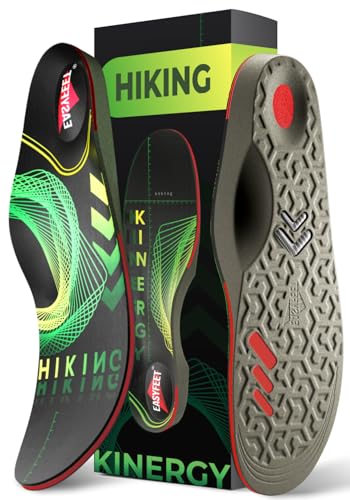
When tackling uneven trails under heavy load, having reliable arch support makes all the difference in maintaining foot alignment and reducing strain over long distances, which is exactly why Kinergy hiking insoles stand out as a top choice for serious ruckers. I’ve found their carbon arch support and deep heel cup keep my feet properly aligned, enhancing balance on rugged terrain. The EnerBoost Tech delivers noticeable energy return, while Joint Protect Tech reduces impact on knees and joints. They’re lightweight, durable, and fit seamlessly in hiking boots. Plus, the moisture-wicking cover keeps my feet dry and cool, even during intense, all-day treks.
Best For: Serious hikers and backpackers seeking enhanced arch support, joint protection, and long-lasting comfort on rugged terrain.
Pros:
- Features carbon arch support and a deep heel cup for optimal foot alignment and stability
- Incorporates EnerBoost Tech and Joint Protect Tech to reduce fatigue and protect joints during long treks
- Breathable, moisture-wicking cover keeps feet dry and comfortable during high-intensity use
Cons:
- May feel too firm for users preferring soft, plush insoles
- Not specifically tailored for narrow or wide foot variants, potentially affecting fit for some
- Higher price point compared to basic aftermarket insoles
Superfeet Hike Support Insoles (7.5-9 M / 8.5-10 W)
A ruck march demands more than sturdy boots-it requires insoles that actively stabilize and support under load, and the Superfeet Hike Support Insoles stand out for hikers and ruckers with medium to high arches who need reliable structure over long distances. I’ve found their orthotic shape locks my foot in place, reducing strain on my knees and back. The EVOLyte carbon fiber and polymer blend delivers lightweight rigidity, while dual-layer cushioning handles impact well. They’re trim-to-fit, so I customized the fit easily, and the Moisturewick top layer keeps my feet drier and less smelly, even on multi-day hauls.
Best For: Hikers and ruckers with medium to high arches who need structured, stabilizing support during long-distance treks.
Pros:
- Engineered with medium to high arch support and an orthotic shape to stabilize the foot and reduce strain on joints
- Constructed with lightweight, durable EVOLyte carbon fiber and polymer blend for responsive underfoot support
- Features dual-layer cushioning, trim-to-fit design, and Moisturewick top cover for comfort, fit customization, and odor control
Cons:
- May feel too firm for users preferring plush, soft insoles
- Trim-to-fit process requires careful cutting for optimal fit
- Designed specifically for hiking boots and shoes, limiting versatility for casual or everyday footwear
CURREX RunPro Insoles for Running Shoes

Though rucking demands durability and support, the CURREX RunPro Insoles stand out best for runners who prioritize propulsion efficiency and injury prevention without sacrificing adaptability. I’ve found their 3D Dynamic Arch Support accommodates my flat feet while stabilizing heel motion, thanks to the deep decoupled cup. The zero heel drop and rebound cushioning encourage a natural stride, boosting my turnover on trails and tracks. I appreciate how the trim-to-fit design molds seamlessly into my running shoes, enhancing flexibility exactly where my foot bends. Plus, the PORON foam wicks moisture well, keeping my feet dry mile after mile. I replace them every 500 miles-it keeps performance consistent.
Best For: Runners seeking enhanced propulsion, dynamic arch support, and injury prevention across varied terrains with a customizable, responsive insole.
Pros:
- 3D Dynamic Arch Support and deep decoupled heel cup provide excellent stabilization and comfort for flat feet
- Zero heel drop and rebound cushioning promote natural foot motion and efficient stride turnover
- Trim-to-fit design and flexible construction ensure a seamless fit in most running shoes with targeted support
Cons:
- Designed primarily for running, making it less ideal for high-load activities like rucking
- Requires replacement every 500 miles or 12 months, which may increase long-term cost
- Moisture-wicking performance may diminish over time with heavy use and frequent exposure to sweat
Dr. Scholl’s Pain Relief Insoles for Men & Women

If you’re logging long miles on rugged terrain or spending hours on your feet during work shifts, Dr. Scholl’s Pain Relief Insoles have my vote for solid, all-day support. They target ten common pain points-from plantar fasciitis to achy knees-with smart arch support that works whether you have flat feet or high arches. I’ve used them in boots and hiking shoes, and the triple-layer cushioning really reduces fatigue while bouncing back mile after mile. Durable enough for 340 lbs, they fit up to size 14 without trimming. The moisture-wicking top cloth keeps things dry, and honestly, they’re one of the most reliable drugstore options for rucking or long shifts.
Best For: Individuals who spend long hours on their feet at work or during outdoor activities and need reliable pain relief and support for multiple foot and joint issues.
Pros:
- Targets 10 common pain points with effective arch support for flat, standard, and high arches
- Triple-layer cushioning provides excellent shock absorption and energy return for reduced fatigue
- Durable, trimmable design fits up to size 14 and supports up to 340 lbs with moisture-wicking comfort
Cons:
- May not fit well in shoes with very shallow or narrow interiors
- Not specifically designed for athletic performance or high-impact sports
- Some users may prefer custom orthotics for more personalized correction
Welnove Carbon Fiber Hiking Insoles for Men Women

You’ll get the most out of the Welnove Carbon Fiber Hiking Insoles if you’re tackling rugged trails or logging long miles under heavy loads, since their rigid aerospace-grade carbon fiber core delivers unmatched support on uneven terrain. I’ve found they’re especially helpful for injury prevention, reducing strain on my metatarsals and protecting against sharp ground hazards. The energy return feels springy during hikes, boosting efficiency. That said, they’re thick-best in roomy boots. I started with just three hours a day to adjust. While not for tight shoes, their durability and stability make them a smart pick for serious rucking or recovery-focused trekking.
Best For: Hikers, outdoor adventurers, and individuals recovering from foot injuries who need rigid support and protection on challenging terrain.
Pros:
- Provides exceptional stability and protection on rocky, uneven trails
- Helps prevent and support recovery from foot conditions like turf toe and metatarsal strain
- Offers energy return for improved efficiency during long hikes or heavy load carrying
Cons:
- Thick design requires spacious footwear and may not fit in tight or narrow shoes
- Initial discomfort during the adaptation period
- Not suitable for everyday or casual use due to rigidity and limited flexibility
Running Shoe Insoles for Men & Women

I’ve found Flame Boost insoles to be especially effective for runners and cross-training athletes who demand both responsiveness and protection during high-impact activities. Engineered for sports like basketball, tennis, and hiking, they deliver over 47% energy return and absorb more than 62% of shock, reducing strain on joints. Their medium-low arch support stabilizes without restricting movement, ideal for dynamic workouts. Multi-layer cushioning molds to your feet, easing pain and fatigue, while breathable materials wick moisture to keep you dry. I appreciate the trim-to-fit design-it fits snugly in most athletic shoes. Even after long sessions, my feet feel supported, not sore.
Best For: Runners and cross-training athletes seeking high energy return, superior shock absorption, and custom fit comfort in high-impact sports.
Pros:
- Delivers over 47% energy return and more than 62% shock absorption for enhanced performance and joint protection
- Multi-layer, trim-to-fit design conforms to foot shape and fits a variety of athletic shoes comfortably
- Breathable, moisture-wicking materials keep feet cool and dry during prolonged use
Cons:
- Medium-low arch support may not suit users needing high arch orthotic support
- Performance benefits are most noticeable in high-intensity activities, less impactful for casual walking
- Trimming required for perfect fit, which may be inconvenient for some users
Factors to Consider When Choosing Insoles for Rucking
You need insoles that match your foot’s arch support level and handle the constant impact of rucking, so don’t overlook shock absorption capacity. A durable build guarantees longevity under heavy loads, while proper fit and compatibility prevent slippage and hot spots in your boots. Good moisture management keeps your feet dry and comfortable, making these factors essential for both performance and recovery.
Arch Support Level
Proper arch support is non-negotiable when selecting insoles for rucking, as it directly influences foot stability, endurance, and injury prevention under load. You need medium to high arch support to maintain alignment and reduce strain, especially with added weight. A structured arch platform stabilizes your foot on rough terrain, improving weight distribution and cutting fatigue over miles. Soft, squishy foams might feel comfy at first, but they collapse under prolonged pressure-go for rigid or semi-rigid materials instead; they hold up better. Match the arch height to your foot type: too high causes pressure, too low offers no real support. Getting it right means better biomechanics, less overpronation, and lower risks of plantar fasciitis or leg discomfort. You’re not just padding your foot-you’re engineering support for performance. Choose wisely, and your feet will keep pace.
Shock Absorption Capacity
While carrying heavy loads over long distances, your feet take a serious pounding, making shock absorption a critical factor in choosing the right rucking insoles. You’ll want materials like high-density foam or dual-layer cushioning, which reduce impact forces by up to 62% and help protect your joints. Closed-cell foam in the heel zone maintains consistent performance, even under repeated stress, so you stay supported mile after mile. Look for insoles with energy-return tech-polymers or carbon-infused layers-because they absorb shock while propelling your forward motion. This isn’t just about comfort; effective cushioning cuts muscle fatigue and lowers the risk of microtrauma, especially on hard or uneven terrain. You’re not just cushioning each step-you’re preserving performance over time. Prioritize engineered shock absorption, and you’ll notice the difference in how your body feels at the end of a long ruck.
Insole Durability
A well-built rucking insole doesn’t just cushion-it holds up. You’re carrying 50+ lbs over 8–12 miles, and your insoles must endure repeated impact without breaking down. High-density closed-cell foam fights compression set, so your cushioning doesn’t collapse after a few hard hikes. Look for materials that resist abrasion and shear forces, especially under the heel and arch, where stress is highest during loaded movement. A durable design also prevents delamination, keeping layered components intact even in wet, heavy-use conditions. Removable, hand-washable insoles give you an edge-washing out moisture, dirt, and grime helps preserve structural integrity over time. You’re not just buying cushioning; you’re investing in longevity. Smart construction means your insoles perform mile after mile, adapting to your load without losing support. Don’t settle for flimsy foam-choose resilience that matches your ruck’s demands.
Fit And Compatibility
You need insoles that fit right, not just in size but in shape and function, because even the most supportive design won’t help if it rides up or crowds your toes under load. Choose low-profile insoles so they fit inside rucking boots without compressing your feet or creating pressure points. Go for trimmable models-you’ll get a custom fit, especially useful if you’re between sizes or using standard-issue footwear. An anti-slip base is essential; it keeps the insole from shifting or bunching during long rucks with heavy gear. Make sure the insole matches your boot’s volume and heel shape to avoid awkward spacing or distortion. If you’re between sizes, pick the larger one-your feet swell over time, and tight insoles restrict circulation and comfort. Compatibility isn’t just about size; it’s about how the insole works within your specific boot system.
Moisture Management
Because your feet sweat heavily during long rucks, especially under load, choosing insoles with strong moisture management isn’t just about comfort-it’s critical for performance and foot health. You need insoles with moisture-wicking top covers that actively pull sweat away, maintaining a drier environment inside your boot. Look for breathable materials that allow continuous air circulation, helping sweat evaporate instead of pooling. Antimicrobial treatments are a smart addition-they suppress odor-causing bacteria that flourish in damp, warm conditions. Closed-cell foam layers are essential since they resist water absorption, keeping cushioning effective and structure intact even with prolonged exposure to sweat. Together, these features reduce friction markedly, which means fewer hotspots and a much lower risk of blisters on extended rucks. Effective moisture control isn’t a luxury-it’s a functional necessity for anyone serious about rucking performance and foot resilience.
Frequently Asked Questions
How Long Do Rucking Insoles Typically Last?
They usually last 6 to 12 months with regular rucking, depending on your stride, load, and terrain. You’ll notice reduced arch support or flattened cushioning when they’re worn out. High-density EVA or polyurethane models hold up better than basic foam. Rotating insoles helps extend life. Clean them monthly and air-dry to prevent breakdown. Durability matters-going longer between replacements saves money and keeps your feet supported mile after mile.
Can I Trim Insoles to Fit My Boots?
Yes, you can trim most insoles to fit your boots, but only if they’re designed for customization-check the manufacturer’s instructions first. Use sharp scissors and cut slowly, following the outline of your existing insole for accuracy. Trimming too much can ruin the arch support and structural integrity. Foam-based insoles are easier to adjust, while rigid models risk cracking. Always test the fit before extended use to guarantee proper alignment and comfort during rucking.
Do Insoles Help With Knee Pain During Rucking?
Yes, you can trim insoles to fit your boots-most are designed with trim-to-fit edges. Do it slowly, test the fit often, and use scissors or a utility knife for clean cuts. Proper trimming guarantees full support without bunching. Just avoid cutting into the arch or heel stabilizing zones, as that compromises structure. Trimming right means they’ll stay effective and comfortable mile after mile.
Are Carbon Fiber Insoles Worth the Extra Cost?
You’ll find carbon fiber insoles worth the extra cost if you need maximum support and durability. They’re stiff, lightweight, and excel at transferring energy efficiently, reducing fatigue on long rucks. While pricier, their ability to maintain arch support and resist compression over time beats most EVA or foam insoles. You’ll notice less foot roll and better alignment, which helps prevent knee pain. Just make sure they fit your boot-otherwise, you’re wasting money.
Can I Use Insoles With Orthotics?
You can use insoles with orthotics, but only if you remove the shoe’s original insole to avoid crowding. Most orthotics are designed to replace, not layer over, stock insoles. Adding extra support without adjusting space leads to pressure, blisters, or poor fit. Some low-profile performance insoles work alongside partial orthotics, but you’ll need to test for comfort and fit. Always prioritize function-your foot’s alignment and movement matter more than added cushioning.