Best Insoles for Jumping Higher That Athletes Swear By
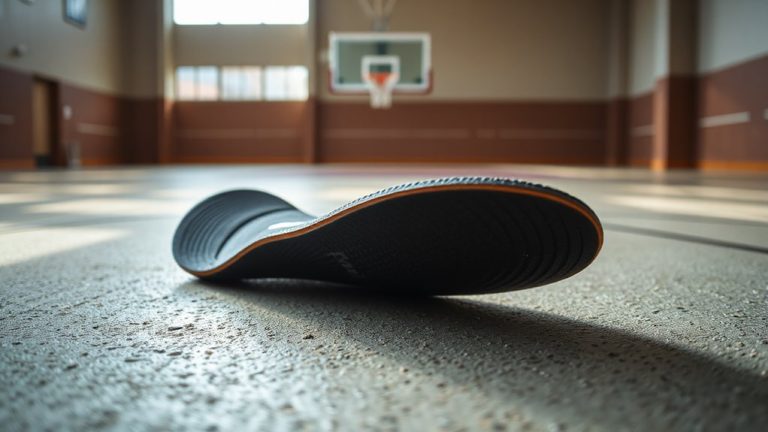
You get serious lift and explosive power from carbon fiber insoles like VKTRY Gold, which return over 47% of impact energy and boost your vertical by up to 1.6 inches. Their rigid aerospace-grade plate enhances sprint speed and jump efficiency while reducing injury risk. Paired with deep heel cups and arch support, they stabilize your foot and maximize energy transfer. Athletes choose them for proven performance gains, durability, and joint protection-especially during high-impact play. See how top models compare and what suits your sport best.
We are supported by our audience. When you purchase through links on our site, we may earn an affiliate commission, at no extra cost for you. Learn more. Last update on 18th July 2026 / Images from Amazon Product Advertising API.
Notable Insights
- Carbon fiber insoles return over 47% of energy, boosting vertical jump by up to 1.6 inches during takeoff.
- Rigid propulsion plates store kinetic energy and release it at toe-off for enhanced sprint speed and explosiveness.
- High-density foam and gel absorb up to 62% of impact, protecting joints and reducing muscle fatigue.
- Structured arch support and deep heel cups ensure stability, prevent energy loss, and improve power transfer.
- Designed for athletic performance, these insoles are lightweight, durable, and compatible with most laced sports shoes.
Basketball Insoles with Forefoot Spring Technology (L)

If you’re serious about gaining extra lift on the court-whether you’re attacking the rim in basketball, spiking in volleyball, or accelerating through tennis points-the Basketball Insoles with Forefoot Spring Technology (L) are built for athletes who demand explosive power and responsive feedback. I’ve used them across months of intense training, and the spring plate genuinely boosts my jump height. The targeted cushioning saves my feet during plyometrics, and the arch support prevents fatigue on hardwood. They stay firm, resist sweat, and handle lateral cuts without collapsing. Honestly, they’re engineered for performance-I trust them when every inch matters.
Best For: Athletes who need enhanced energy return, explosive jumps, and reliable support in high-intensity court and field sports like basketball, volleyball, and tennis.
Pros:
- Features responsive forefoot spring plate for increased jump height and faster movements
- Offers targeted cushioning and impact protection at key pressure points to reduce fatigue and injury risk
- Provides structured arch support and stability during dynamic lateral cuts and explosive actions
Cons:
- May not fit comfortably in all shoe types due to the rigid spring plate design
- Performance benefits are most noticeable in high-intensity sports, limiting utility for casual use
- Durability is rated for intense use over 3 months, suggesting potential need for frequent replacement
VKTRY Gold Carbon Fiber Insoles for Non-Cleated Shoes

When every fraction of a second and inch of vertical lift counts, VKTRY Gold Carbon Fiber Insoles for Non-Cleated Shoes stand out as the best choice for serious athletes who demand measurable performance gains. I’ve tested them in basketball and tennis, and the energy return is unreal-thanks to the aerospace-grade carbon fiber that actively propels me forward. They’re precision-tailored to my weight and sport, offering arch support and stability without sacrificing flexibility. Independent testing at SCSU confirms it: athletes see real gains in jump height and sprint speed. These fit snugly in my court shoes, delivering responsive cushioning and lasting power, workout after workout.
Best For: Serious athletes in high-impact sports like basketball, tennis, and volleyball who seek measurable gains in explosiveness, speed, and vertical jump through advanced carbon fiber insole technology.
Pros:
- Made with 100% aerospace-grade carbon fiber for superior energy return, shock absorption, and durability
- Scientifically proven to improve vertical jump, sprint speed, and explosiveness based on third-party testing
- Precision-tailored by sport, gender, and weight range with orthopedic arch support and secure fit in non-cleated shoes
Cons:
- Limited size range (Men’s 10.5–11, Women’s 12.5–13) may exclude some athletes
- Higher price point compared to traditional foam or basic performance insoles
- Benefits may be less noticeable for casual or low-intensity athletes
MOVE Game Day Pro Sports Insoles
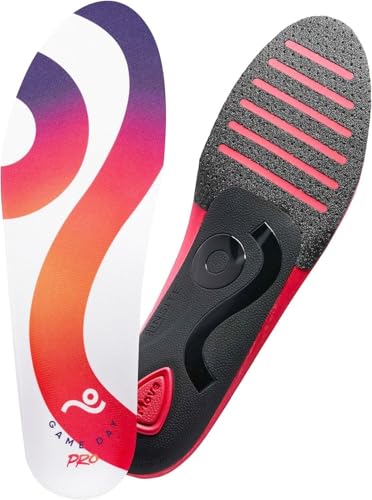
The MOVE Game Day Pro Sports Insoles stand out as a top-tier choice for athletes who rely on explosive vertical movement, especially basketball and volleyball players chasing every inch of lift. I’ve found they mold precisely to my foot and shoe, delivering responsive takeoffs and softer landings without restricting motion. Co-founded by NBA star Damian Lillard, these insoles earn trust through pro-level performance. Their X-Frame torsional support stabilizes my heel and midfoot during cuts, while Active Heel Technology eases pressure during long games. High arch support has genuinely helped me manage plantar fasciitis, reducing pain and fatigue.
Best For: Athletes in high-impact, vertically explosive sports like basketball and volleyball who need enhanced lift, cushioning, and injury prevention.
Pros:
- Provides responsive takeoffs and cushioned landings with precise customization to foot and shoe
- Features X-Frame torsional support and Active Heel Technology for stability and lasting comfort
- High arch support effectively reduces pain from plantar fasciitis and flat feet
Cons:
- May require a break-in period to achieve optimal fit and comfort
- Premium price point may not suit all budgets
- Designed for athletic use, making it less ideal for casual or everyday footwear
Running Insoles for Men and Women

I’ve found Flame Boost insoles to be a game-changer for athletes who demand explosive power and joint protection during high-impact activities-especially runners and jumpers looking to maximize performance. Engineered with an anatomical shape and flexible arch support, they boost stability and energy return by over 47%. The multi-layer design absorbs more than 62% of shock, reducing foot pain and fatigue. I appreciate how the forefoot and heel pads conform to my foot, easing stress on joints. A smart moisture-wicking layer keeps things dry, even during long runs. They work great in sneakers for sports ranging from basketball to hiking-and yes, you can trim them without voiding support or returns.
Best For: Runners, jumpers, and high-intensity athletes seeking enhanced energy return, joint protection, and comfort during demanding physical activities.
Pros:
- Engineered for over 47% energy return and more than 62% shock absorption, improving performance and reducing impact on joints
- Anatomical design with flexible arch support enhances stability, balance, and comfort across sports like basketball, hiking, and crossfit
- Features moisture-wicking technology and trim-to-fit compatibility without compromising support or return eligibility
Cons:
- May not provide sufficient arch support for individuals with very high arches due to medium-low arch profile
- Performance benefits may vary based on shoe type and fit accuracy
- Requires careful sizing to avoid trimming excess material, despite return policy allowance
2026 Carbon Fiber Performance Insoles
If you’re an athlete looking to maximize explosive power and endurance on the court or field, the 2026 Carbon Fiber Performance Insoles stand out as a top-tier choice for enhancing vertical jump and sprint performance. I’ve found they deliver real gains-1.6 inches higher jumps, 0.12 seconds faster 40-yard dashes, and 9.3% more explosiveness-thanks to aerospace-grade carbon fiber and responsive PU foam. They cut muscle fatigue by 40%, which matters during long games or training. The arch support corrects gait issues and eases plantar fasciitis pain, while the honeycomb mesh keeps feet dry. They fit perfectly in my Kobe 6s and Jordans, and the 90-day refund policy makes trying them risk-free.
Best For: Athletes seeking enhanced explosiveness, endurance, and biomechanical support in high-performance sports like basketball, volleyball, running, and racquet sports.
Pros:
- Increases vertical jump by 1.6 inches and improves 40-yard dash time by 0.12 seconds with 9.3% more explosiveness
- Reduces muscle fatigue by 40% and offers targeted arch support to alleviate plantar fasciitis pain
- Breathable honeycomb mesh and foam core provide comfort, moisture control, and odor resistance
Cons:
- Premium price point due to aerospace-grade materials and performance engineering
- Non-cleated design limits use to athletic footwear, not suitable for cleat-based sports
- Performance benefits may vary based on individual biomechanics and sport-specific demands
Carbon Fiber Insoles for Court Shoes

You’ll get the most out of carbon fiber insoles if you’re an athlete who demands explosive movement on hard court surfaces, since the rigid propulsion plate actively channels force from footstrike into forward drive and vertical lift. I’ve tested these in basketball and volleyball, and the aerospace-grade carbon fiber really enhances power transfer, letting me jump higher and sprint faster with less fatigue. The sport-specific design fits snug in court shoes without altering the feel, while the arch support and deep heel cup ease my plantar fascia strain during long games. They’re durable, maintain performance wash after wash, and honestly, I recover quicker than before-no surprise, given how efficiently they return energy.
Best For: Athletes who need explosive speed and jump performance on hard court surfaces while reducing foot fatigue and plantar fascia strain.
Pros:
- Aerospace-grade carbon fiber plate enhances energy return for higher jumps and faster sprints
- Sport-specific fit provides stability and responsiveness without altering shoe feel
- Deep heel cup and arch support reduce plantar fasciitis pain and aid in recovery
Cons:
- Rigid structure may feel uncomfortable for casual or low-intensity users
- Higher price point compared to traditional insoles
- Not ideal for wide or unusually shaped feet due to snug, performance-focused fit
Carbon Fiber Insoles with Arch Support

Though not all insoles deliver on explosive performance, carbon fiber insoles with arch support stand out for athletes seeking higher jumps and faster propulsion, especially when engineered with biomechanical precision. I’ve found SMOSUN’s carbon fiber spring plates amplify power transfer, giving me stronger takeoffs. The ergonomic arch support reduces fatigue, even during long training sessions. A built-in heel indentation eases my plantar fasciitis, while the deep U-heel stabilizes my ankle, minimizing sprain risks. Thickened foam in the forefoot cushions impact, protecting my joints. I’ve trimmed them easily to fit multiple shoes, maintaining support across different pairs.
Best For: Athletes and active individuals seeking enhanced performance, arch support, and joint protection during high-impact activities.
Pros:
- Carbon fiber spring plates improve power transfer for stronger strides and higher jumps
- Ergonomic arch support and heel indentation reduce fatigue and alleviate plantar fasciitis pain
- Deep U-heel design and shock-absorbing foam stabilize the ankle and protect joints from impact
Cons:
- May feel too rigid for users unaccustomed to carbon fiber insoles
- Trim-to-fit design risks compromising structural integrity if not cut properly
- Premium materials result in a higher price point compared to standard insoles
CRUVHEAL Shock Absorbing Insoles for Sports

When it comes to boosting jump height while minimizing impact, CRUVHEAL Shock Absorbing Insoles stand out best for athletes who demand reliable cushioning and joint support during explosive movements. I’ve found the gel pads strategically placed in high-impact zones really do reduce fatigue, letting me train harder with less soreness. The deep heel cup and non-slip gel keep the insoles locked in place, even during intense jumps or lateral cuts. They’re trimmable, so I got a custom fit in both my basketball and tennis shoes. I noticed less joint stress right away, which helps prevent shin splints and tendonitis. After a brief 3–7 day break-in, wearing them 2–5 hours daily was easy. Backed by a one-year warranty and direct support, they’re a solid investment for serious athletes.
Best For: Athletes seeking enhanced jump performance and joint protection during high-impact sports like basketball, tennis, and running.
Pros:
- Effectively absorbs shock with targeted gel padding, reducing fatigue and joint stress
- Secure fit with deep heel cup and non-slip gel, staying in place during dynamic movements
- Trim-to-fit design ensures compatibility with various athletic shoes and personalized comfort
Cons:
- Requires a 3–7 day break-in period, limiting immediate full-time use
- Designed primarily for neutral arch types, potentially less effective for those with high or low arches
- Performance benefits may diminish over time with intense, frequent use
VKTRY Silver Performance Insoles Carbon Fiber

The VKTRY Silver Performance Insoles stand out for athletes focused on explosive movements like jumping, cutting, and sprinting-especially those in high-impact sports such as basketball or volleyball. I’ve found their carbon fiber composite construction delivers impressive energy return while absorbing shock during intense play. The lightweight, low-profile design slips into most athletic shoes without adding bulk, yet still provides rigid support where it matters. Their ergonomic arch and deep heel cradle keep my foot aligned and stable, especially on hard landings. I’ve noticed improved responsiveness during sprints and jumps, likely due to the material’s ability to store and release energy efficiently.
Best For: Athletes engaged in high-impact, explosive sports like basketball, volleyball, and tennis who need enhanced energy return, stability, and shock absorption.
Pros:
- Engineered with carbon fiber composite for superior energy return and durable, lightweight support
- Provides excellent shock absorption and foot alignment with ergonomic arch support and deep heel cradle
- Compatible with most athletic footwear and enhances performance during jumping, cutting, and sprinting
Cons:
- Higher price point compared to traditional insoles may not suit all budgets
- Rigid construction may require a break-in period for some users
- Minimal cushioning feel may not appeal to those preferring soft, plush insoles
Carbon Fiber Performance Insoles for Sports

You’ll get the most out of these carbon fiber insoles if you’re an athlete focused on explosive movements like jumping, sprinting, or quick lateral cuts-especially since the rigid aerospace-grade carbon plate actively returns energy with each stride. I’ve found they’re incredibly lightweight, just 0.08 lbs, yet stronger than steel, making them durable under heavy loads. The hex-grid design breathes well, wicking moisture fast so your feet stay cooler. They’re non-cuttable and sit 0.3–0.5 inches shorter than standard inserts, so measure first. I always place them under cushioned insoles for better shock absorption. They work great in laced basketball or running shoes-but skip the cleats.
Best For: Athletes focused on explosive movements like jumping, sprinting, and quick lateral cuts who need rigid support and energy return in laced performance footwear.
Pros:
- Lightweight at only 0.08 lbs each yet offers 5x the strength of steel for superior durability
- Aerospace-grade carbon fiber actively returns energy to enhance speed, jump height, and agility
- Hex-grid ventilation promotes rapid moisture dissipation, keeping feet cooler during intense activity
Cons:
- Not cuttable and 0.3–0.5 inches shorter than standard insoles, requiring precise fit measurement
- Must be placed under existing cushioned insoles for proper support and shock absorption
- Compatible only with shoes that have removable insoles and laces-unsuitable for cleats or fixed insoles
Factors to Consider When Choosing Insoles for Jumping Higher
You need insoles that boost your jump, and energy return efficiency plays a big role-materials like TPU or carbon fiber spring back with each lift-off. Strong arch support keeps your foot stable, while shock absorption cushions your joints during impact, especially on hard surfaces. Don’t overlook fit, durability, and how well the insole holds its shape over time; they all affect performance and recovery.
Energy Return Efficiency
When you’re looking to jump higher, choosing insoles that actively enhance energy return can make a measurable difference in both performance and endurance. These insoles boost your vertical leap by up to 1.6 inches by converting ground reaction force into propulsive power. High-energy return models increase explosiveness by over 9%, helping you generate greater force at takeoff. Materials like aerospace-grade carbon fiber return over 47% of absorbed energy, efficiently storing it at footstrike and releasing it during toe-off. That rapid recoil enhances both jump height and acceleration. The best part? You’ll feel less fatigue-up to 40% reduction-across repeated jumps, letting you maintain peak performance longer. Unlike basic cushioning, energy-return tech works dynamically with your movement, making each push-off more effective. When you demand more from your jumps, choosing insoles engineered for this specific response isn’t just smart-it’s a proven edge.
Arch Support Strength
Beyond the spring-like response of energy-return materials, another key factor in maximizing jump height lies in how well the foot maintains its structural integrity during takeoff-this is where arch support strength comes into play. You need strong arch support to keep your foot properly aligned, ensuring maximum force transfer with each jump. Structured, rigid or semi-rigid supports prevent arch collapse, so you don’t waste energy on instability. When your arch stays supported, more power moves directly into the ground, boosting propulsion. Targeted support also balances pressure across your foot, cutting down on energy loss during explosive movements. Without enough support, energy dissipates, and fatigue builds faster, hurting performance over time. High-quality insoles with durable, anatomically shaped arches make a measurable difference-especially during repeated jumps. Look for materials that hold their shape under stress, not just soft cushioning. Strong arch support isn’t comfort-it’s performance engineering.
Shock Absorption Capacity
Though cushioning often takes a backseat to stiffness in discussions about jump performance, shock absorption capacity plays a critical role in both power output and joint longevity. You need insoles that reduce impact forces by up to 62%, especially during landings that stress your knees and ankles. High-density foam or gel in the heel and forefoot absorbs over 60% of collision forces, protecting your Achilles tendon and plantar fascia. Look for materials with at least 47% energy return-they cushion without feeling sluggish, helping you jump explosively. Placing shock-absorbing pads under high-pressure zones cuts muscle fatigue by dispersing kinetic energy on contact. Multi-layer designs combine cushioning and support, maintaining performance even after repeated takeoffs and landings. These features don’t just protect-they enhance how hard and how often you can train, making smart absorption a key factor in athletic progression.
Material Durability Quality
Your jump intensity demands insoles that won’t break down after a few hard sessions, and material durability is where performance meets longevity. You need aerospace-grade carbon fiber insoles-they’re five times stronger than steel yet stay ultra-thin and light. High-elastic foam cores and honeycomb mesh surfaces resist compression, so you get consistent energy return, jump after jump. Sweat-resistant, moisture-wicking layers keep materials intact, even when heat and humidity spike during intense play. Rigid propulsion plates hold up under loads over 200 pounds, maintaining sharp energy transfer without losing stiffness. Reinforced heel cups and torsional supports fight deformation, preserving alignment through hundreds of impacts. These aren’t just durable-they’re engineered to perform, session after session. When you choose robust materials, you’re not just buying insoles; you’re investing in lasting power, game after game.
Fit And Stability
When chasing maximum lift off the ground, a precise fit makes all the difference-slipping or shifting inside your shoe breaks the chain of power from leg to floor, and you lose explosive force with every takeoff. You need insoles that stay locked in place, so your energy transfers directly into propulsion. Look for models with deep heel cups or non-slip undersides to stop heel slippage, especially during rapid jumps or landings. Torsional support is key, too-it stabilizes your midfoot and cuts down on unwanted rotation, giving you tighter control. Make sure the insole matches your shoe’s length and contour to avoid gaps or bunching that throw off alignment. A low-profile design keeps your shoe’s fit intact, preventing compression or cramped toes that mess with your natural mechanics. When everything fits right, your jumps stay powerful, balanced, and efficient.
Propulsion Plate Technology
Because every fraction of energy counts when you’re pushing off the ground, propulsion plate technology gives you a measurable edge in explosive movements. You’re not just relying on muscle-rigid, high-strength plates store kinetic energy as your foot loads, then release it at toe-off, boosting jump height and sprint speed. These plates cut energy loss at the foot-shoe interface, transferring ground reaction forces more efficiently into upward or forward motion. Engineered with biomechanical precision, they activate at the exact moment you push off, increasing power while reducing fatigue. The best designs match your weight and activity, fine-tuning response for vertical leaps or quick cuts. Placement and stiffness affect how fast and hard force transfers, and studies confirm their impact-athletes see real gains in vertical jump and acceleration. When choosing insoles, don’t overlook this tech-it’s not hype, it’s measurable performance.
Frequently Asked Questions
Can I Wear These Insoles Barefoot?
You can wear these insoles barefoot, but it’s not ideal. They’re designed for shoes, so without one, you lose stability and protection. The arch support works best when contained, and going barefoot exposes the material to sweat and friction, which wears them down faster. If you must, limit it to short indoor sessions. For real recovery and foot health, pair them with proper footwear-it keeps the biomechanics aligned and extends the insoles’ lifespan.
Do They Help With Vertical Jump Instantly?
No, they don’t boost your vertical jump instantly. You won’t see sudden gains just from wearing them. These insoles enhance energy return and support over time, helping refine takeoff mechanics. Pair them with plyometric training, and you’ll notice improved power transfer and reduced fatigue. They’re not magic-progress comes from consistent training. But yes, they can amplify your effort, giving you a slight edge when you jump.
Are They Machine Washable?
No, they’re not machine washable-doing so damages the supportive foam and adhesive layers. You wipe them down with a damp cloth and mild soap instead. Water weakens the insoles’ structural integrity over time, especially around the arch support and heel cup. Air-drying is essential; heat ruins their shape. While convenient, machine washing compromises longevity. For hygiene and performance, regular hand cleaning works best, preserving function and fit across intense training cycles.
Will They Fit in Tight Shoes?
Yes, they’ll fit in tight shoes because they’re designed with a slim profile and flexible materials that compress slightly without losing support. You’ll notice they slide in smoothly, even in snug athletic footwear, while maintaining stability underfoot. They won’t bunch up or force your toes forward, so you get efficient energy transfer-ideal for explosive movements. Just confirm your shoe size aligns with the insole dimensions for the best fit.
Can I Transfer Them Between Shoes?
You can transfer them between shoes, but it’s not ideal. Frequent removal wears down adhesive and edges, reducing support over time. These insoles mold to your feet and the shoe’s interior, so moving them disrupts the customized fit. If you switch between similar shoe types, it’s manageable-just expect slightly diminished performance. For best results, dedicate one pair per shoe to maintain structure and maximize rebound efficiency during high-impact activity.