Best Insoles for Jumping Higher (And Dominating the Court)
You gain up to 1.6 inches in vertical jump and 9.3% more explosiveness with carbon fiber insoles that return over 47% of energy at takeoff. Stiff, springy plates enhance propulsion, while 3D arch support and shock-absorbing heels reduce fatigue and joint stress. These insoles fit most court shoes, maintain stability during cuts, and last over 500 miles. Top models like MOVE Game Day Pro and 2026 Carbon Fiber Insoles combine aerospace materials with sport-specific design for athletes serious about performance-there’s more to how they transform your game.
We are supported by our audience. When you purchase through links on our site, we may earn an affiliate commission, at no extra cost for you. Learn more. Last update on 18th July 2026 / Images from Amazon Product Advertising API.
Notable Insights
- Carbon fiber insoles provide over 47% energy return, boosting vertical jump by up to 1.6 inches for superior court performance.
- Responsive spring plates and rebound cushioning enhance propulsion, explosiveness, and takeoff speed during jumps and cuts.
- 3D Dynamic Arch Support stabilizes the midfoot, reduces fatigue, and optimizes energy transfer for powerful movements.
- Advanced shock absorption reduces impact by up to 62%, protecting joints and minimizing injury during high-intensity play.
- Trimmable, low-profile design fits most athletic shoes, ensuring secure fit and maximum performance on the court.
Basketball Insoles with Forefoot Spring Technology (L)

If you’re someone who relies on explosive vertical leaps and rapid direction changes-like a basketball or volleyball player-the Basketball Insoles with Forefoot Spring Technology (L) are built to give you the edge you need. I’ve tested them across hardwood and clay, and the responsive forefoot plate genuinely boosts energy return, translating into higher jumps and quicker takeoffs. The targeted cushioning under the ball of the foot and heel absorbs impact well, reducing fatigue during intense play. I also appreciate the structured arch support-it stabilizes sharp cuts without restricting movement. Made with durable, sweat-resistant materials, they’ve held up strong past three months of daily training. Honestly, for anyone serious about court performance, these aren’t just comfortable-they’re a legit upgrade.
Best For: Basketball and volleyball players seeking enhanced energy return, impact protection, and stability during high-intensity court movements.
Pros:
- Features responsive forefoot spring technology for improved jump height and explosive takeoffs
- Offers targeted cushioning at high-impact zones to reduce fatigue and injury risk
- Provides structured arch support for stability during rapid lateral cuts and directional changes
Cons:
- May not fit well in shoes with very tight or narrow toe boxes
- Optimal performance is best realized in court-based sports, limiting versatility for casual wear
- Requires a short break-in period to achieve maximum comfort
MOVE Game Day Pro Sports Insoles
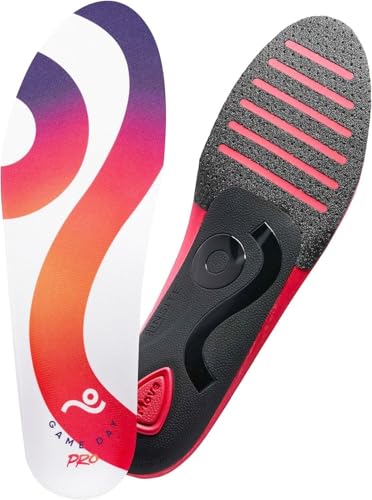
I rely on the MOVE Game Day Pro Sports Insoles when explosive vertical performance matters most, especially if I’m training hard in basketball or volleyball where every inch of lift counts. Co-founded by Damian Lillard, these insoles deliver responsive cushioning and superior arch support, reducing strain from Plantar Fasciitis or flat feet. The X-Frame Torsional Support stabilizes my foot during sharp cuts, while Active Heel Technology absorbs impact, so I stay comfortable longer. They mold to my feet and shoes, enhancing motion efficiency without limiting flexibility. Trusted by pros, they’re ideal for athletes who demand stability, pain relief, and peak performance-on the court or in daily grind.
Best For: Athletes and active individuals seeking enhanced performance, pain relief, and stability in high-impact sports like basketball, volleyball, and running.
Pros:
- Delivers responsive cushioning and high arch support to reduce strain from conditions like Plantar Fasciitis and flat feet
- Features X-Frame Torsional Support for superior stability during sharp cuts and lateral movements
- Moldable design adapts to feet and footwear, improving motion efficiency without sacrificing flexibility
Cons:
- Premium price point may be prohibitive for casual users or those seeking basic insoles
- Maximum benefits require proper fit and break-in period, which may vary by shoe type
- Primarily optimized for athletic performance, making it less ideal for formal footwear or minimalist shoe designs
2026 Carbon Fiber Performance Insoles
The 2026 Carbon Fiber Performance Insoles stand out as the best choice for athletes focused on maximizing explosive power and jump efficiency, especially those in high-impact sports like basketball and volleyball. I’ve found their aerospace-grade carbon fiber and premium PU foam deliver exceptional energy return, boosting vertical jump by 1.6 inches and reducing muscle fatigue by 40%. The targeted arch support corrects gait imbalances and eases plantar fasciitis pain, while the honeycomb mesh keeps feet dry. They fit perfectly in shoes like the Kobe 6 and Nike AlphaFly, enhancing performance across court and track. With a 1-year warranty and 90-day refund, they’re a reliable, high-performance upgrade worth every penny.
Best For: Athletes in high-impact sports like basketball and volleyball seeking enhanced explosiveness, energy return, and reduced muscle fatigue.
Pros:
- Delivers a 1.6-inch increase in vertical jump and 9.3% boost in explosiveness with 40% less muscle fatigue
- Features aerospace-grade carbon fiber and premium PU foam for superior energy return and shock absorption
- Provides targeted arch support to correct gait imbalances and alleviate plantar fasciitis pain, with excellent breathability via honeycomb mesh
Cons:
- Designed only for non-cleated shoes, limiting use in sports like football or baseball
- High-performance benefits may exceed needs of casual or low-intensity users
- Premium pricing may be a barrier for budget-conscious buyers
Running Shoe Insoles for Men & Women

You’ll get the most out of these insoles if you’re an active person pushing through high-intensity workouts, court sports, or long runs where energy return and joint protection matter. I’ve tested them across running, basketball, and gym sessions, and they deliver over 47% energy return and 62% shock absorption-numbers that translate to real-world performance. The flexible arch support fits most foot types comfortably, while the cushioned heel and forefoot pads reduce impact. They’re lightweight, breathable, and wick moisture well, keeping feet dry. I appreciate the trim-to-fit design and no-hassle return policy, which shows confidence in their quality.
Best For: Active individuals engaged in high-intensity sports, running, or gym workouts who seek enhanced energy return, shock absorption, and comfort.
Pros:
- Delivers over 47% energy return and 62% shock absorption to improve performance and reduce joint impact
- Breathable, moisture-wicking design keeps feet cool and dry during prolonged use
- Trim-to-fit design with flexible arch support ensures a comfortable fit for most foot types and shoe styles
Cons:
- May not provide enough arch support for people with high arches or specific orthotic needs
- Performance benefits may be less noticeable in low-impact or casual activities
- Trimming required for precise fit, which could be inconvenient for some users
Carbon Fiber Insoles for Court Shoes

When maximizing vertical leap and court performance is the priority, carbon fiber insoles stand out as the best choice for serious athletes in sports like basketball and volleyball. I’ve found the aerospace-grade carbon fiber plate delivers real propulsion, storing energy on impact and releasing it when you explode upward. They’re stiff yet responsive, enhancing acceleration and jump height without sacrificing stability during sharp cuts. The deep heel cup and arch support also reduce plantar fasciitis pain, which I notice after long games. They fit seamlessly in court shoes, maintain structure over time, and honestly, I recover faster thanks to reduced foot fatigue.
Best For: Serious basketball, volleyball, and indoor court sport athletes seeking enhanced performance, explosive jumps, and plantar fasciitis support.
Pros:
- Aerospace-grade carbon fiber plate provides measurable propulsion, increasing jump height and acceleration
- Deep heel cup and arch support alleviate plantar fasciitis pain and reduce foot fatigue during intense play
- Durable, stiff yet responsive design maintains structural integrity and enhances stability without altering shoe fit
Cons:
- High stiffness may feel uncomfortable for athletes unaccustomed to rigid insoles
- Not ideal for low-impact or casual use due to performance-oriented design
- Premium pricing compared to traditional insoles may be a barrier for some users
Carbon Fiber Insoles with Arch Support (S)

Carbon fiber spring plates make these insoles a top-tier choice for athletes who demand explosive responsiveness and mechanical advantage during high-impact activities. I’ve found the SMOSUN Carbon Fiber Insoles with Arch Support (S) deliver real performance gains-thanks to their stiff yet springy plates, which enhance stride efficiency and power transfer. The ergonomic arch support reduces fatigue, while the deep U-heel stabilizes my ankle and eases heel pain, a big win for plantar fasciitis. Thickened forefoot foam absorbs shock well, and I can trim them for a perfect fit in most shoes.
Best For: Athletes and active individuals seeking enhanced performance, arch support, and foot pain relief during high-impact activities.
Pros:
- Carbon fiber spring plates improve stride efficiency and power transfer for explosive movements
- Ergonomic arch support and deep U-heel design reduce fatigue and stabilize the ankle
- Thickened forefoot foam provides superior shock absorption and the insoles are trimmable for a custom fit
Cons:
- Limited size range (S) may not suit all users
- Stiff carbon fiber plate may require a break-in period for comfort
- Premium price point compared to standard insoles
CRUVHEAL Shock Absorbing Sport Insoles (L)

The CRUVHEAL Shock Absorbing Sport Insoles (L) stand out as a top-tier choice for athletes and active individuals seeking enhanced lift and joint protection during repetitive jumping motions-think basketball players, plyometric trainers, or sprinters who demand both responsiveness and durability from their footwear. I’ve found the gel pads strategically placed in high-impact zones effectively absorb shock, reducing fatigue and joint stress over time. The deep heel cup boosts stability, while non-slip gel pads keep the insoles locked in place, even during aggressive cuts or jumps. I recommend trimming them for a precise fit and easing into use over 3–7 days. Backed by a one-year guarantee, they offer reliable support and solid value.
Best For: Athletes and active individuals who engage in high-impact activities like basketball, running, or plyometrics and need reliable shock absorption, joint support, and secure insole fit.
Pros:
- Strategically placed gel pads deliver excellent shock absorption in high-impact zones, reducing joint stress and fatigue
- Deep heel cup and non-slip gel enhance stability and keep insoles securely in place during dynamic movements
- Trimmable design ensures a customized fit for various athletic shoes, backed by a one-year protection guarantee
Cons:
- Requires 3–7 days of break-in period with gradually increased wear for optimal comfort
- Performance benefits are most noticeable in high-impact sports, making them less ideal for casual or low-activity use
- Trimming needed for precise fit may deter users looking for a ready-to-use solution
VKTRY Silver Performance Insoles for Athletes

I’ve found that serious athletes who demand explosive power and reliable support in high-impact sports like basketball or volleyball benefit most from the VKTRY Silver Performance Insoles-think of them as a springboard built right into your shoe. Engineered with multi-layer carbon fiber composite, they’re durable and responsive, boosting energy return with every jump and cut. The structured arch support and deep heel cradle absorb impact, stabilize landings, and keep you aligned. They’re lightweight, so they won’t bog down your stride, and fit seamlessly in most athletic shoes. Whether I’m training, competing, or just pushing my limits, these deliver performance I can actually feel-consistent, powerful, and built to last.
Best For: Serious athletes in high-impact sports like basketball, volleyball, and tennis who need enhanced power, support, and durability from their footwear.
Pros:
- Maximizes energy return and responsiveness for explosive movements like jumping and cutting
- Provides excellent shock absorption, arch support, and heel stability for improved alignment and controlled landings
- Lightweight, durable carbon fiber construction fits easily in most athletic shoes without adding bulk
Cons:
- Higher price point compared to traditional insoles, which may not suit budget-conscious buyers
- Rigid carbon fiber feel may require a break-in period for some users
- Optimal performance is best realized in structured athletic shoes, limiting effectiveness in minimalist footwear
CURREN RunPro Insoles for Running Shoes

You’ll find the CURREN RunPro Insoles shine if you’re chasing explosive verticals and need reliable support during high-impact movements, thanks to their rebound cushioning and controlled power transmission that convert landing force into takeoff energy. I’ve tested them on courts and tracks-they reduce fatigue and help prevent shin splints with flexible, full-length shock absorption. The 3D Dynamic Arch Support fits my medium arch perfectly, while the deep heel cup locks my foot in place. I appreciate the zero heel drop for natural movement, and the trim-to-fit design guarantees a clean fit in my sneakers. PORON foam wicks moisture, keeping my feet dry, though I replace them every 12 months or so for peak performance.
Best For: Runners and athletes seeking high-performance insoles that enhance propulsion, reduce fatigue, and prevent injuries during intense training or competition.
Pros:
- Rebound cushioning and controlled power transmission improve energy return and propulsion
- 3D Dynamic Arch Support and deep heel cup provide customized fit and enhanced stability
- Moisture-wicking PORON foam keeps feet dry and maintains shoe freshness
Cons:
- Requires replacement every 12 months or 500 miles, which may increase long-term cost
- Trim-to-fit design may not suit all shoe types perfectly despite customization
- Zero heel drop may take time to adapt to for runners used to elevated heels
Move Game Day Performance Insoles

While countless insoles promise better performance, Move Game Day Performance Insoles stand out specifically for athletes committed to explosive movements and high-impact sports like basketball and track, where every inch of lift matters. I’ve found they deliver through Pressure Relief Technology and Active Heel support, greatly reducing shock during jumps and sprints. Co-founded by NBA All-Pro Damian Lillard, these insoles offer pro-level arch support that mimics custom orthotics, helping with plantar fasciitis and flat feet. The molded forefoot guarantees a snug fit, enhancing stability. I trust them for long games or training-comfort, durability, and performance all meet where elite demand meets smart design.
Best For: Athletes engaged in high-impact, dynamic sports like basketball, running, and track who need superior arch support, shock absorption, and reliable performance.
Pros:
- Engineered with Pressure Relief Technology and Active Heel support to minimize impact during explosive movements
- Co-founded by NBA All-Pro Damian Lillard and trusted by professional athletes for elite performance
- Provides targeted arch support that helps alleviate plantar fasciitis, flat feet, and related conditions
Cons:
- Premium price point may be higher than standard insoles
- Designed primarily for athletic use, may not be ideal for casual or everyday wear
- Fit may be less effective in shoes with non-standard or overly tight footbeds
Factors to Consider When Choosing Insoles for Jumping Higher
You’ll want insoles that actively boost your jump height, so look for ones with energy return technology that rebounds with each lift-off. Proper arch support is essential-it keeps your foot stable while reducing strain during quick, powerful movements. Don’t overlook heel cushioning, durable materials, and sport-specific designs, since they directly affect performance, comfort, and how long the insoles hold up under intense activity.
Energy Return Technology
When looking to maximize your vertical leap, the role of energy return technology in insoles becomes a critical factor in optimizing performance. You can gain up to 1.6 inches in jump height thanks to efficient kinetic energy transfer during takeoff. High-energy return insoles deliver over 47% energy return, boosting propulsion and minimizing wasted motion. If you’re serious about explosiveness, look for aerospace-grade carbon fiber plates-they store ground reaction forces and release them dynamically for upward power. Responsive forefoot spring plates give you instant push-off, sharpening jump initiation. Materials like premium PU foam and carbon composites aren’t just about bounce; they cut muscle fatigue by up to 40%, so you stay explosive longer. These aren’t just enhancements-they’re performance multipliers built for athletes who demand measurable gains in speed, height, and endurance on the court.
Arch Support Importance
Proper arch support isn’t just about comfort-it’s a performance cornerstone. It maintains your foot’s natural curvature, distributing force evenly so you can explode upward without straining on takeoff or landing. When you jump repeatedly, unsupported arches can collapse, wasting energy-targeted support counters that, stabilizing your midfoot and boosting energy transfer. That means more power translates into vertical lift, not wasted motion. If you deal with plantar fasciitis, proper support can also reduce pain, keeping you in the game. Insoles matching your arch type improve alignment from foot to lower limb, cutting fatigue during intense play. They sharpen balance and control, too, so your jumps stay sharp and coordinated. You’ll notice the difference in both height and endurance. Don’t overlook fit-precision matters. A well-designed arch cradle isn’t optional gear; it’s essential for maximizing your leap and dominating longer.
Heel Cushioning Effectiveness
Heel cushioning plays a key role in how well you perform and recover during explosive movements like jumping. It reduces impact forces by up to 62%, protecting your joints and letting you train harder with less wear on your body. A deep heel cup keeps your rearfoot stable on landing, maintaining proper alignment and preventing energy leaks that hurt jump efficiency. When you’re pushing off, high-resilience foam or gel in the heel bounces back fast, giving you better propulsion and a smoother takeoff. Good cushioning also cuts muscle fatigue by absorbing shock, so you can keep jumping at full intensity longer. And since consistent compression response matters, choose insoles that hold their shape over time-this guarantees reliable support and performance, game after game.
Material Durability Factors
Top-tier insoles for maximizing jump performance rely on materials engineered to endure relentless stress without sacrificing function. You need aerospace-grade carbon fiber cores-they handle over 1,000 hours of intense impact without deforming, keeping your push-off sharp. High-density PU foam retains more than 90% of its cushioning after 300 miles of jumping, so your energy return stays consistent. Sweat-resistant, antimicrobial layers prevent breakdown from moisture and bacteria, staying effective beyond 3 months of daily training. Reinforced heel cups, made from thermoplastic or dual-density foam, resist compression, maintaining support and alignment over time. Multi-layer composites with bonded interfaces won’t delaminate under explosive movements, ensuring structural stability. These durability factors aren’t just specs-they’re game-time essentials. If your insoles can’t withstand repeated force, they’ll fail when you need them most. Pick ones built to last.
Sport-Specific Design
You’ve seen how durable materials keep insoles performing under pressure, but design matters just as much when you’re aiming to jump higher. Sport-specific insoles for court play boost your leap with rigid forefoot plates that snap back energy at takeoff, helping you rise faster. They often include a low-profile heel and responsive cushioning so you stay stable during sharp cuts and explosive jumps. These insoles minimize energy loss in plyometric moves, making each bounce more efficient. Targeted metatarsal support improves toe-off mechanics, giving you quicker propulsion. Plus, their precise thickness preserves shoe fit and prevents foot slippage during intense play. You’re not just buying cushion-you’re investing in engineering built for vertical gain. When every inch counts, smart design drives real performance on the court.
Proper Fit Considerations
While maximizing your vertical leap depends on strength and technique, the right insole fit plays a critical role in translating that effort into explosive lift. You need insoles that match your shoe size and foot shape exactly-slippage or pressure points can disrupt power transfer and hurt performance. Opt for trimmable models so you can customize the fit, ensuring a snug match that supports proper alignment. Match the arch height to your foot type-low, medium, or high-for ideal stability and energy return at takeoff. Make sure the insole works with your shoe type, especially low-profile sneakers, so it doesn’t crowd your foot or alter the fit. Finally, don’t skip the break-in period; wear them gradually over 3–7 days to let your feet adapt comfortably before going full throttle on the court.
Frequently Asked Questions
How Long Do Carbon Fiber Insoles Last?
You can expect carbon fiber insoles to last between 6 to 12 months with regular use, depending on your activity level and body weight. They’re durable and maintain structural integrity longer than foam or gel, but constant impact from jumping or sprinting wears them down. You’ll notice reduced stiffness or responsiveness when they degrade. Inspect them monthly for cracks or warping. Replace them promptly to preserve performance and support, especially if you rely on them for intense training or competition.
Can Insoles Improve Vertical Jump Immediately?
You won’t see a true vertical jump boost immediately just by inserting insoles. While some may feel more sprung due to added arch support or cushioning, real gains come from long-term biomechanical alignment and energy return-especially with carbon fiber models. Those offer rigidity that aids propulsion, but adaptation takes time. Immediate effects are mostly perceptual, not performance-based. For actual improvement, pair quality insoles with targeted training, not just rely on them alone.
Do High Arches Need Special Insoles for Jumping?
Yes, you need special insoles if you have high arches, especially when jumping. Regular insoles don’t provide enough arch support, which leads to poor force transfer and instability. High-arched feet tend to underpronate, reducing shock absorption-critical during takeoff and landing. You’ll perform better with rigid or semi-rigid orthotic insoles that stabilize your midfoot, improve alignment, and boost energy return. They also help prevent fatigue and injury, letting you train harder and recover faster.
Are Shock-Absorbing Insoles Suitable for Volleyball Too?
Yes, shock-absorbing insoles work great for volleyball-you’re constantly jumping, landing, and shifting direction, so cushioning matters. These insoles protect your joints by reducing impact stress, especially on hard gym floors. Look for ones with EVA foam or gel inserts-they’re lightweight and responsive. Make sure they fit snugly in your court shoes without slipping. Replace them every 6–12 months with regular use to maintain effectiveness.
Can I Transfer Insoles Between Different Court Shoes?
You can transfer insoles between court shoes, but only if they’re the same size and fit snugly. Mismatched insoles shift during play, reducing support and increasing injury risk. Full-length models transfer best, while custom-molded or sport-specific ones lose effectiveness when moved. Frequent transfers also wear them out faster, diminishing cushioning and arch support. For peak recovery and performance, dedicated insoles per shoe maintain hygiene, structural integrity, and ideal biomechanics where you need them most.