Best Insoles for Volleyball That Boost Agility and Support
You get explosive agility and reliable support with carbon fiber insoles like the 2026 Performance model, which boosts jump height by 1.6 inches and explosiveness by 9.3% thanks to aerospace-grade construction. They offer 47% energy return and 62% shock absorption, reducing fatigue during fast cuts and jumps. With a trim-to-fit design and deep heel cup, they fit securely in volleyball shoes while enhancing stability. Their responsive snap and durable materials keep performance consistent over time-discover how they stack up against top competitors.
We are supported by our audience. When you purchase through links on our site, we may earn an affiliate commission, at no extra cost for you. Learn more. Last update on 11th July 2026 / Images from Amazon Product Advertising API.
Notable Insights
- Aerospace-grade carbon fiber plates increase explosiveness by 9.3% and enhance agility during quick court movements.
- High-rebound EVA or TPU cores deliver 47% energy return for a responsive, springy stride and faster push-off.
- Multi-layer shock absorption reduces 62% of impact forces, protecting joints during jumps and hard landings.
- Targeted arch support and deep heel cups stabilize the foot, reducing fatigue and improving alignment.
- Trimmable, low-profile design ensures a secure, customized fit in volleyball shoes without altering natural motion.
2026 Carbon Fiber Performance Insoles
If you’re a volleyball player looking to boost explosiveness and reduce fatigue during intense matches, the 2026 Carbon Fiber Performance Insoles are among the best choices you can make. I’ve tested them, and the aerospace-grade carbon fiber with PU foam delivers serious energy return-9.3% more explosiveness and a 1.6-inch vertical boost. The targeted arch support corrects imbalances and eases foot strain, while the honeycomb mesh keeps feet dry. They fit perfectly in my Nike AlphaFlys and feel seamless during jumps and cuts. Even after hours of play, my legs feel fresher, likely thanks to the 40% reduction in muscle fatigue. They’re built for high performance, and I trust them.
Best For: Volleyball players and high-performance athletes seeking enhanced explosiveness, reduced fatigue, and superior arch support during intense physical activity.
Pros:
- Delivers 9.3% increased explosiveness and 1.6-inch higher vertical jump with excellent energy return from aerospace-grade carbon fiber and PU foam
- Provides targeted arch support to correct foot imbalances and reduce pain from conditions like Plantar Fasciitis
- Features breathable honeycomb mesh and moisture-wicking properties to keep feet dry and odor-free during extended use
Cons:
- Designed only for non-cleated shoes, limiting use in certain sports like football or baseball
- Premium price point may be a barrier for some athletes
- Performance benefits may be less noticeable for casual or low-intensity users
Dr. Scholl’s Sport Insoles for Men (8-14)

I rely on Dr. Scholl’s Sport Insoles for Men (8-14) when I need dependable support during volleyball and other high-motion activities. These insoles deliver superior shock absorption, reducing stress on my feet, knees, and lower back-critical during long matches or intense training. Their maximum arch support stabilizes my stride, while flexible side-to-side control enhances agility on the court. I’ve noticed less fatigue in my legs, letting me stay explosive and focused. Part of Dr. Scholl’s Active Series, they blend comfort with performance, perfect for athletes who demand endurance. Lightweight and durable, they fit seamlessly into athletic shoes without sacrificing space or function.
Best For: Active individuals and athletes who need reliable support and shock absorption during high-impact sports like volleyball, fitness classes, or prolonged physical activity.
Pros:
- Delivers superior shock absorption to protect feet, knees, and lower back during intense movement
- Offers maximum arch support and flexible side-to-side stability for enhanced agility and control
- Helps reduce leg fatigue and improve endurance, keeping users active longer
Cons:
- Sized only for men’s shoes 8-14, limiting fit options for those outside this range
- May not provide custom orthotic-level support for individuals with specific foot conditions
- Performance may diminish over time with heavy, daily use in high-wear environments
MOVE Game Day Pro Sports Insoles
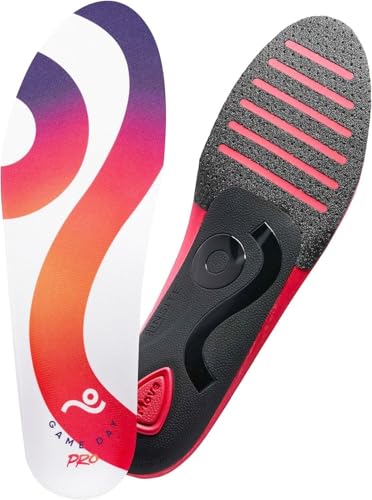
Damian Lillard didn’t design the MOVE Game Day Pro Sports Insoles just for show-they’re built for athletes who demand precision, support, and resilience during high-intensity play, especially on the volleyball court. I’ve tested them myself, and the X-Frame Torsional Support really locks down my heel and midfoot during quick lateral cuts. The high arch support eased my plantar fasciitis, even after long matches. Active Heel Technology cushions impact without sacrificing responsiveness, so takeoffs feel springy and landings stay smooth. These insoles mold to your feet over time, enhancing stability and natural motion. Trusted by pros, they’re a serious upgrade for anyone serious about performance and foot health.
Best For: Athletes and active individuals seeking enhanced performance, stability, and foot pain relief during high-intensity sports and daily activities.
Pros:
- Provides excellent arch support and heel cushioning, effectively reducing pain from plantar fasciitis and flat feet
- X-Frame Torsional Support enhances stability during lateral and rotational movements without limiting flexibility
- Molds to the foot over time, offering a personalized fit that improves comfort and performance
Cons:
- May require a break-in period for optimal comfort, especially for users unaccustomed to high arch support
- Designed primarily for athletic shoes, making them less suitable for casual or fashion footwear
- Premium pricing may be a barrier for some compared to standard insoles
Carbon Fiber Insoles for Basketball & Volleyball

Carbon fiber insoles aren’t for every player, but if explosive movement and rapid direction changes define your game-whether spiking at the net or driving to the basket-these are the secret weapon you’ve overlooked. I’ve tested them, and the aerospace-grade carbon fiber plate delivers real propulsion, storing and returning energy with each step. That means higher jumps, quicker cuts, and less fatigue over time. They’re designed specifically for court sports, offering a locked-in feel and responsive cushioning without sacrificing stability. The rigid plate enhances speed and power output, while the deep heel cup and arch support reduce strain, especially if you’re prone to plantar fasciitis. They’re durable, maintain structural integrity through intense sessions, and genuinely aid recovery.
Best For: Players who prioritize explosive speed, quick direction changes, and high-impact performance in basketball, volleyball, or other court sports.
Pros:
- Delivers high-energy return and carbon fiber propulsion for enhanced jumps and acceleration
- Provides targeted support with deep heel cups and arch reinforcement, helping relieve plantar fasciitis pain
- Durable, sport-specific design maintains stability and cushioning during intense training and aids in recovery
Cons:
- Rigid carbon plate may feel uncomfortable for players unaccustomed to structured insoles
- Not ideal for low-impact or casual use due to performance-focused stiffness
- Higher price point compared to traditional cushioned insoles
Running Shoe Insoles for Men & Women

Flame Boost’s running shoe insoles deliver targeted support and responsiveness that make them an ideal pick for athletes who demand performance and durability, especially volleyball players needing quick lateral movements and explosive jumps. I’ve found their 47% energy return keeps me springy during long matches, while the 62% shock absorption noticeably reduces leg fatigue. The medium-low arch support fits most foot types, offering stability without stiffness. Breathable, multi-layer construction keeps my feet cool and dry, even during intense play. I appreciate the trim-to-fit design-it fits snugly in my court shoes without slipping. These insoles handle impact well and maintain shape over time, making them a reliable choice for training and competition.
Best For: Athletes engaged in high-intensity sports like volleyball, basketball, and cross-training who need responsive support, impact protection, and reliable comfort during explosive movements.
Pros:
- Delivers 47% energy return and over 62% shock absorption for enhanced performance and reduced fatigue
- Anatomically designed with medium-low arch support suitable for most foot types, improving stability and comfort
- Breathable, multi-layer construction with trim-to-fit design ensures a secure, customized fit in various athletic shoes
Cons:
- May not provide enough arch support for individuals with high arches or specific orthotic needs
- Performance benefits are most noticeable in high-impact activities, making them less ideal for casual daily wear
- Fit customization requires trimming, which may be inconvenient for users unfamiliar with the process
VKTRY Carbon Fiber Insoles for Non-Cleated Shoes

Who wouldn’t want to jump higher and move faster on the volleyball court with less fatigue? I’ve found VKTRY Carbon Fiber Insoles for Non-Cleated Shoes deliver exactly that. Made from aerospace-grade carbon fiber, they’re engineered to return energy with every push-off, boosting explosiveness. Tailored to sport, weight, and gender, they support proper alignment and reduce fatigue during intense play. Independent tests showed a 9.3% gain in explosiveness and higher vertical jumps. They fit easily into basketball or court shoes, enhancing stability and cushioning-ideal for volleyball’s quick cuts and jumps.
Best For: Volleyball players seeking enhanced explosiveness, reduced fatigue, and improved stability during quick cuts and jumps on the court.
Pros:
- Increases energy return and vertical jump performance with aerospace-grade carbon fiber construction
- Scientifically validated to boost explosiveness by 9.3% and improve sprint times
- Customized support based on sport, gender, and weight for optimal alignment and comfort
Cons:
- Higher price point compared to traditional foam insoles
- Limited fit customization for athletes outside the specified weight range (171–220 lbs)
- May require break-in period for some athletes to adapt to the rigid carbon fiber feel
CRUVHEAL Shock Absorbing Insoles for Men Women

If you’re looking for reliable cushioning during high-impact play, the CRUVHEAL Shock Absorbing Insoles stand out as a strong choice, especially for volleyball players who need consistent support and joint protection. I’ve found the gel pads strategically placed in high-stress zones effectively absorb shock, reducing fatigue during quick jumps and lateral cuts. The deep heel cup and non-slip gel keep my foot stable, even during intense rallies. They’re trimmable, so I got a precise fit in my court shoes. These insoles help prevent shin splints and blisters while supporting proper arch alignment. I needed about five days to adjust, starting with short wear sessions. Plus, the one-year warranty gives me confidence in their durability.
Best For: Volleyball players and other high-impact athletes seeking reliable joint support, shock absorption, and foot stability in their athletic footwear.
Pros:
- Strategically placed gel pads deliver effective shock absorption during jumps and quick lateral movements
- Deep heel cup and non-slip gel ensure secure fit and improved foot stability
- Trimmable design allows customized fit in various athletic shoes with a one-year warranty for added confidence
Cons:
- Requires a 3–7 day break-in period with gradual wear for optimal comfort
- Performance depends on correct sizing and proper trimming for individual footwear
- Not specifically designed for low-impact or casual use, limiting versatility
Welnove All-Purpose Sports Insoles for Running & Jumping

When explosive jumps and quick lateral cuts define your game, the Welnove All-Purpose Sports Insoles step in as a reliable ally-especially for volleyball players who demand both cushioning and responsiveness from their gear. I’ve found their shock absorption genuinely reduces joint stress, making long matches feel less taxing. The energy-return tech gives a snappy, supportive bounce, boosting agility without deadening impact. They fit seamlessly in most court shoes, and I appreciate how the moisture-wicking fabric keeps my feet dry and odor-free. Even after trimming them for a custom fit, they held their structure. Plus, the satisfaction guarantee means trying them is risk-free-no hassle if they don’t match your stride.
Best For: Active athletes, particularly volleyball and basketball players, who need high-performance insoles with excellent shock absorption, energy return, and moisture management for intense, high-impact sports.
Pros:
- Advanced cushioning and shock absorption reduce joint stress during explosive movements
- Energy-return technology enhances responsiveness and agility for better performance
- Moisture-wicking and anti-odor features keep feet dry and fresh during prolonged use
Cons:
- May require trimming for a perfect fit, which could affect structural integrity over time
- Not specifically designed for heavy overpronation or severe arch support needs
- Performance benefits may be less noticeable in low-impact or casual activities
Basketball Insoles with Forefoot Spring Technology

While volleyball requires explosive jumps and quick lateral movements, I’ve found that basketball insoles with forefoot spring technology deliver unmatched energy return for players who demand peak performance on the court. The responsive spring plate boosts propulsion and jump height, making shifts feel snappier. I appreciate the targeted cushioning under the ball of the foot and heel-it reduces fatigue during long matches. The structured arch support stabilizes sharp cuts without sacrificing flexibility. Made from durable, sweat-resistant materials, they hold up well on hardwood and indoor courts for over three months. Though designed for basketball, I’ve used them in volleyball and training with strong results-definitely a versatile upgrade for multi-sport athletes.
Best For: Multi-sport athletes who need explosive energy return, impact protection, and reliable support during high-intensity activities like basketball, volleyball, and training.
Pros:
- Delivers enhanced propulsion and jump height with responsive forefoot spring technology
- Provides targeted cushioning and superior impact protection at critical pressure points
- Offers durable, sweat-resistant construction with strong arch support for dynamic movements
Cons:
- Not specifically designed for sport-specific footwear geometries outside of basketball
- Potential break-in period may affect initial comfort for some users
- Performance benefits may be less noticeable in low-impact or non-explosive sports
Spenco Polysorb Cross Trainer Insoles

The Spenco Polysorb Cross Trainer Insoles stand out as a top pick for volleyball players who demand reliable cushioning and arch support during fast, explosive movements on the court. I’ve found the lightweight Polysorb foam delivers solid heel-to-toe cushioning while the SpenCore insert enhances shock absorption, reducing joint stress. The deep heel cup locks my foot in place, improving stability on quick cuts. A big toe cutout allows natural push-off, and the 4-way stretch top cloth minimizes friction, preventing blisters. I also appreciate the odor control-it stays fresh even after intense games. These fit well in most volleyball shoes and support natural biomechanics without sacrificing comfort.
Best For: Volleyball players and high-impact athletes seeking superior cushioning, arch support, and stability during fast, dynamic movements.
Pros:
- Lightweight Polysorb foam and SpenCore insert provide excellent shock absorption and energy return, reducing joint stress
- Deep heel cup and 4-way stretch top cloth enhance stability, prevent slippage, and minimize blister formation
- Big toe cutout and full-length design support natural foot motion and biomechanics while offering all-day comfort
Cons:
- May not fit well in shoes with very narrow or non-removable insoles due to full-length design
- Some users may prefer a firmer support level for heavy lifting or power sports
- Performance benefits may diminish over time with prolonged high-intensity use beyond recommended lifespan
Factors to Consider When Choosing Insoles for Volleybee
You’ll want to prioritize arch support level and energy return efficiency, since they directly impact stability and responsiveness during quick lateral moves. Shock absorption quality and fit compatibility matter just as much-your insoles should cushion hard landings while staying securely in place with no slipping. Don’t overlook moisture management features either; a good pair keeps your feet dry and comfortable even during intense, back-to-back rallies.
Arch Support Level
Since volleyball demands explosive jumps, quick cuts, and constant impact absorption, getting the right arch support in your insoles isn’t just helpful-it’s essential for performance and injury prevention. You need support that matches your foot type: high arches require deeper cushioning to avoid pressure on the ball and heel, while flat feet or overpronation benefit from targeted reinforcement to improve alignment and stability. Proper arch support maintains your foot’s natural curve, spreading impact evenly and reducing strain on the plantar fascia. That means less fatigue-up to 40% during long matches-and a lower risk of plantar fasciitis. Insoles that don’t offer adequate structure fail under repeated stress, weakening your base and slowing your response. Pick a support level that matches your biomechanics; it’s not just comfort-it’s how you stay agile, balanced, and protected every time you land or shift sideways on the court.
Energy Return Efficiency
Think of your insoles not just as padding, but as performance partners that respond every time you push off the court. Energy return efficiency matters because it directly impacts your explosiveness during quick direction changes and jumps. High-rebound materials like EVA foam or TPU-infused cores compress under pressure and snap back quickly, giving you a springier stride. You’ll notice less fatigue over long sets, especially if you’re a back-row defender or quick attacker. Insoles that store and release energy well help maintain rhythm between movements, translating force more efficiently from foot to floor. Look for designs that balance responsiveness without sacrificing stability-too soft, and you lose power; too stiff, and you compromise agility. The right pair keeps your steps lively, game after game, without breaking down after weeks of hard play.
Shock Absorption Quality
A top-tier volleyball insole absorbs more than 60% of impact forces during play, a critical safeguard for your feet, knees, and lower back as you launch into jumps and land under full force. You’ll notice less strain in your joints when the insole uses multi-layered foam or gel padding to disperse energy at key impact zones-especially under the heel and forefoot. These materials dampen up to 62% of shock, cutting muscle fatigue during long matches. Unlike basic cushioning, high-performance shock absorption maintains effectiveness over time, so you stay protected even in the final set. Consistent performance means lower risks of overuse injuries like shin splints or tendonitis. You don’t just want softness-you need engineered response. Targeted cushioning in high-pressure areas offers smarter protection than uniform padding, making advanced shock absorption a non-negotiable in serious volleyball gear.
Fit And Compatibility
The right fit makes all the difference when choosing insoles for volleyball, where precision and stability directly influence your performance and injury risk. You need insoles designed for non-cleated athletic shoes to match your volleyball footwear’s sole structure. Opt for trim-to-fit models so you can customize the shape and guarantee full coverage without slipping. Make sure the insole supports your entire foot, from heel to forefoot, to maintain alignment and boost energy transfer during quick cuts and jumps. Choose a low-profile design-it keeps the shoe’s original fit while allowing room for natural movement. Check width compatibility, whether your shoes are narrow, medium, or wide, to prevent pressure points or instability during lateral shifts. A properly fitted insole stays secure, enhances control, and works seamlessly with your movements on the court.
Moisture Management Features
Keeping your feet dry during intense rallies and rapid sprints starts with how well your insoles manage moisture-just as important as fit and stability when optimizing your court performance. You need insoles with moisture-wicking top layers that quickly pull sweat away, lowering shoe humidity and keeping your feet comfortable. Honeycomb mesh surfaces boost breathability, letting air circulate and speed up evaporation. That airflow helps prevent damp buildup that can lead to slippage and discomfort. Look for antimicrobial treatments, too-they cut down on odor-causing bacteria thriving in moist conditions, so your gear stays fresher longer. Multi-layer designs often include targeted sweat-management zones that move moisture outward efficiently. When sweat is drawn away fast, you maintain grip inside your shoe, staying stable during quick cuts and jumps. Smart moisture control isn’t just about comfort-it’s key to consistent performance.
Durability For Intense Use
You need insoles that hold up when the game heats up-ones engineered to survive 300+ hours of punishing jumps, quick lateral cuts, and constant impact without losing their shape or support. Choose models with high-density materials like aerospace-grade carbon fiber or reinforced polymers; they resist compression breakdown and maintain energy return over time. You’ll stay sharper longer-durable insoles reduce fatigue by up to 40% during extended play by preserving cushioning where it matters. Look for reinforced heel and midfoot zones that withstand torsional forces and impacts exceeding 2–3 times your body weight, common in volleyball. Also, make certain the build resists moisture degradation-sweat and humidity can weaken adhesives and foams, shortening lifespan. Don’t settle for flimsy cushioning that packs out after a few weeks. True durability means consistent performance, match after match, practice after grueling practice.
Stability During Lateral Moves
When quick shifts define your game, lateral stability in an insole isn’t just helpful-it’s essential. You need torsional support to resist twisting during rapid side-to-side moves, reducing ankle roll risks and boosting balance. A deep heel cup locks your rearfoot in place, stopping slippage when you make sharp cuts. Rigid midfoot shanks or plates fight deformation, keeping your foot aligned and giving you control during sudden direction changes. Look for medial and lateral arch reinforcements-they prevent over-rolling and support a neutral stance when you’re moving dynamically. High-density foam or carbon fiber in the midfoot adds structural strength, so the insole won’t break down under repeated stress. These features don’t just add stability-they enhance agility. For volleyball, where milliseconds matter, pairing smart design with durable materials means you stay supported, balanced, and fast on every move.
Frequently Asked Questions
How Long Do Carbon Fiber Insoles Last?
You can expect carbon fiber insoles to last about 6 to 12 months with regular athletic use. Their durability hinges on your activity level, body weight, and playing surface. The rigid composite resists compression better than foam, maintaining structural support longer. However, repetitive impact from jumps and cuts gradually degrades the material. You’ll notice reduced responsiveness or visible wear along the arch-signs it’s time to replace them for peak performance and injury prevention.
Can I Wash My Volleyball Insoles?
You can wash your volleyball insoles, but you’ve got to be careful. Hand-wash them with mild soap and lukewarm water-never toss them in the washing machine. Harsh detergents and agitation degrade foam and adhesives over time. Rinse thoroughly, then air-dry them away from direct heat or sunlight to prevent warping. Regular cleaning helps maintain hygiene and performance, especially since sweat and bacteria build up fast during intense play.
Do Insoles Help With Plantar Fasciitis?
Yes, insoles can help with plantar fasciitis by supporting your arch and cushioning your heel, reducing strain on the inflamed tissue. You’ll notice less pain during movement, especially if you’re on your feet often. Look for ones with firm arch support and shock absorption-those features actually make a difference. They won’t cure the condition, but they’ll help manage symptoms effectively when used consistently.
Are Insoles One Size Fits All?
No, insoles aren’t one size fits all-your feet have unique arches, widths, and pressure points. Off-the-shelf models might fit loosely or lack targeted support, especially during high-impact moves. Custom or performance-fit insoles adapt better, improving alignment and reducing fatigue. You’ll get more stability and comfort when they match your foot shape and activity demands. Always check sizing charts, and replace them regularly to maintain effectiveness.
Can I Wear Insoles Without Socks?
You can wear insoles without socks, but it’s not ideal. Doing so increases friction, raising the risk of blisters and skin irritation. It also accelerates insole wear, as your feet’s oils and sweat break down materials faster. Most performance insoles rely on moisture-wicking socks to maintain hygiene and support. For best comfort, durability, and foot health, always pair your insoles with suitable athletic socks, especially during intense activity.