Functional Strength Circuit for Tennis Players to Enhance Court Movement Efficiency
You’ll build faster, more efficient court movement by training functional strength with tennis-specific patterns like lateral bounds and rotational throws. These exercises boost power, stability, and coordination while reducing injury risk. Use medicine balls, resistance bands, and kettlebells in a circuit that mimics real match demands. A well-designed routine enhances force transfer and movement precision-key for elite performance. There’s a smart way to progress and recover that keeps you playing stronger, longer.
Notable Insights
- Focus on movement patterns like lateral bounds and reactive shuffles to improve explosive court coverage.
- Incorporate medicine ball rotational throws to enhance power in serves and groundstrokes.
- Use single-leg deadlifts to build balance and posterior chain strength for efficient lunging.
- Include plank-to-punch variations and Pallof presses for core stability during dynamic movements.
- Design circuits with minimal downtime, using sport-specific tools like resistance bands and slide boards.
Why Functional Strength Boosts Tennis Performance
While traditional strength training builds muscle mass, functional strength takes it a step further by enhancing the specific movements you rely on during a tennis match-like lateral bursts, quick direction changes, and rotational power. You’re not just getting stronger; you’re training your body to move more efficiently under real match conditions. This type of training improves injury prevention by reinforcing joint stability and muscle balance, reducing strain during explosive actions. It also optimizes power transfer, allowing force generated from your legs and core to move seamlessly through your upper body during a serve or groundstroke. Unlike isolated exercises, functional movements mimic on-court demands, improving neuromuscular coordination. You’ll notice sharper shifts, better balance, and sustained performance, especially during long rallies. Equipment like resistance bands or medicine balls enhances these effects, though proper form matters more than gear. Ultimately, functional strength bridges the gap between the gym and the court.
Train These Movement Patterns for Faster Court Coverage
How often do you find yourself just a step too late to reach a wide cross-court shot or struggle to recover after a deep lob? You’re not alone-many players lack training in specific movement patterns that directly impact court coverage. To get faster, you need more than just speed; you need precision and timing. That’s where lateral bounds come in. They build explosive power and stability when pushing off sideways, mimicking real court demands. Pair them with reactive shuffles to sharpen your response to unpredictable shots. Reactive shuffles train your nervous system to shift direction quickly, improving agility under pressure. Together, these movements boost functional mobility, helping you stay balanced and efficient. Unlike generic drills, they replicate actual match scenarios, making your training time more effective. If you want real results, embedding lateral bounds and reactive shuffles into your routine isn’t optional-it’s essential for staying one step ahead.
Best Functional Strength Exercises for Tennis Players
You’ve already started building the dynamic movement base needed for sharp court coverage with lateral bounds and reactive shuffles-now it’s time to reinforce that athleticism with functional strength exercises that directly support power, stability, and injury resilience. Focus on moves like medicine ball rotational throws, which boost rotational power essential for aggressive serves and groundstrokes. Add single-leg deadlifts to enhance balance and posterior chain strength, improving directional changes. Plank-to-punch variations challenge core stability while mimicking in-match arm drive. Incorporate pallof presses to resist rotation, teaching your trunk to stay stable under dynamic load. These exercises aren’t flashy, but their carryover to on-court performance is measurable-better stroke production, sharper cuts, and reduced risk of overuse injury. They integrate seamlessly with recovery routines and pair well with compression gear that supports muscle maintenance. Consistent execution builds a resilient, responsive frame ready for match intensity.
Design Your Tennis-Specific Strength Circuit
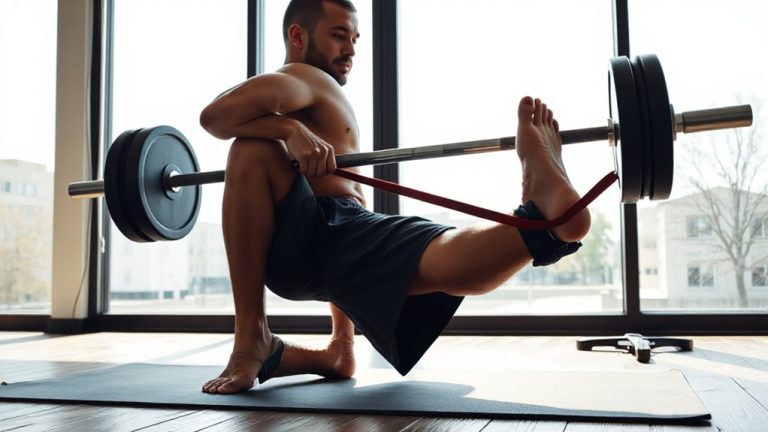
Because your tennis performance depends as much on controlled power as it does on endurance and joint integrity, designing a strength circuit that mirrors the sport’s physical demands is essential. Your circuit layout should flow logically-group exercises by movement pattern to minimize downtime and maintain intensity. Use cones or markers to define stations clearly, enabling smooth shifts. Equipment selection plays a vital role: opt for resistance bands, medicine balls, kettlebells, and slide boards to simulate on-court actions like lunging, rotating, and decelerating. Avoid overloading with unnecessary gear; prioritize tools that enhance stability and replication of tennis-specific motions. A well-structured circuit balances lower-body explosiveness, core stability, and upper-body strength. Test your setup for efficiency-adjust spacing or tools if movements feel disjointed. A thoughtful circuit layout paired with smart equipment selection maximizes functional gains without compromising form or focus.
Balance Workload and Recovery for Peak Play
While pushing your limits builds strength and endurance, skipping rest can undo gains and increase injury risk-especially in a sport as physically demanding as tennis. You need a smart balance between workload and recovery to maintain performance and support injury prevention. Overtraining strains joints and muscles, but scheduled rest days allow tissues to repair and adapt. Incorporate active recovery-like light cycling, swimming, or yoga-on off-days to boost circulation without taxing your body. These low-intensity sessions reduce soreness and keep movement patterns sharp. Recovery isn’t passive; it’s a functional part of training. Tools like foam rollers, compression gear, and massage guns help manage muscle tightness, though their benefits depend on consistent use. Listen to your body: persistent fatigue or joint discomfort signals the need for more rest. Ultimately, peak play isn’t just built in the gym-it’s refined through recovery that complements your effort. Choosing the right foam roller density can significantly impact the effectiveness of your recovery routine.
Fit Strength Training Into Your Weekly Tennis Routine
How do you find time to build strength without disrupting your match schedule or burning out? The answer lies in smart exercise timing and consistent session frequency. Aim for two to three strength sessions weekly, each lasting 30–40 minutes, scheduled on-court days or after light practices. Prioritize functional movements that mimic tennis demands-lateral lunges, single-leg squats, rotational lifts-so every rep supports court efficiency. Perform sessions at least six hours apart from intense matches to allow for proper recovery. Early morning or late afternoon slots often work best, depending on your energy peaks. Too frequent lifting risks fatigue; too little limits gains. Twice weekly is usually enough for noticeable improvement, especially when exercise timing aligns with lower neural load days. This balance enhances power and resilience without compromising technique or injury risk.
Scale Your Circuit as Your Game Evolves
AsMODIFIED TEXT):
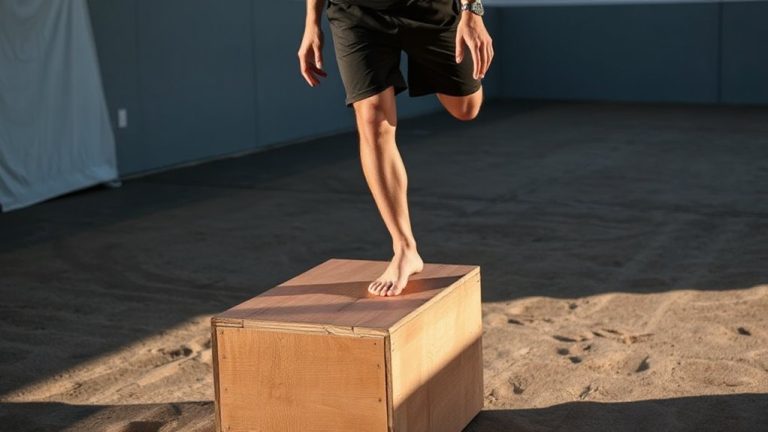
As your tennis performance progresses, so should your strength training-you’ll need a circuit that adapts to increasing power demands, movement complexity, and recovery capacity. Progress tracking is essential; use performance logs or apps to monitor gains in speed, strength, and agility, guaranteeing your program evolves with your on-court improvements. What worked for baseline conditioning may not suffice for net shifts or explosive lateral sprints. Equipment adaptation allows that growth-swap bodyweight moves for resisted bands, add plyometric boxes, or integrate medicine balls for rotational power. Adjustable kettlebells or suspension trainers let you fine-tune intensity without clutter. Don’t overlook recovery gear-foam rollers and percussion guns help maintain muscle resilience as volume increases. A static routine leads to plateaus; evolving your circuit with measurable feedback and scalable tools guarantees long-term gains. Your training should mirror your competitive rise-intentional, responsive, and precise.
On a final note
You’ll find that pairing your circuit with smart recovery-like foam rolling, quality sleep, and hydration-maximizes adaptation and reduces injury risk. Functional strength gains mean little without proper recovery to support them. Likewise, investing in reliable gear, such as supportive footwear and durable resistance bands, guarantees consistent, safe training. These choices don’t just enhance performance-they sustain it, letting you move efficiently, respond faster, and stay competitive throughout the season.